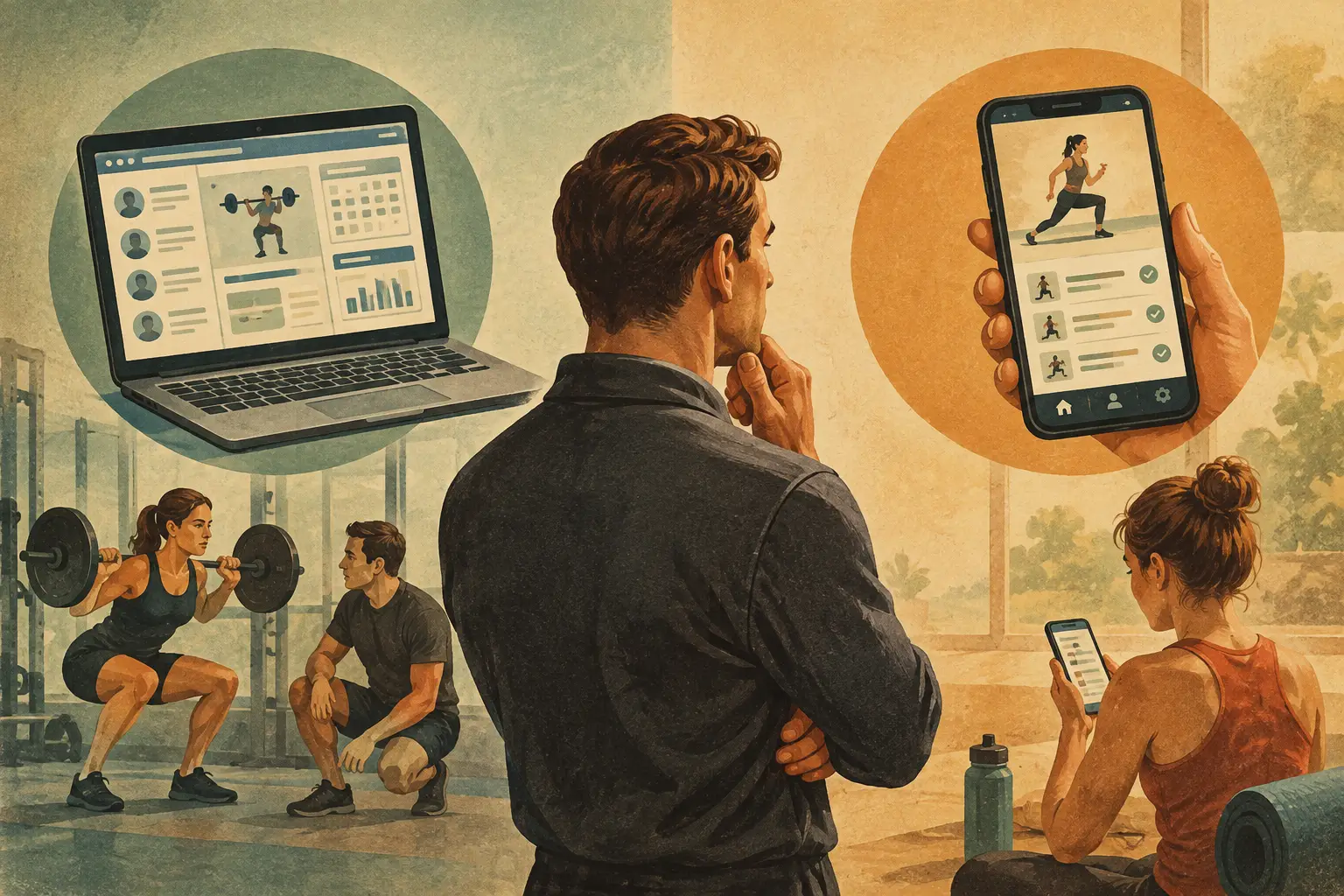
A client misses two sessions, logs half their nutrition targets, and reports poor sleep on a Sunday check-in. A coaching app may show you the data. The real question in trainer software vs coaching apps is whether your system helps you interpret that data, adjust the plan, communicate the change, and keep the client engaged without creating another hour of admin.
That distinction matters when you are managing recurring coaching relationships, not just sending workouts. The best platform is not the one with the longest feature list. It is the one that supports the way your business actually delivers results: programming, nutrition, accountability, communication, and a branded client experience working together.
Trainer Software vs Coaching Apps: The Operational Difference
The phrase “coaching app” can describe almost anything. It might be a workout tracker, a habit app, a nutrition log, a messaging tool, or a client-facing exercise library. These tools can be useful, particularly for a new trainer with a small roster or a narrow service offer. If your only need is sending a three-day training plan and receiving a few messages, a focused app may be enough.
Trainer software is usually built around the coach’s operating system. It should let you manage clients, build programs, collect check-ins, monitor adherence, communicate, and make informed changes from a central dashboard. The practical difference is not mobile access. Both categories may have mobile apps. The difference is whether the technology supports a complete coaching workflow or covers one part of it.
For an online strength coach, this shows up fast. A workout-only app may handle exercise delivery well, but nutrition ends up in a separate tracker, check-ins land in a form tool, and progress photos arrive by text. The coach becomes the integration layer. Every client update requires switching tabs, matching data, and making sure nothing gets missed.
That fragmented workflow is manageable at five clients. At 30 clients, it becomes a retention problem. Delayed feedback feels impersonal, inconsistent data makes decisions harder, and the client sees a collection of tools instead of a professional coaching service.
What Coaches Actually Need to Scale
A platform should be evaluated against the work you repeat every week. The more recurring tasks it removes or organizes, the more capacity you create without lowering coaching quality.
Program design that supports coaching decisions
Exercise delivery is table stakes. Serious coaching software should also help you build progression with intent. That means reusable templates, exercise substitutions, training blocks, set and rep prescriptions, and a clear view of what each client has completed.
The strongest systems go further by supporting autoregulation. RIR-based load adjustments, for example, give coaches a structured way to respond when a client is stronger, weaker, or more fatigued than expected. That approach aligns with research on RIR-based autoregulation, including work by Zourdos and colleagues, while keeping the coach in control of the decision.
Automation should not replace judgment. A client returning from travel, managing a painful flare-up, or preparing for a physique show needs context. But when your platform identifies fatigue patterns, suggests an adjustment, or helps schedule a deload, you spend less time doing calculations and more time applying your expertise.
Nutrition that is part of the coaching plan
Nutrition is where many coaching stacks break down. A training app plus a separate calorie tracker can work, but it creates friction for the client and blind spots for the coach. If a client’s training performance drops while their food compliance falls, you should be able to see the relationship without asking them to send screenshots from another platform.
Integrated nutrition tools let coaches create meal plans, set macro targets, review adherence, and make food swaps within the same client experience as training. Features such as a large food database, barcode scanning, recipes, grocery lists, and BMR/TDEE calculations make the plan more practical for the client. They also reduce the support burden that comes from clients asking, “What can I eat instead?” every other day.
This does not mean every coach needs to prescribe detailed meal plans. A habit-based nutrition coach may only need targets, check-ins, and food-quality guidance. A physique coach may need precise macros, meal structures, and fast adjustments. The right platform should support both models without forcing a separate nutrition system onto your clients.
Check-ins that lead to action
Weekly check-ins are where coaching becomes personal. They surface the details no workout completion percentage can explain: stress, hunger, sleep, digestion, confidence, schedule changes, and pain. Yet many coaches still collect this information in forms and manually review each response across multiple screens.
A better workflow puts check-in responses, training compliance, nutrition adherence, body metrics, and coach notes in one place. Instead of scanning disconnected data, you can quickly identify the clients who need intervention and the clients who are ready to progress.
AI can be valuable here when it reduces review time rather than making generic decisions for you. A check-in assistant that summarizes wins, flags concerns, and suggests areas to review can help a coach prioritize their roster. The coach still chooses whether to reduce volume, adjust calories, change an exercise, or simply reinforce a good week. That is the right division of labor: automation handles the repetitive pattern recognition; the coach provides context and accountability.
A client experience that looks like your business
Your client app is part of your service delivery. When invite emails, dashboards, training plans, and nutrition tools carry your logo, colors, and custom subdomain, the coaching relationship feels more established. Clients are not being handed a generic app with your name pasted into a message.
White-labeling also matters commercially. It supports premium positioning, makes referrals easier to trust, and gives a small coaching business the presentation of a more mature operation. For hybrid coaches, mobile access is equally important. Clients should be able to follow training, log nutrition, message their coach, and sync steps from the phone they already use every day.
When a Coaching App Is the Better Choice
A focused coaching app is not automatically the wrong choice. It can be the right option when your service is intentionally simple. A trainer running in-person sessions may only need exercise demonstrations and basic homework workouts. A coach with a fixed, low-ticket challenge may prioritize community and habit tracking over individualized programming. A nutrition professional who does not provide training may prefer a nutrition-first tool.
The trade-off is usually future flexibility. As you add individualized training, regular check-ins, nutrition support, assistants, or a larger roster, standalone tools often require more integrations. Each added app brings another login, another cost, another client onboarding step, and another place where data can become incomplete.
Before choosing, map the client journey from lead conversion through renewal. Ask where programming is built, where meals are delivered, where adherence is reviewed, how changes are communicated, and what the client sees on mobile. If the answer involves several disconnected tools, the low monthly app price may be hiding a high operational cost.
How to Evaluate Trainer Software Without Buying More Admin
Start with your coaching model, not the product demo. A strength coach, a nutrition coach, and a hybrid transformation business should not evaluate software against identical criteria. Define the coaching actions you perform weekly and identify the points where you currently copy data, chase clients, or answer the same questions repeatedly.
Then test whether the platform handles four connected areas: training delivery, nutrition delivery, accountability workflows, and client communication. If those elements live together, review how the platform turns data into decisions. Compliance dashboards, progress trends, automatic reminders, and check-in summaries are more valuable than a large number of isolated features.
Pricing structure deserves the same scrutiny. Per-client fees can feel inexpensive early on but become harder to forecast as your roster grows. A flat-rate model gives you a clearer margin picture and lets you add clients without treating growth like a penalty. Free plans can also be useful if they allow real testing with live clients rather than limiting the features that determine whether the platform fits.
CoachingPortal is designed for coaches who need training program design, nutrition and meal planning, check-ins, compliance analytics, messaging, and science-informed automation in one branded client experience. For a coach moving beyond spreadsheets and disconnected apps, that consolidation is not just a software upgrade. It is a way to protect service quality as the business grows.
The system you choose should make a good coaching decision easier to deliver at the exact moment a client needs it. That is how technology earns its place in your business: not by adding another app to manage, but by giving you more room to coach.