Many people who take fitness seriously end up using two or three different apps to log their meals, record their workouts, and check their progress. Juggling between a food diary, a strength-training logger, and a wearable sync can feel like a part-time job. The idea of unifying nutrition and workout tracking in one app solves this friction directly. Whether you are a coach managing clients or an individual aiming for better results, combining both domains in a single tool delivers clear advantages. Here are five benefits backed by real-world data and expert recommendations.
1. Save Time and Reduce Logging Friction
When your food and exercise data live in separate apps, you spend extra minutes every day switching between screens, duplicating entries, and syncing devices. Unifying nutrition and workout tracking eliminates that overhead. Consider the difference in logging speed alone. A food tracker that relies on manual entry, such as MyFitnessPal, averages about 45 seconds per item. In contrast, an app with AI photo logging can capture a meal in roughly 8 seconds. Over multiple meals each day, that difference adds up to hours per month. Similarly, having workout tracking in the same place means you never have to reopen a second app after a session. The time saved can be redirected toward actual training or meal preparation.
2. Lower Overall Cost
Running separate premium subscriptions for nutrition and workout tracking often costs more than a single unified app. For example, combining JEFIT Elite for strength training with MyFitnessPal Premium runs approximately $120 per year. Fitbit Premium, which offers basic food tracking alongside workout features, costs about $80 per year. MyFitnessPal Premium alone is around $80 per year. Standalone unified apps can be more affordable. Nutrola, which provides AI photo logging, voice logging, barcode scanning, and workout tracking via Apple Health sync, costs about 2.50 euros per month (roughly $33 per year). Even free options like Samsung Health (Android-only) include both food and workout tracking with a barcode scanner, though they lack advanced AI features. By unifying nutrition and workout tracking, you avoid paying for two or three overlapping services.
3. Get a Complete Picture of Your Health Data
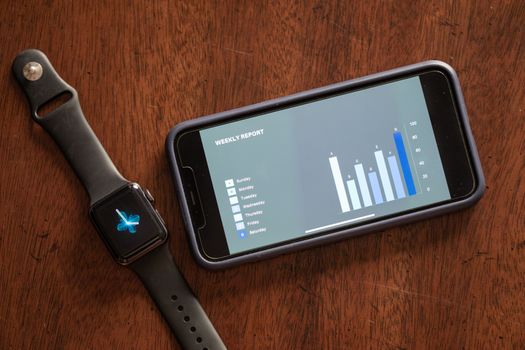
Tracking both what you eat and how you move gives you a fuller understanding of your body’s response. UCLA Health recommends that people track exercise and nutrition together, using qualitative measures such as energy, soreness, and motivation alongside quantitative metrics like weight lifted and repetitions. When these data points are in one app, you can easily see how a high-intensity workout affects your hunger or how a low-carb day impacts your gym performance. Apps like Unify Health connect to Apple Watch, Garmin, Fitbit, MyFitnessPal, and Withings devices, pulling all your metrics into a single dashboard. Cronometer allows you to log calories, macros, micronutrients, weight, and exercise in one place. Unifying nutrition and workout tracking means you review one report instead of piecing together fragments from different sources.

4. Simplify Your Digital Ecosystem
Every fitness app you add creates another account, another login, and another point of potential data fragmentation. Unifying nutrition and workout tracking reduces the number of apps cluttering your phone and your mind. Many unified apps sync with health platforms like Apple Health or Google Health Connect, so your step count, heart rate, and sleep data flow in automatically. This integration also makes it easier to share data with coaches or healthcare providers if needed. For fitness professionals who manage a roster of clients, the simplification is even more valuable. A platform like CoachingPortal offers an all-in-one solution that unifies training program design, meal planning, client check-ins, and compliance tracking under one roof. Coaches no longer need to juggle separate tools for workouts and nutrition; everything lives in a single white-labeled client experience.
5. Make Smarter Adjustments with Combined Insights
When your nutrition and workout data are separate, adjusting your macros or training volume requires manual cross-referencing. A unified app lets you see cause and effect immediately. For example, if your performance in the gym stalls, you can check your recent calorie and protein intake without switching apps. If you are trying to gain muscle, you might notice that your energy dips on days you fall below a certain fat intake. Apps like Nutrola include features such as a barcode scanner, voice logging, and recipe URL import to make food entry quick enough that you never skip a log. Combined with workout data synced through Apple Health or Health Connect, you have a complete daily record. This actionable feedback helps you and your coach adjust meal timing, macronutrient targets, or training intensity based on real patterns rather than guesswork. CoachingPortal’s native integration of meal planning and workout programming, for example, ensures that both the coach and the client see the same data and can make evidence-based decisions together.

Frequently Asked Questions
Can I sync a unified tracking app with my smartwatch or fitness band?
Most unified apps support integration with major wearables. Unify Health connects to Apple Watch, Garmin, Fitbit, MyFitnessPal, and Withings devices. Samsung Health works with Galaxy watches. Nutrola and Cronometer sync through Apple Health or Google Health Connect. Always check the app’s official compatibility list before committing.
How much does it cost to replace two separate apps with one unified app?
Cost varies widely. A standalone strength app plus a premium food tracker can exceed $120 per year. Single unified apps range from free (Samsung Health, basic Cronometer) to about $33 per year (Nutrola) or $80 per year (Fitbit Premium). Compare your current subscriptions to see potential savings.
Is unified tracking better for weight loss than using separate apps?
Having both nutrition and exercise data in one place makes it easier to see the full picture, which UCLA Health recommends for healthy weight loss. You can immediately connect changes in your diet to your energy and workout performance. However, no app guarantees results without consistent effort and, ideally, professional guidance.
Which app is best for strength training and nutrition combined?
No single app fits everyone. JEFIT excels at strength training but requires MyFitnessPal for food tracking, raising the total cost. Cronometer handles both nutrition and exercise logging well. Nutrola focuses on fast food logging and relies on Apple Health for workout data. Consider which features matter most to you and test the free versions.
Do I need a separate app if I only track calories and not macros?
Many unified apps track both calories and macros, but some focus only on calories. Cronometer tracks calories, macros, micronutrients, weight, and exercise. MyFitnessPal tracks calories and macros with user-submitted entries. If you only care about calories, a free app like Samsung Health may be sufficient, but having macro data helps fine-tune your nutrition for performance goals.