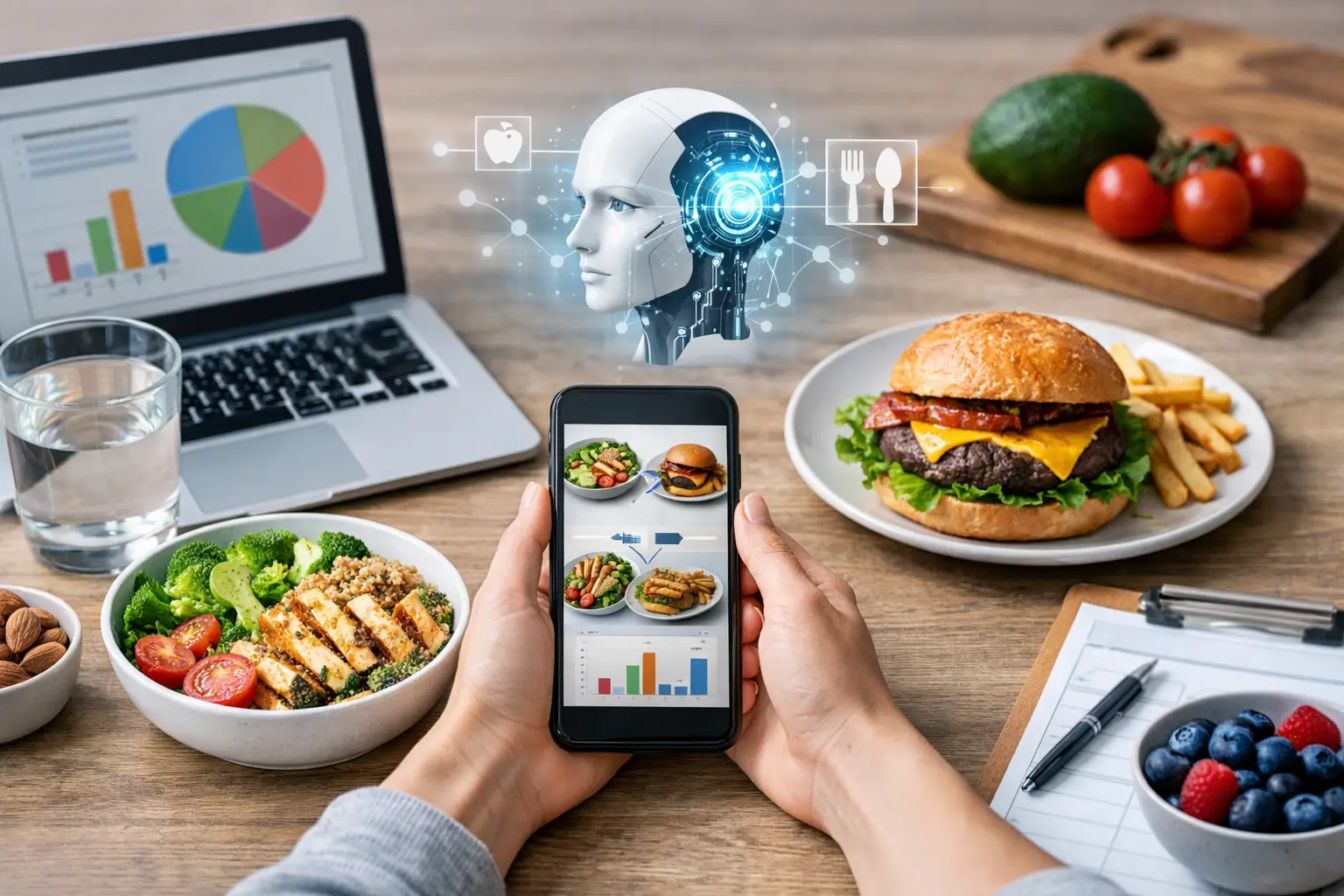
A client misses their protein target three days in a row, logs half their usual meals, reports poor sleep, and tells you their appetite has disappeared. The future of AI in nutrition coaching is not a chatbot sending generic encouragement. It is a system that surfaces the pattern before your weekly review, gives you the relevant context, and leaves the coaching decision where it belongs: with you.
That distinction matters. Nutrition coaching is full of variables that do not fit neatly into a calorie target: food access, travel, digestion, training fatigue, social pressure, stress, culture, budget, and a client’s history with dieting. AI can make the administrative side faster and the data easier to interpret. It cannot replace the judgment required to decide whether a client needs a meal swap, a simpler plan, a maintenance phase, or a referral to a qualified healthcare professional.
For online coaches, the opportunity is substantial. Used well, AI can reduce check-in workload, identify adherence problems earlier, and make personalization more realistic across a growing roster. Used poorly, it can turn nutrition delivery into automated advice with no accountability, no context, and no meaningful client relationship.
The Future of AI in Nutrition Coaching Is Decision Support
The strongest AI tools will not position themselves as autonomous nutrition coaches. They will operate as decision-support systems that help professionals see what deserves attention.
A coach managing 60 clients does not need another dashboard full of numbers. They need the system to separate signal from noise. Which clients are hitting calories but missing protein? Who is compliant Monday through Thursday but consistently falls off on weekends? Whose body weight trend has stalled alongside reduced step count and worsening sleep? Which clients are reporting hunger levels that suggest their current approach will not hold?
AI is increasingly capable of connecting these inputs across meal logs, check-ins, progress data, training compliance, wearable data, and client messages. The practical benefit is not that the platform “knows” what to do. The benefit is that it can prioritize your attention and reduce the time spent manually searching for patterns.
That changes the economics of high-touch coaching. Instead of spending hours collecting information and writing repetitive responses, coaches can spend more time making meaningful adjustments, educating clients, and strengthening adherence.
Personalization will move beyond macro targets
Macros will remain useful, especially for physique, strength, and performance-focused clients. But macro targets alone do not create an executable nutrition plan.
The next generation of AI-assisted nutrition coaching will account for behavioral patterns. A client who consistently misses breakfast may need portable, high-protein options rather than another reminder to hit their target. A parent with unpredictable evenings may benefit from flexible calorie distribution and a short list of repeatable dinners. A client training early may need adjustments to pre-training nutrition that protect both performance and total daily intake.
Food AI can support this work by suggesting meal swaps when macros are off while preserving preferences, calorie ranges, and practical constraints. But the recommendation should always be reviewable. A swap that technically fits the numbers may be a poor choice if it ignores allergies, cultural preferences, digestive tolerance, or the client’s actual cooking ability.
This is where coach-led systems will win. AI can generate options quickly. The coach determines which option creates the greatest chance of adherence.
Better Data Will Make AI More Useful
AI output is only as useful as the information feeding it. If clients log sporadically, use inaccurate food entries, or submit vague check-ins, the system will produce confident-looking suggestions based on weak inputs.
That is why the future is not just about smarter models. It is about better client workflows. Mobile-first food logging, barcode scanning, real-time macro tracking, grocery lists, meal templates, and simple weekly check-ins all improve the quality of the data a coach can act on. Reducing friction for clients is a coaching strategy, not merely a product feature.
The most useful platforms will also connect nutrition data to the rest of the coaching relationship. A client’s food intake should not live in a separate app from their training plan, recovery feedback, and weekly progress review. Training volume, RIR performance, fatigue, step count, sleep, and nutrition adherence influence one another.
For example, a client whose training performance drops while hunger climbs and sleep declines may not need more dietary restriction. They may need an adjustment to training volume, a deload, more carbohydrates around sessions, or a broader conversation about recovery. Fragmented software makes that connection harder to see. An integrated coaching system makes it actionable.
AI Will Improve Check-Ins, Not Eliminate Them
Weekly check-ins are one of the highest-value touchpoints in online coaching. They are also one of the easiest places to lose time to repetitive work.
AI can summarize a client’s week: adherence wins, missed targets, changes in body weight, recurring concerns, and possible areas for follow-up. It can flag contradictions, such as a client reporting perfect compliance while food logs and step data show a different picture. It can draft a response structure based on your coaching standards.
What it should not do is send final feedback without oversight. Clients can tell when a response is generic. More importantly, they need to know that a qualified professional has reviewed their situation. A client discussing binge eating, persistent gastrointestinal symptoms, medication changes, pregnancy, or signs of disordered eating requires human care and appropriate scope-of-practice boundaries, not automated advice.
The best workflow is AI-assisted, coach-approved communication. Let the system handle the preparation. Keep the relationship, interpretation, and accountability human.
The Business Impact: More Capacity Without Lower Standards
For growing coaching businesses, AI is most valuable when it removes low-value repetition without commoditizing the service.
A practical AI workflow can help coaches organize check-ins, identify clients at risk of disengaging, prepare nutrition adjustments, and maintain consistent follow-up across a larger roster. That creates capacity, but capacity alone is not the goal. The goal is to increase the quality and consistency of the client experience.
Coaches should be cautious about using automation as an excuse to overpromise availability or enroll more clients than they can responsibly serve. If AI identifies ten clients who need attention, someone still has to make the decisions and communicate with care. Scale works when systems protect coaching standards, not when they hide a lack of service behind automation.
CoachingPortal reflects the more useful direction of the category: training delivery, meal planning, client check-ins, compliance analytics, and AI support in one branded client experience. When the data lives together, coaches can make faster decisions without asking clients to juggle disconnected apps, spreadsheets, and message threads.
Trust, Privacy, and Scope Will Separate Serious Platforms
As AI becomes more common, clients will ask reasonable questions. Who can see their food logs, body measurements, health information, and messages? Is their data used to train a model? Can they correct inaccurate information? Does the system know when to stop and direct them to medical care?
Coaches need clear answers before they build AI into their service. Nutrition data can be deeply personal. Transparency, secure data handling, permission controls, and human review are not optional details. They are part of a professional coaching experience.
Scope matters just as much. AI should not diagnose conditions, prescribe treatment for disease, or replace a registered dietitian where medical nutrition therapy is needed. Fitness and nutrition coaches can deliver education, behavior support, meal-planning structure, and evidence-based guidance within their qualifications. Good technology should reinforce those lines, not blur them.
What Coaches Should Build Now
The coaches who benefit most from AI will not wait for a fully autonomous solution. They will improve the systems that make expert coaching repeatable.
Start by standardizing your check-in questions so clients provide useful information. Build meal templates and swap rules around the situations you see most often. Define clear triggers for when adherence, hunger, performance, or fatigue requires a review. Establish which decisions can be supported by automation and which always require direct coach approval.
Then measure whether the system is actually improving outcomes. Are check-ins faster to review? Are clients logging more consistently? Are fewer clients disappearing after week three? Are your nutrition recommendations more timely? Is your team spending less time on admin and more time on meaningful coaching?
AI will not make mediocre nutrition coaching exceptional on its own. It will amplify the operating system already behind your service. Build that system around evidence, clear boundaries, and real client behavior, and you will have something far more valuable than automation: a coaching experience that feels personal at scale.