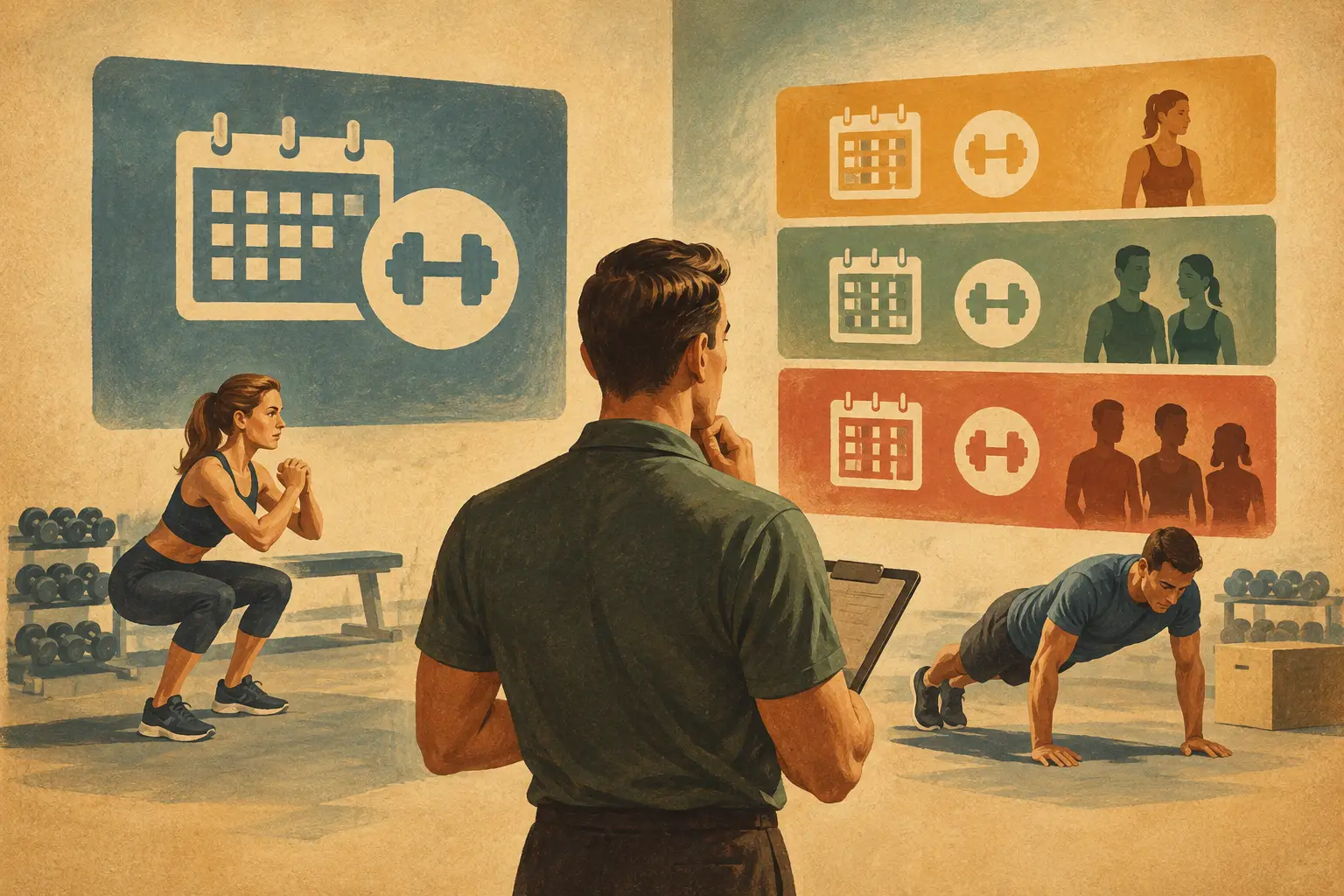
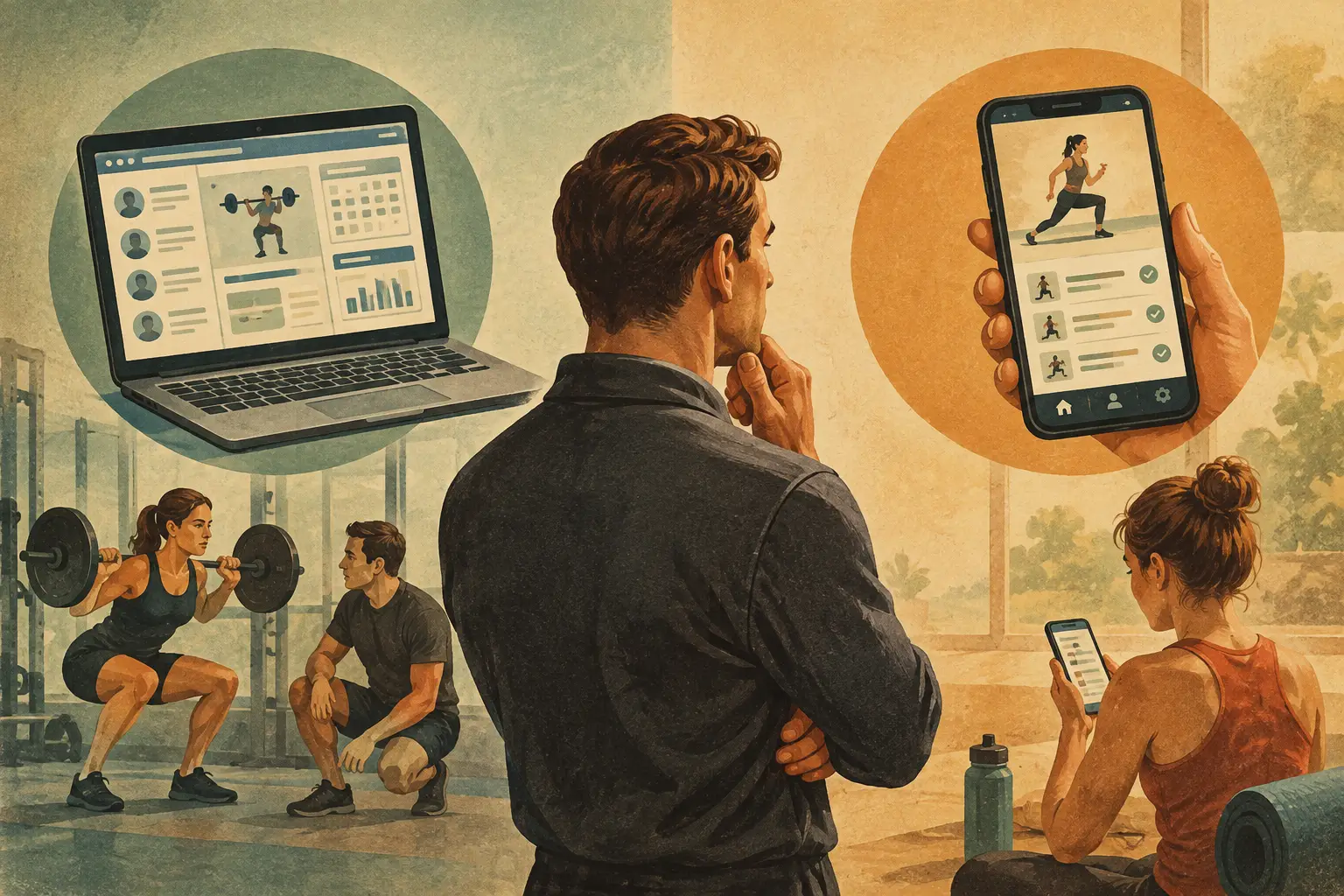
Many people start their health journey by downloading a nutrition tracking app like MyFitnessPal, which helps nearly one million members reach their goals every year. They might also use a separate workout app, a fitness journal, or a spreadsheet for training logs. This fragmented approach can feel manageable at first, but over time the cost in both time and money adds up. For fitness coaches managing multiple clients, the problem multiplies. Data entry becomes a daily chore, subscriptions pile up, and it becomes harder to see the full picture of a client’s progress. An all-in-one solution eliminates those inefficiencies and delivers better results for everyone involved.
The Fragmented Approach to Health Tracking
The app market is crowded with specialized tools. Research on digital nutrition applications notes that popular solutions include MyFitnessPal, LoseIt!, and Fitbit. These apps excel at food logging and calorie counting. On the fitness side, coaches and athletes turn to workout trackers, fitness journals, and training apps. The problem is that these tools rarely talk to each other. A coach might ask a client to log meals in one app and workouts in another, then manually combine the data. The Reddit post about organizational tools for fitness highlights that while nutrition tools handle planning and logging, fitness tools take a different approach. That separation creates extra work.
The confusion extends to clients as well. They must remember which app to open for each task, leading to missed logs and incomplete data. Research shows that digital nutrition solutions are popular, but users often stop logging within a few weeks because the process feels like a second job. When the tools are separate, that friction increases. Coaches end up spending more time chasing data than analyzing it.

The Hidden Costs of Using Separate Tools
Time Wasted on Manual Data Entry and Syncing
Every time a client logs a workout in one app and a meal in another, someone has to bring that information together. For the coach, that means manually copying numbers into a spreadsheet or another dashboard. Even simple checks require logging into two or three platforms. The best fitness journals, according to a fitness coach, allow tracking of preferred metrics, but they are still separate from nutrition logs. With one integrated platform, a coach can see training loads, meal compliance, and client feedback all in one view. That saves hours each week that can be reinvested into coaching.
Higher Financial Expenses for Multiple Subscriptions
Premium nutrition apps like MyFitnessPal offer extra features for a fee. Workout platforms often charge per client or per month. A coach paying for a nutrition app, a training app, and maybe a check in tool can easily spend more than the cost of a single all-in-one platform. By avoiding multiple subscriptions, a coach keeps more of their revenue. Integrated platforms like CoachingPortal offer a free forever plan for up to five clients with all features included, which means no per-client overage fees and no transaction costs. That flat-rate pricing is a direct financial advantage over the separate tools approach.
Inconsistent Client Experience and Compliance Issues
When clients use different apps for different tasks, they are more likely to miss entries. A client might log their breakfast in MyFitnessPal but forget to record their afternoon workout in a separate app. The coach then sees incomplete data and cannot accurately assess compliance. Research on digital nutrition solutions shows that consistent logging is key to success, but separate tools make consistency harder. An integrated platform that combines nutrition and fitness in one interface encourages clients to log everything because they never have to switch contexts. That leads to higher compliance rates and better outcomes.

Why an All-in-One Solution Solves the Problem
CoachingPortal is designed as a single platform that unifies training program design, nutrition planning, client management, and communication. Coaches running their entire roster from one white-labeled tool eliminate the headaches of separate subscriptions and manual syncing. Instead of jumping between apps, the coach opens one dashboard to see training compliance, meal logs, check-in responses, and messages. The system even includes AI features such as CoachGPT, which summarizes client check-ins into wins, concerns, and suggested changes, and Food AI, which suggests meal swaps when macros are off. This level of integration is not possible when using separate fitness and nutrition tools.
Unified Training and Nutrition Planning
With an integrated platform, building programs and meal plans happens in one place. CoachingPortal includes a meal plan builder with access to over one million foods from FatSecret, more than 17,000 recipes, a barcode scanner, real-time macro calculations, and auto-generated grocery lists. The training side offers a program builder with auto-periodization, RIR based load adjustment, and automatic deloads when fatigue patterns appear. When both are in the same system, the coach can adjust nutrition based on training volume and vice versa without exporting and importing data.
Client Compliance and Analytics in One Dashboard
Weekly check-ins, client dashboards, and compliance analytics are all native features of CoachingPortal. A coach can see whether a client hit their macro targets and completed their prescribed workouts side by side. The platform also supports steps integration via Apple Health and Health Connect, and includes a client community with leaderboards and challenges. All of this data feeds into the same reporting, making it easy to spot trends. A coach using separate tools would need to manually correlate workout logs with nutrition logs, which is time-consuming and error-prone.
Cost-Effective Pricing for Coaches
The free plan at CoachingPortal supports up to five clients with every feature included, no trial expiry, and no credit card required. For coaches with more clients, the flat-rate pricing eliminates per-client overage charges. This model directly contrasts with paying for a nutrition app subscription plus a training app subscription plus a separate check-in tool. By bringing everything under one roof, the coach saves money and removes the administrative burden of managing multiple vendor accounts.

The Growing Demand for Integrated Health Tools
Digital nutrition applications are used by a wide audience, but the trend is moving toward platforms that combine fitness and nutrition. Services like Strongr Fastr offer AI-powered meal planning and workout adaptation in one experience. However, for professional coaches who need client management, billing, and communication, a purpose-built coaching platform is more appropriate. The research confirms that popular apps like MyFitnessPal and Fitbit are widely used, but they lack the multi-client management features that coaches require. An integrated platform bridges that gap.
Evidence-Based Features Save Time and Improve Results
CoachingPortal grounds its automation in peer-reviewed science, including studies by Zourdos et al. on RIR autoregulation, Schoenfeld et al. on volume and hypertrophy, and ISSN/Jager et al. on nutrition guidelines. Auto-periodization adjusts training loads based on fatigue patterns, and the RIR based load adjustment reduces the need for constant manual recalculations. On the nutrition side, the BMR and TDEE calculator ensures meal plans are personalized. All of these features work together automatically because they are part of the same platform. That is a time saving that separate tools simply cannot match.
Switching from separate fitness and nutrition tools to an integrated platform like CoachingPortal eliminates duplicate work lowers costs and improves client compliance. The hours saved each week from manual data entry and the money saved from multiple subscriptions add up quickly. For coaches who want to focus on coaching rather than admin work, an all-in-one solution is the clear choice.