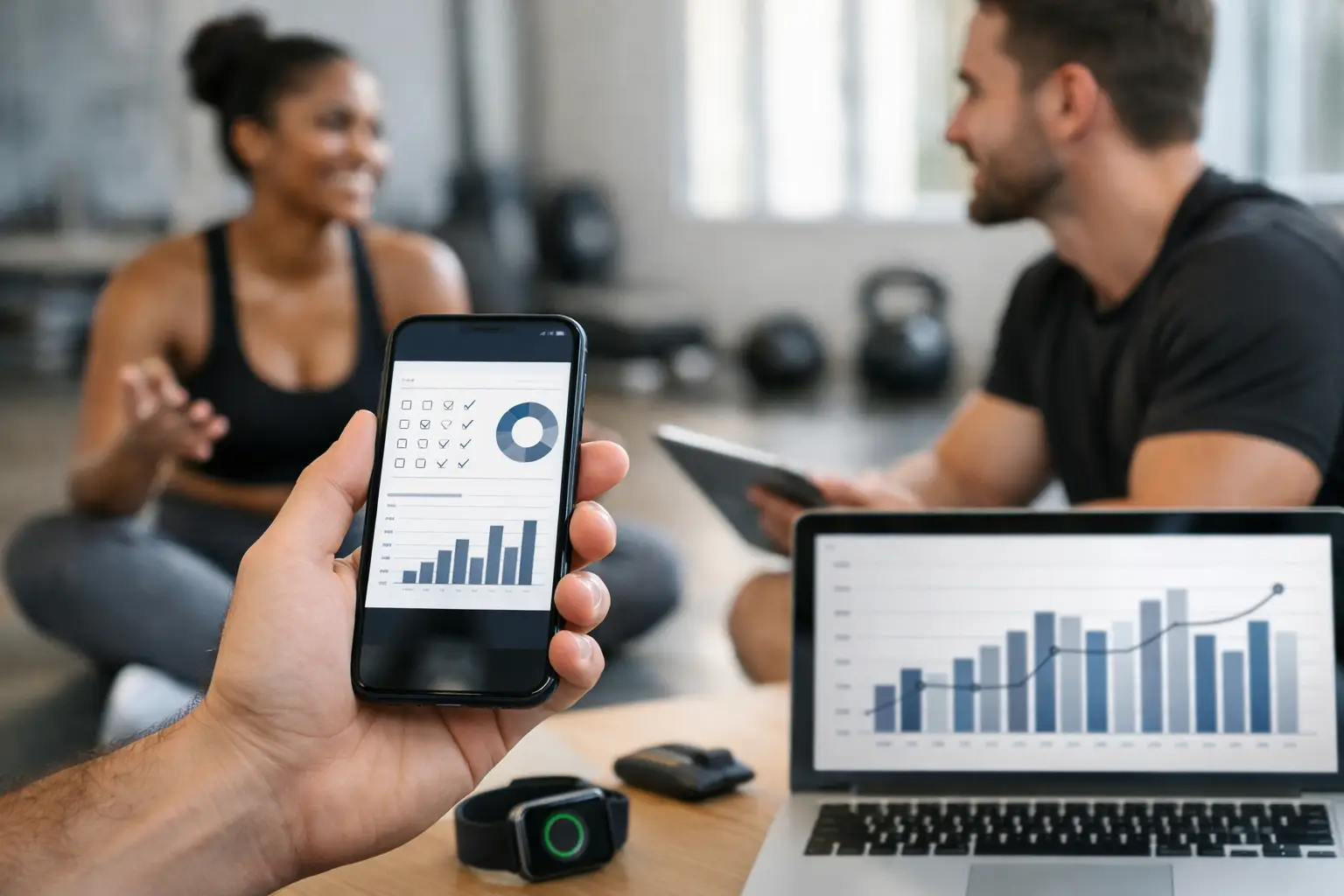
A habit tracking app for fitness coaches should do more than collect checkmarks. Its job is to make the behaviors behind client outcomes visible: meals logged, steps completed, water targets hit, sleep protected, training sessions finished, and recovery habits followed. When those actions live in a separate tracker, a spreadsheet, or a weekly text message, the coach loses the context needed to make fast, confident decisions.
For an online coach managing a growing roster, habit tracking is not a motivational add-on. It is operational data. The right system shows whether a client is struggling with program design, nutrition execution, recovery capacity, or simply consistency before their check-in becomes another vague explanation of a disappointing week.
What a Habit Tracking App for Fitness Coaches Must Solve
Most clients do not fail because they lack a plan. They fail because the plan is not translated into repeatable daily actions and reviewed often enough to create accountability. A macro target matters, but so does whether the client logged food four days out of seven. A 10,000-step goal sounds useful, but it has limited coaching value if the coach only sees the monthly average after body composition progress stalls.
A strong habit tracking system closes that gap. It gives clients a low-friction way to report completion each day, then gives the coach a clear view of patterns across the week. That distinction matters. Tracking habits is easy. Turning tracked habits into better coaching decisions is where most generic wellness apps fall short.
For fitness and nutrition professionals, the platform should connect adherence to the rest of the coaching workflow: the training plan, meal plan, check-in data, progress photos, body weight trends, messages, and program adjustments. Otherwise, coaches are still manually reconciling data from disconnected tools.
Daily adherence needs context
A green checkmark for "workout completed" is useful, but not sufficient for a strength coach. Did the client complete the prescribed session? Did they report the target RIR? Was performance down across multiple lifts? Did poor sleep coincide with reduced training compliance? Context is what turns a habit tracker into coaching infrastructure.
The same applies to nutrition. A client may mark nutrition as compliant while consistently under-consuming protein, skipping breakfast before training, or missing their calorie target on weekends. The best workflows combine subjective habit completion with objective food, macro, and meal-plan data. That lets coaches address the real bottleneck instead of giving generic reminders.
The client experience has to be simple
Clients will not sustain a complicated tracking process, especially during busy workweeks, travel, social events, or stressful periods. The daily interaction should take seconds on a phone. If reporting a habit requires opening several screens, calculating values manually, or remembering a separate login, adherence to the tracker becomes the next habit problem.
A mobile-first experience also changes the timing of accountability. Clients can check off steps after an evening walk, log meals as they eat, and review tomorrow's training before arriving at the gym. Coaches receive cleaner information without chasing updates through text threads.
Choose Habits That Actually Move Results
The biggest mistake in habit tracking is creating a long list of behaviors because they sound healthy. More targets do not automatically create more compliance. They often create decision fatigue, especially for clients who already feel behind.
Start with the smallest number of actions that address the client's current limiting factor. A beginner whose calorie intake is inconsistent may need meal logging, a protein target, and a daily step goal. An experienced physique athlete in a high-volume training block may benefit more from training completion, sleep duration, pre-session carbohydrate intake, and a recovery rating.
Habit targets should also change as the coaching phase changes. During a fat-loss phase, steps, food logging, and weekend nutrition structure may deserve more attention. During a strength-focused block, exercise execution, RIR accuracy, sleep, and pre-training nutrition can matter more. The tracker should reflect the current plan, not a static wellness checklist copied from client to client.
A useful rule is to separate outcome metrics from process behaviors. Scale weight, circumference measurements, and strength performance are outcomes. Logging meals, completing planned sessions, walking after lunch, and hitting a bedtime window are processes. Coaches cannot control an outcome on a given day, but they can build a system around controllable behaviors.
Turn Compliance Data Into Better Check-Ins
Weekly check-ins should not begin with, "How was your week?" They should begin with the evidence. When habit completion, training adherence, nutrition compliance, and recovery data are already visible, the coach can spend less time gathering information and more time interpreting it.
Consider a client whose weekly average weight has not changed during a calorie deficit. If food logging was completed only three days, step compliance dropped, and weekend meals were untracked, the adjustment is not automatically a lower calorie target. The immediate coaching opportunity is adherence. Reducing calories before fixing execution can make the plan harder and less sustainable.
Now consider the opposite scenario: nutrition and step compliance are consistently high, body weight is stable over multiple weeks, hunger is manageable, and training performance is holding. That is a stronger case for a measured calorie or activity adjustment. Habit data protects coaches from changing variables too quickly.
The same logic applies to fatigue. A client who misses sessions, reports poor sleep, and shows declining performance may not need more motivation. They may need a deload, lower volume, a revised schedule, or a conversation about recovery demands outside the gym. Evidence-based coaching requires more than a program template. It requires feedback loops that reveal when the template no longer fits the person.
Use automation to surface exceptions, not replace judgment
Automation is most valuable when it directs attention. A coach does not need another dashboard that requires an hour of interpretation each Monday. They need the system to flag the client whose adherence dropped, whose fatigue trend is building, or whose check-in signals a decision is needed.
That is especially important when a business grows beyond a handful of clients. Manual review does not scale linearly. The more clients a coach serves, the more likely important signals are buried in messages and spreadsheets. Automated summaries and compliance views can reduce administrative work while leaving the coaching judgment where it belongs: with the professional who understands the client's history, goals, constraints, and readiness.
CoachingPortal brings this workflow together by combining daily adherence tracking with training delivery, nutrition and meal planning, weekly check-ins, compliance analytics, messaging, and AI-generated check-in summaries in one white-labeled client experience. Rather than asking clients to move between apps, coaches can connect habits directly to the program they are expected to follow.
Build Accountability Without Creating Surveillance
Daily tracking can strengthen client accountability, but only when the coaching relationship is framed correctly. Clients should understand that habit data is not a pass-fail scorecard. It is a tool for identifying friction early and adjusting the plan before a difficult week turns into a lost month.
This is particularly relevant for clients with demanding careers, parents managing unpredictable schedules, and people rebuilding consistency after years of all-or-nothing behavior. A missed habit should create useful information. Was the target unrealistic? Did the client lack a practical plan? Was the environment working against them? Did the coach prescribe too much change at once?
Coaches can reinforce this by responding to patterns, not policing single missed days. One unlogged meal does not require a corrective message. Four unlogged days combined with stalled progress may require a direct conversation and a simpler nutrition strategy. The tone should be clear and accountable, but never punitive.
Evaluate the Platform Through a Coaching Business Lens
A standalone habit tracker may work for a coach with a few local clients, especially if their service is simple. But as the roster grows, the hidden cost is fragmentation. Each additional app creates another invitation, another login, another place to review data, and another opportunity for clients to disengage.
When evaluating software, ask whether habits can be tailored by client and phase, whether data is visible alongside training and nutrition adherence, and whether the coach can act on the information without exporting reports. Also consider branding. A client experience that carries your business name, colors, and communication style reinforces that they are receiving a professional coaching service, not a collection of consumer apps.
Pricing structure matters as well. Per-client fees can make it harder to confidently add lower-touch clients, group coaching members, or nutrition-only clients. A flat-rate platform provides more predictable margins as the business expands. The best choice depends on your delivery model, but the system should support growth rather than make every new client feel like another software bill.
The real value of habit tracking is not a higher number of completed checkboxes. It is a coaching operation where clients know the next action, coaches see the behaviors that drive results, and adjustments are made from evidence instead of assumptions. Start with the few habits that matter most, make them easy to report, and let the data create more useful conversations every week.