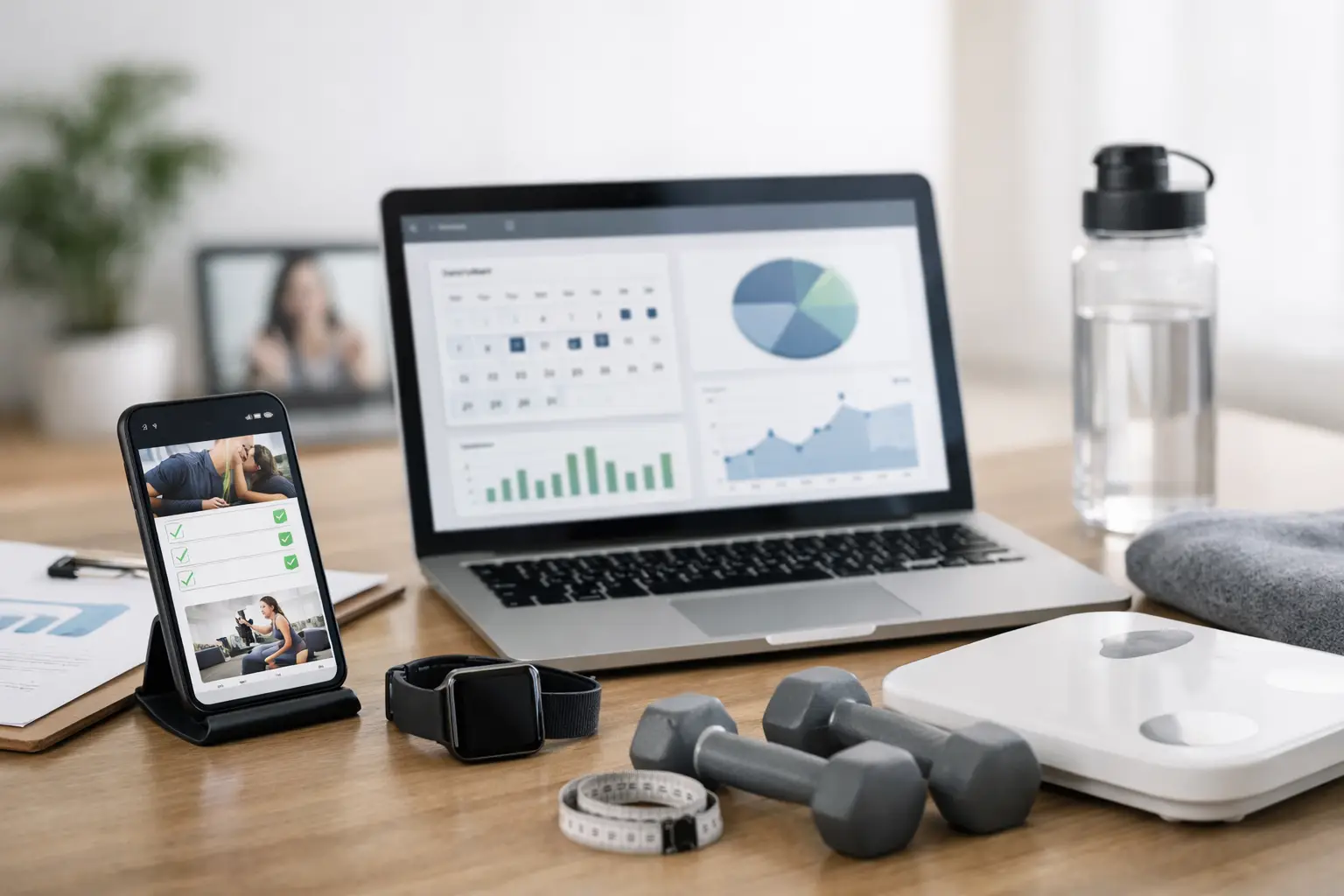
A client who misses two workouts is not necessarily unmotivated. More often, they are navigating an unclear program, a forgotten meal target, a missed check-in, and a coaching experience spread across too many apps. The best tools for client adherence reduce those points of friction so the right action is always obvious, accessible, and connected to the coach’s feedback.
For online fitness and nutrition coaches, adherence is not a side metric. It is the operating system behind client results, renewals, referrals, and predictable recurring revenue. Better programming matters, but even the most intelligent plan produces little when clients cannot follow it consistently. The right technology helps you turn intent into repeatable behavior without turning your coaching service into a full-time admin job.
What Client Adherence Tools Need to Solve
Adherence is often framed as a willpower problem. In practice, it is a systems problem. Clients need to know what to do today, log what happened with minimal effort, understand whether they are on track, and receive support before a small lapse becomes a disengaged month.
A useful coaching stack closes that loop. It delivers training and nutrition clearly, captures compliance data, gives clients a reason to check in, and lets the coach respond based on patterns instead of scattered messages and guesswork. If a tool adds steps for the client or forces the coach to chase updates manually, it can work against adherence even if its feature list looks impressive.
The strongest setup also recognizes that adherence is not perfection. A client may hit 80% of planned sessions, make smart food swaps, and still progress well. Your tools should show the difference between a temporary disruption and a meaningful pattern that requires a program, nutrition, or accountability adjustment.
Best Tools for Client Adherence: The Core System
The best approach is usually not a collection of disconnected apps. It is an integrated coaching platform with specialized capabilities that work from the same client record. Here are the functions that create the biggest adherence gains.
1. A mobile-first training delivery tool
Clients should be able to open their plan, see the day’s workout, understand exercise instructions, log sets, and move on. When workouts live in a spreadsheet, a PDF, and a separate tracking app, every extra handoff creates another chance to delay or skip the session.
Look for exercise-level tracking, clear progression targets, and a client dashboard that makes completed versus missed sessions visible. For strength and physique coaching, RIR-based logging is particularly valuable. It gives clients a practical way to report effort while giving the coach context beyond whether a set was simply marked complete.
Training delivery should also be flexible enough to account for real life. A rigid calendar can make a client feel behind after one missed day. A program that supports logical session sequencing and quick coach adjustments helps clients restart rather than abandon the week.
2. Nutrition and meal-planning tools in the same client experience
Nutrition adherence falls when food tracking becomes a separate project from training. Clients are more likely to follow targets when meal plans, macro goals, grocery lists, recipes, and food logging live beside the program they are already opening for workouts.
The practical features matter. A large food database, barcode scanning, real-time macro calculations, and realistic meal-swap options reduce the effort required to stay within targets. Grocery lists can be especially useful for busy clients because they turn a nutrition plan into an action they can complete before the week gets chaotic.
Do not confuse a highly restrictive plan with a highly adherent one. Some clients thrive with detailed meals; others need calorie and protein targets with flexible food choices. Your nutrition tool should support both models, then make it easy to see which one produces better consistency for that individual client.
3. Structured weekly check-ins
Weekly check-ins are where adherence data becomes coaching decisions. A message asking, “How was your week?” invites vague answers. A structured check-in captures the information you need: body weight trends, progress photos when appropriate, sleep, stress, hunger, energy, digestion, training performance, obstacles, and confidence for the coming week.
The key is balance. A check-in that takes 20 minutes will eventually be skipped. A check-in with only a scale weight tells you very little. Use a short, repeatable form and tailor optional questions to the coaching goal. A fat-loss client dealing with hunger may need different prompts than a powerlifter approaching a competition.
For the coach, check-in summaries should make exceptions obvious. You need to quickly spot the client whose sessions dropped from four to two, whose sleep has deteriorated for three weeks, or whose nutrition consistency is improving despite a stalled scale trend. That is how you intervene early and avoid unnecessary program changes.
4. Compliance analytics that show trends, not just logs
Raw data does not improve adherence. Clear feedback does. Compliance analytics should show planned versus completed workouts, nutrition consistency, check-in completion, and changes over time. The coach needs a roster-level view to prioritize attention, while the client needs a simple view that reinforces progress.
This is where many coaches regain hours each week. Rather than opening every client file and scanning messages, they can identify who needs a nudge, who deserves positive reinforcement, and who may be ready for a more advanced progression. The goal is not to monitor clients more aggressively. It is to deliver better-timed coaching.
Be careful with how client-facing compliance scores are presented. For detail-oriented clients, a score can create momentum. For clients with a history of all-or-nothing thinking, it can create shame after an imperfect week. Use metrics as a conversation starter, not a grade.
5. Messaging and automated accountability prompts
Fast, contextual communication removes a major barrier to follow-through. A client should not have to search through text threads to ask about a substitution, report a painful movement, or clarify a macro target. In-platform messaging keeps those conversations connected to their plan and easier to reference later.
Automation handles the predictable moments: a reminder to complete a check-in, recognition for finishing a training block, or a prompt after several days of inactivity. But automation should support the relationship, not impersonate it. Generic daily messages lose impact quickly. The best systems use automation to surface the right moment for a real coaching response.
6. Adaptive programming tools
Adherence suffers when the program no longer matches the client’s recovery or schedule. A client who repeatedly fails prescribed loads may not need more motivation. They may need an autoregulated adjustment, a lower fatigue week, or a more realistic training frequency.
Tools that support RIR-based load adjustments, periodized blocks, and fatigue-informed deload scheduling let coaches protect momentum without rebuilding every program from scratch. This approach aligns with evidence-based practice: training quality depends on an appropriate stimulus and recoverable workload, not on forcing every client through the same fixed progression.
How to Choose the Right Platform for Your Coaching Model
Before adding another app, map the client journey from onboarding through renewal. Where do clients lose momentum? If they skip workouts because they cannot find the program, delivery is the issue. If they train consistently but miss nutrition targets, simplify food tracking and meal planning. If they disappear after week three, your check-in cadence and communication may need work.
Then evaluate platforms on three practical criteria: client friction, coach visibility, and operational scale. Can a client complete their daily actions from one mobile experience? Can you identify adherence risks in minutes? Can the system support more clients without adding the same amount of manual follow-up?
CoachingPortal is built around that integrated workflow, combining training delivery, meal planning, weekly check-ins, compliance analytics, messaging, and evidence-based automation in one white-labeled client experience. For coaches who have outgrown spreadsheets and disconnected tools, that consolidation means fewer handoffs for clients and a more scalable service behind the brand they are building.
Pricing also deserves scrutiny. Per-client fees can punish growth, while limited plans may force you to bolt on separate tools as your roster expands. A flat-rate platform with the features you actually use can make your operating costs more predictable and protect margins as retention improves.
Build Adherence Into the Coaching Experience
Technology cannot make a client care, but it can make the next right action easier than avoidance. Start with one clear daily action, whether that is completing a session, logging meals, or checking a step target. Reinforce completed actions visibly. Use weekly data to solve barriers before they become identities like “I am just not consistent.”
The most effective client adherence system feels simple on the client side and intelligent on the coach side. When clients can see the plan, complete it, and get meaningful support without switching between tools, consistency becomes less dependent on motivation and more dependent on a coaching process designed to hold up in real life.