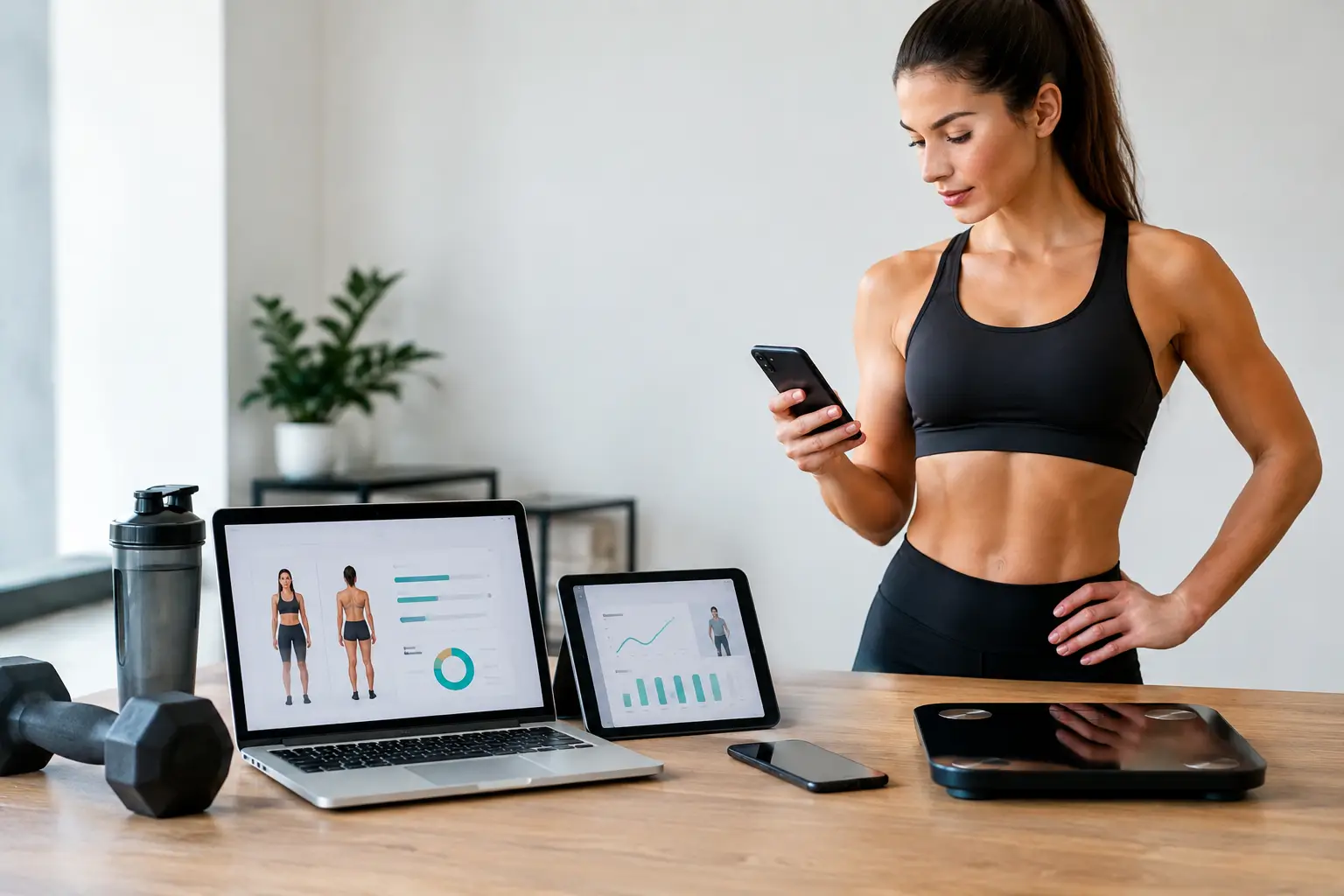
A workout builder software review should not start with an exercise library or a prettier calendar. Those features matter, but they do not determine whether your coaching operation becomes more scalable or simply moves the same manual work into a new dashboard. The real question is whether the software helps you deliver better decisions, maintain a high-touch client experience, and protect your time as your roster grows.
For online strength, physique, and nutrition coaches, the right platform is infrastructure. It needs to support the way you prescribe training, react to client feedback, monitor adherence, and keep training and nutrition connected. A program builder that only creates workouts may be useful. A platform that turns programming, check-ins, nutrition, communication, and reporting into one operating system is far more valuable.
What a workout builder must do for real coaches
A basic builder lets you assign exercises, sets, reps, and rest periods. That is table stakes. Professional coaching software should make sophisticated programming easier to execute consistently, especially when every client has different goals, training ages, schedules, equipment access, and recovery capacity.
Start with program architecture. You should be able to build reusable templates, organize sessions logically, duplicate and modify blocks quickly, and assign individualized training without rebuilding every program from scratch. This matters when a client moves from a hypertrophy phase into a strength-focused block, returns from travel, or needs a lower-volume week after a demanding work period.
The exercise experience also deserves scrutiny. Coaches need clear exercise demonstrations, coaching cues, substitutions, and a simple way to account for available equipment. On the client side, logging should feel fast enough to use in the gym. If training data is difficult to enter, your adherence data becomes incomplete, and incomplete data leads to weaker coaching decisions.
The strongest builders go beyond static prescriptions. Research on autoregulation, including RIR-based approaches discussed by Zourdos and colleagues, supports adjusting effort based on a client’s actual readiness rather than pretending every session happens under ideal conditions. A capable platform should let you prescribe and track RIR, recognize performance trends, and support load adjustments without forcing you into a spreadsheet after every check-in.
Workout builder software review criteria that affect growth
Most software comparisons overvalue the visible interface and undervalue workflow. A polished program screen does not help if you still have to open three other tools to review photos, answer questions, revise macros, and calculate compliance.
Assess each platform against the full client lifecycle: onboarding, program delivery, daily logging, weekly review, adjustment, retention, and renewal. That lens exposes the gap between a workout app and a coaching platform.
Programming depth without programming drag
Look for support for multi-week and multi-block periodization, not only standalone weekly plans. Coaches should be able to progress volume, intensity, exercise selection, and effort targets across phases while retaining the ability to intervene when the client’s recovery says the plan needs to change.
Automation should reduce repetition, not remove coaching judgment. Automatic deload recommendations based on fatigue patterns can save time, but a coach still needs to decide whether poor performance reflects accumulated fatigue, sleep disruption, under-fueling, pain, poor execution, or low effort. The best systems surface the relevant signal and make the adjustment easy.
Volume tracking is another practical differentiator. Schoenfeld’s work on training volume and hypertrophy reinforces a familiar coaching reality: more work is not automatically better, and productive volume must be matched to the person performing it. Software should help you see what the client is actually completing, not just what you originally assigned.
Nutrition cannot be an afterthought
For physique, fat-loss, and general population clients, training and nutrition are one coaching conversation. A workout builder that treats meal planning as a separate add-on creates unnecessary friction for both the coach and the client.
Evaluate whether nutrition features are built into the same client experience. Useful functionality includes an extensive food database, recipe support, barcode scanning, real-time macro tracking, meal templates, grocery lists, and calculators that help establish BMR and TDEE estimates. More importantly, the nutrition workflow should let you see adherence beside training performance, bodyweight trends, recovery, and check-in responses.
This integrated view changes the quality of adjustments. If a client misses loads for two weeks, the right response may not be to reduce training volume. Their check-in may reveal low calories, poor sleep, or inconsistent meal timing. Nutrition guidance informed by established sports nutrition positions, such as those published by the International Society of Sports Nutrition, should be practical enough to use at scale rather than trapped in a separate app.
Check-ins and compliance data should drive action
Weekly check-ins are where personalized coaching either scales or stalls. If you are manually reading long forms, copying key notes into client files, and trying to remember last week’s concerns, the process eventually becomes the bottleneck.
Strong software centralizes check-in data and makes patterns visible. Coaches should be able to review body metrics, progress photos, subjective recovery, training performance, steps, nutrition adherence, and client messages in context. Compliance analytics are especially useful because they distinguish a program problem from an execution problem. A client who is 95% compliant and stalled needs a different intervention than a client completing half the plan.
AI can help when it is used as an assistant, not a substitute for expertise. A check-in summary that flags wins, concerns, and potential adjustments can reduce review time substantially. It should not generate generic coaching advice without access to the client’s actual history. The coach remains accountable for the decision; the system should reduce the administrative distance between information and action.
Client experience is part of your retention strategy
Clients do not separate your coaching from the software they open every day. If the app is confusing, generic, or inconsistent, it weakens the perceived quality of your service even when your programming is excellent.
Prioritize native mobile access, reliable mobile web functionality, intuitive workout logging, and clear messaging. Step syncing through Apple Health and Health Connect can also make activity monitoring more accurate without creating another task for the client. Community, challenges, and leaderboards can improve engagement for the right business model, though they are not essential for every high-ticket one-to-one coach.
White-labeling deserves more attention than it gets in most reviews. Your logo, colors, custom subdomain, and branded client emails create continuity from the first invitation through every training session. This is not cosmetic. A branded environment reinforces that clients joined a professional coaching business, not a collection of disconnected third-party tools.
Pricing reveals whether a platform can scale with you
Do not compare plans only by the monthly sticker price. Compare the total cost of your stack, including programming software, nutrition tracking, forms, messaging, automation tools, and any per-client charges that increase as you grow.
Per-client pricing can be reasonable for a small roster, but it can become a margin problem when growth is the objective. Flat-rate pricing creates more predictable economics, particularly for coaches building recurring revenue. A free plan is only useful if it includes the features required to test your actual workflow, not a stripped-down version that forces a decision before you can validate fit.
CoachingPortal is positioned for coaches who need training design, meal planning, check-ins, compliance analytics, messaging, AI-assisted review, and white-label delivery in one platform. Its free-forever plan for up to five clients gives independent coaches a practical way to test the full operating model before expanding, while flat-rate pricing avoids a surprise fee for every new client.
How to make the final decision
Before committing, run a realistic test with a small group of current clients or representative test profiles. Build a multi-week program, assign a meal plan, complete a check-in, adjust a training variable, review compliance, and use the client app from the athlete’s perspective. A demo can make any platform look efficient. Your real workflow will reveal whether it is.
Choose the software that makes it easier to deliver your coaching standard repeatedly, not the one with the longest feature list. When your programming logic, nutrition support, client data, and brand experience live in the same place, you spend less time managing tools and more time making the decisions clients are paying you for.