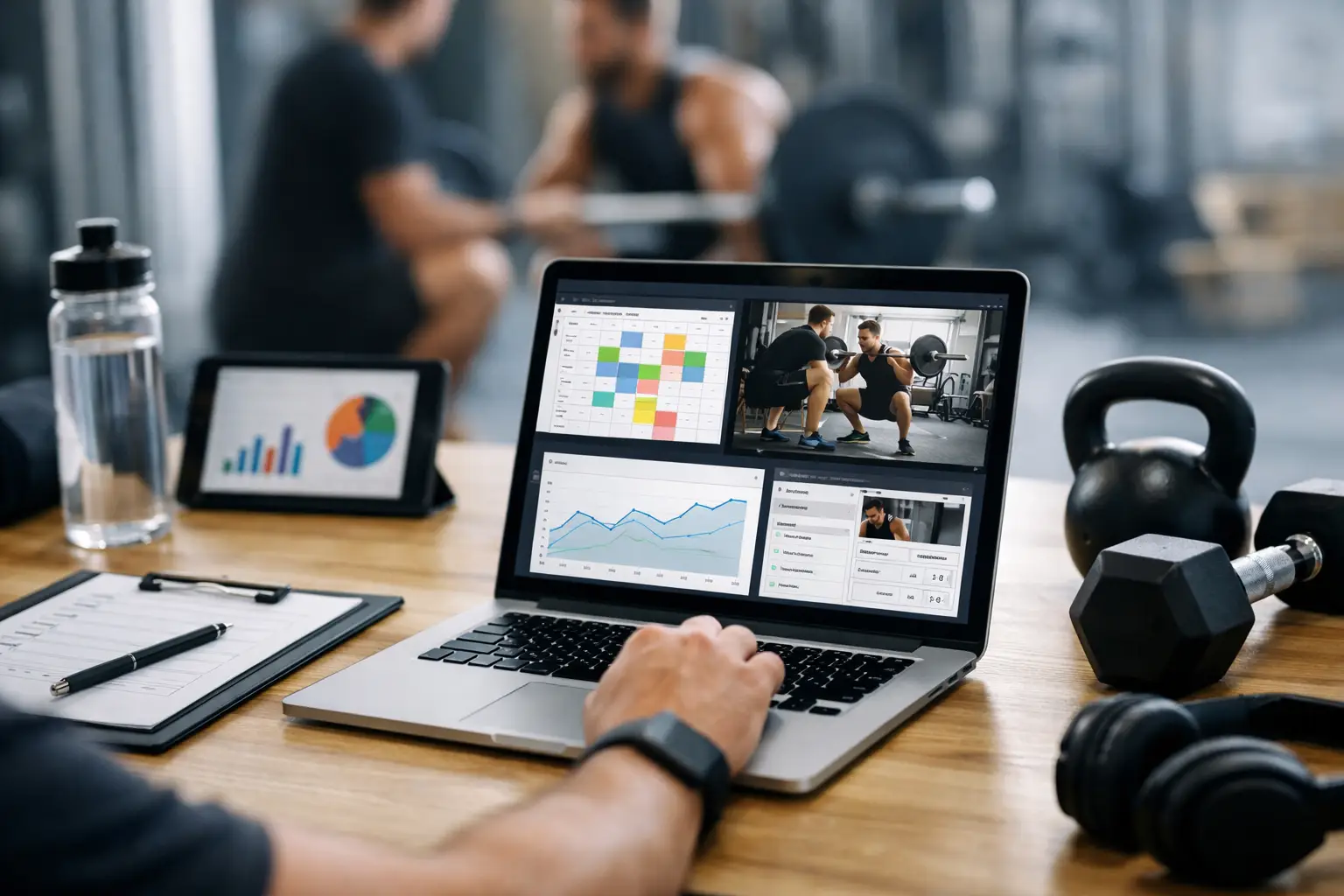
A strength coach can build a world-class program and still lose clients because the delivery system feels disorganized. Missed check-ins, scattered nutrition documents, unread messages, and manually updated spreadsheets create friction that clients interpret as a lack of support. The top software for strength coaching businesses fixes that operational gap without turning coaching into a generic app experience.
The right choice depends on how you coach. A coach running high-volume one-on-one physique transformations needs different tools than a trainer delivering repeatable strength templates to a large hybrid roster. The best platforms do more than host workouts. They help you prescribe, monitor, adjust, communicate, and present your business like a professional coaching operation.
What strength coaching software must handle
Strength coaching is not simply assigning exercises. Your software needs to support progression models, RIR or RPE targets, training blocks, exercise substitutions, session feedback, and adjustments based on performance and recovery. If a platform makes programming slow or forces you to work around its limitations, it becomes another admin task instead of an operating system.
Nutrition matters just as much for most strength and physique clients. A client can execute every top set and still stall if calorie intake, protein targets, meal adherence, and recovery are off. That is why a training-only platform can create a fragmented client experience. Coaches end up using one app for programming, another for food logging, a form tool for check-ins, and messaging software to connect the dots.
Before comparing platforms, assess whether you need these core capabilities:
- Flexible program design for individualized strength training
- Client check-ins, progress tracking, and adherence reporting
- In-app nutrition and meal planning tools
- Direct messaging and a polished mobile client experience
- Automation that reduces repetitive decisions without removing coach oversight
- Branding controls that make the platform feel like your business
A platform does not need every feature for every coach. But if your business sells high-touch coaching, the software should reduce the number of places clients need to go for answers.
Top software for strength coaching businesses: the main options
CoachingPortal for integrated strength and nutrition coaching
CoachingPortal is built for coaches who want programming, nutrition delivery, check-ins, client management, and automation in one branded environment. That matters when your service is based on the relationship between training performance, food intake, recovery, and compliance rather than isolated workout delivery.
Its program builder supports structured training design, while auto-periodization can organize multi-block plans and use RIR-based load adjustments. This is especially useful for strength and physique coaches managing clients with different training ages, recovery capacities, and progression rates. RIR autoregulation has practical support in exercise science because it gives coaches a way to manage intensity based on a client’s actual readiness, not just the number written in a spreadsheet weeks earlier.
The nutrition side is not an afterthought. Coaches can build meal plans using a large food database, recipes, barcode scanning, real-time macros, grocery lists, and BMR/TDEE calculations. Food AI can suggest meal swaps when a client’s macros are off, while CoachGPT reviews weekly check-ins and highlights wins, concerns, and potential adjustments. The coach remains responsible for the decision, but the platform reduces time spent sorting through routine information.
For business owners, the white-label experience and flat-rate pricing are meaningful differentiators. Clients see your logo, colors, and branded subdomain rather than a third-party tool competing for attention. A free plan for up to five clients also gives newer coaches room to establish a professional delivery system before taking on more overhead.
TrueCoach for straightforward workout delivery
TrueCoach is a familiar option for trainers who prioritize clean workout delivery and simple client communication. Its appeal is speed: coaches can build sessions, assign programs, review completed workouts, and keep the client experience focused on training.
That simplicity can be an advantage for in-person trainers moving part of their business online or for coaches who sell relatively standardized programs. The trade-off is that businesses offering detailed nutrition coaching, advanced periodization, and comprehensive compliance management may need additional systems. Multiple tools can work, but they increase the chance that clients stop logging, miss messages, or receive inconsistent guidance.
Trainerize for hybrid trainers and broad client engagement
Trainerize is commonly used by personal trainers, studios, and hybrid fitness businesses. It offers workout delivery, habits, messaging, and integrations that can suit businesses combining in-person sessions with remote accountability.
Its broader fitness orientation is useful when a roster includes beginners, general-population clients, and group challenges. For a specialist strength coach, however, the key question is whether the programming workflow gives you enough control over progression, exercise logic, fatigue management, and coaching detail. A platform designed for broad engagement may not always match the needs of a coach running serious powerlifting, strength, or physique programming.
Everfit for a polished client experience
Everfit is often considered by online coaches who value a modern app interface, workflow automation, and client-facing polish. It can be a strong fit for service businesses where coaching includes training, habits, communication, and client progress tracking.
The decision comes down to depth. If your coaching model relies on complex periodization and tightly connected nutrition planning, examine how many manual workarounds are required. A clean interface is valuable, but it should not come at the expense of your ability to make evidence-based programming decisions quickly.
Practice Better for nutrition-led coaching practices
Practice Better is more closely aligned with nutrition, wellness, and health-coaching workflows. It can be useful for practitioners who need forms, scheduling, client records, protocols, and nutrition-oriented communication.
For strength coaches, it may be best when training is a supporting component rather than the center of the service. Coaches whose main deliverable is individualized resistance training will want to test how efficiently they can create sessions, track execution, review performance, and progress loads over time.
How to choose based on your business model
The best software is the one that matches the service you are actually selling, not the one with the longest feature list. Start with your delivery model.
If you coach strength athletes or physique clients one-on-one, prioritize flexible programming, subjective feedback, check-in analysis, nutrition adherence, and fast adjustments. Your clients need a system that can handle the reality of fluctuating readiness and changing goals. Research on volume and hypertrophy, including work by Schoenfeld and colleagues, reinforces why coaches must manage more than exercise selection. Weekly volume, recovery, effort, and nutrition all affect the outcome.
If you run a hybrid personal training business, look for mobile accessibility, recurring session visibility, habit support, messaging, and easy program reuse. You may value group features and challenges more heavily than advanced training block design.
If you sell templates or low-touch programs, speed and brand presentation may be your primary requirements. You still need a simple client experience, but a deep check-in process may be unnecessary until you add premium coaching tiers.
Finally, count your tools. If you currently use a spreadsheet for programming, a separate food tracker, an intake form, text messages, cloud folders, and payment software, your stack is costing more than subscription fees. It costs attention. Every handoff creates another point where a client can disengage or where your team can miss context.
Evaluate the workflow, not just the feature list
Most software demos look good when viewed one screen at a time. Test the full weekly workflow instead. Build a training block, assign nutrition targets, invite a test client, collect a check-in, review adherence, adjust the plan, and send a message. Then ask how many clicks, tabs, and exports were required.
Also assess what the client sees on Monday morning. Can they find their workout, log food, review targets, message you, and understand what matters this week? A powerful coach dashboard does not help if the client app feels confusing or disconnected.
Automation deserves the same scrutiny. Good automation surfaces patterns, schedules predictable work, and protects coaching time. Bad automation sends generic prompts that make clients feel managed by a bot. The strongest systems use automation to make a coach more responsive and consistent, not less personal.
A strength coaching platform should make your service easier to follow and harder to leave. Choose the software that lets you spend less time assembling information and more time making the decisions your clients are paying you to make.