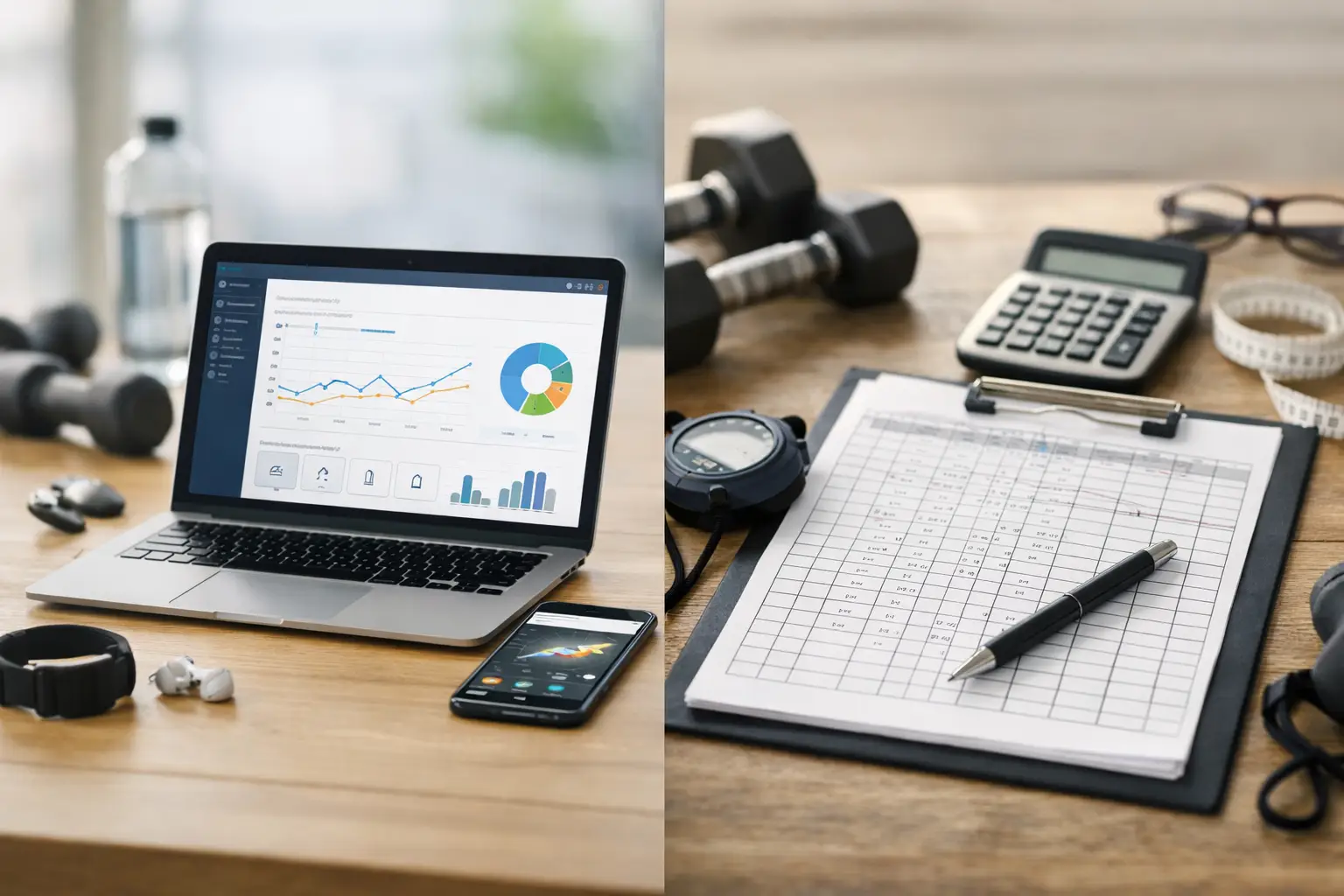
A coach with 25 clients can get away with spreadsheets longer than they should. A coach with 50 clients usually cannot. That is where the real coaching software vs spreadsheets decision shows up - not in theory, but in missed check-ins, delayed program updates, nutrition errors, and hours lost every week managing work that should already be automated.
For fitness coaches, nutrition coaches, and online personal trainers, spreadsheets are often the first operating system. They are cheap, familiar, and flexible. But flexibility is not the same as infrastructure. Once your service includes programming, habit tracking, nutrition targets, messaging, progress data, and recurring accountability, spreadsheets stop being a lean solution and start becoming a drag on delivery.
Coaching software vs spreadsheets: the real difference
This comparison is not really about tools. It is about how you run your coaching business and what kind of client experience you can sustain.
Spreadsheets are manual by nature. They store information well enough, but they do not actively manage coaching workflows. They do not analyze compliance, prompt the right next step, centralize communication, or turn scattered data into a usable coaching signal. A spreadsheet can hold a training plan. It cannot coach around it.
Coaching software is built around recurring client delivery. That matters because coaching is not static. Clients miss sessions, body weight trends shift, calories need adjustment, exercises need substitution, and adherence changes week to week. A proper platform helps you respond faster and more consistently because it is designed for the rhythm of real coaching.
If you coach a handful of low-touch clients, spreadsheets may still be enough. If you want to scale without lowering service quality, they usually are not.
Where spreadsheets still work
There is a reason spreadsheets are so common. They are inexpensive, customizable, and fast to start. A coach can build a basic exercise library, create a progress tracker, and map out calories or macros without paying for a platform. For a new business, that matters.
They also give experienced coaches a sense of control. You can structure tabs exactly how you like, create custom formulas, and tweak workflows on the fly. For analytical coaches, that level of freedom feels efficient at first.
The trade-off is that the system depends heavily on you remembering everything. You become the automation layer. You are the one checking whether a client submitted photos, whether their training volume progressed correctly, whether adherence dropped over the last two weeks, and whether their nutrition targets still match the phase of training.
That works until client volume rises, or until life gets busy, or until you add another service. Then the hidden cost of spreadsheets shows up in labor, inconsistency, and client friction.
Why spreadsheets break at scale
The biggest problem with spreadsheets is not that they are old school. It is that they create fragmented coaching.
Most coaches using spreadsheets are not just using spreadsheets. They are also using forms for check-ins, separate apps for messaging, another tool for meal guidance, maybe a calendar app for scheduling, and a notes app to keep track of context they do not want to lose. Now every client update lives in multiple places. Every weekly review takes longer than it should. Every handoff between data and action depends on memory.
That fragmentation hurts both efficiency and coaching quality. You spend more time assembling the story than acting on it. Instead of seeing compliance, body composition trends, workout performance, and habits in one view, you are stitching together signals from five different sources.
That matters because better outcomes usually come from consistent execution, not one-off brilliance. Research on behavior change and adherence keeps pointing back to monitoring, feedback, and structured accountability. Coaches know this intuitively. The issue is that spreadsheets make those systems harder to deliver consistently at scale.
What coaching software changes
The best coaching platforms do not just digitize your spreadsheet. They remove manual layers from the business.
Programming becomes faster because workouts, progressions, and periodization live inside a structured system instead of across copied tabs. Nutrition coaching gets cleaner when meal planning, macro targets, and food guidance are connected to the client record instead of spread across documents. Check-ins become more useful when they are standardized, trackable, and analyzed in context with training and body comp data.
That shift has a business effect and a coaching effect.
On the business side, you reduce admin hours. Fewer repetitive tasks means more room to sell, onboard, and retain clients. You also reduce the risk of dropping details as your roster grows.
On the coaching side, you make better decisions faster. A centralized system can surface patterns you would otherwise miss, especially when client adherence starts slipping. That is where automation earns its place. Not as a gimmick, but as a way to keep service quality high across more clients.
The client experience is where the gap gets obvious
Coaches often evaluate software based on their own convenience first. That is fair, but clients feel the difference even more clearly.
A spreadsheet-based experience can feel functional but disconnected. The client gets a training sheet here, nutrition guidance there, check-in questions somewhere else, and messages in a separate app. Nothing feels fully integrated. Even if your coaching is strong, the delivery can feel pieced together.
Dedicated coaching software gives clients one place to follow the plan, log data, review habits, complete check-ins, and communicate with you. That improves adherence because the next action is always easier to find. It also increases perceived professionalism. Clients are more likely to trust a process that feels organized, branded, and intentional.
That trust matters for retention. People stay longer when the coaching experience feels structured and responsive, not improvised behind the scenes.
Coaching software vs spreadsheets for programming and nutrition
This is where many high-level coaches hit the limit of spreadsheets fastest.
Programming is not just sets and reps. It is progression logic, exercise substitution, volume management, deload planning, and adaptation based on readiness and compliance. You can build all of that manually in a spreadsheet, but manual does not mean efficient. It means every update costs more time.
Nutrition coaching has the same problem. Macro changes, meal structure, food preferences, compliance trends, and body composition outcomes all interact. If your nutrition system lives in one sheet, your weekly check-in lives in a form, and your food recommendations live in a message thread, you are working harder than necessary to provide a service clients are paying premium rates for.
A platform purpose-built for coaching can connect these layers. That means programming, meal planning, compliance scoring, check-in analysis, and progression management can support each other instead of operating in silos. For coaches running evidence-based services, that creates a major advantage because the system helps translate data into action.
The cost question most coaches ask too late
Spreadsheets look cheaper because the subscription line is zero or close to it. But the true cost is time, complexity, and ceiling.
If you spend 8 to 10 extra hours each week managing admin that software could reduce, that is not free. If clients churn because the experience feels disjointed, that is not free either. If your delivery model depends on manual effort that cannot scale beyond your personal bandwidth, spreadsheets are costing growth even before they cost cash.
That does not mean every coach needs a platform on day one. It means the decision should be based on operating reality, not just monthly software cost.
For coaches who want to grow a serious recurring revenue business, infrastructure matters. A centralized coaching system becomes less of an expense and more of a capacity tool.
So which one should you choose?
If you coach a small number of clients, deliver a simple service, and genuinely enjoy managing your process manually, spreadsheets can still work. They are not useless. They are just limited.
If you want to save time, improve consistency, create a stronger client experience, and scale without your week turning into admin catch-up, coaching software is the better move. That is especially true for coaches combining training, nutrition, habits, messaging, and body composition tracking.
A platform like CoachingPortal is built for exactly that stage of growth, where disconnected tools start holding the business back. When programming, meal planning, check-ins, analytics, and automation live in one system, coaching gets sharper and operations get lighter.
The best setup is the one that lets you spend less time managing files and more time making high-value coaching decisions. That is usually the point where spreadsheets stop feeling scrappy and start feeling expensive.