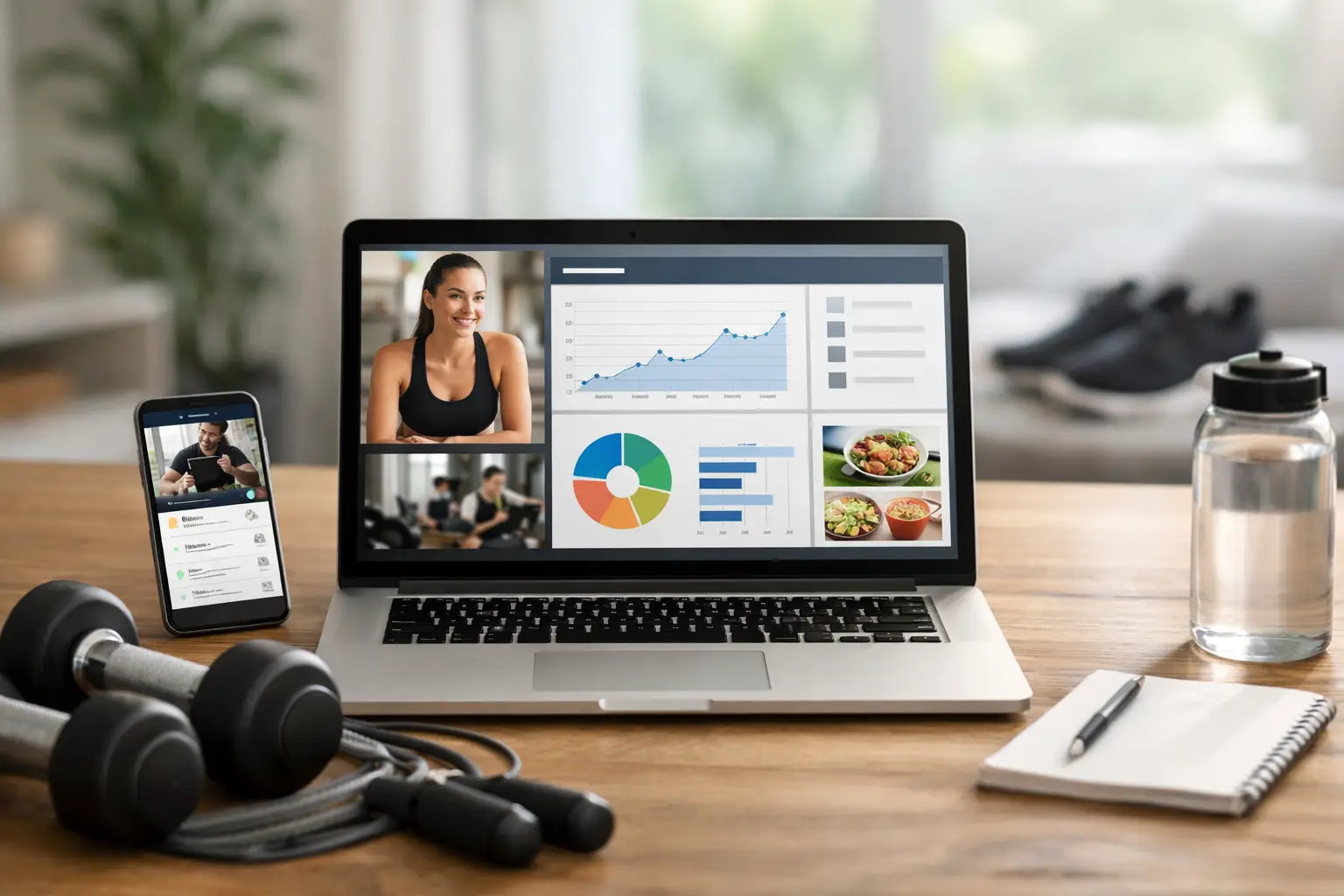
If your clients are checking workouts in one app, macros in another, messages in Instagram, and weekly check-ins in a Google Form, your coaching business is already leaking time and authority. A custom branded coaching app fixes that problem at the root by bringing delivery, communication, data, and brand experience into one system your clients actually use.
For fitness coaches, nutrition coaches, and online personal trainers, that shift is not cosmetic. It changes how clients perceive the service, how consistently they follow the plan, and how many hours you spend each week doing work that should have been automated months ago. The real value is not just having your logo on a mobile app. It is creating a coaching environment that feels professional, structured, and built for results.
What a custom branded coaching app actually does
At a basic level, a custom branded coaching app puts your business name, visuals, and coaching experience in front of the client instead of another generic software company. But if that is all it does, it is not enough. Strong branding matters, but coaching businesses do not scale on branding alone. They scale on systems.
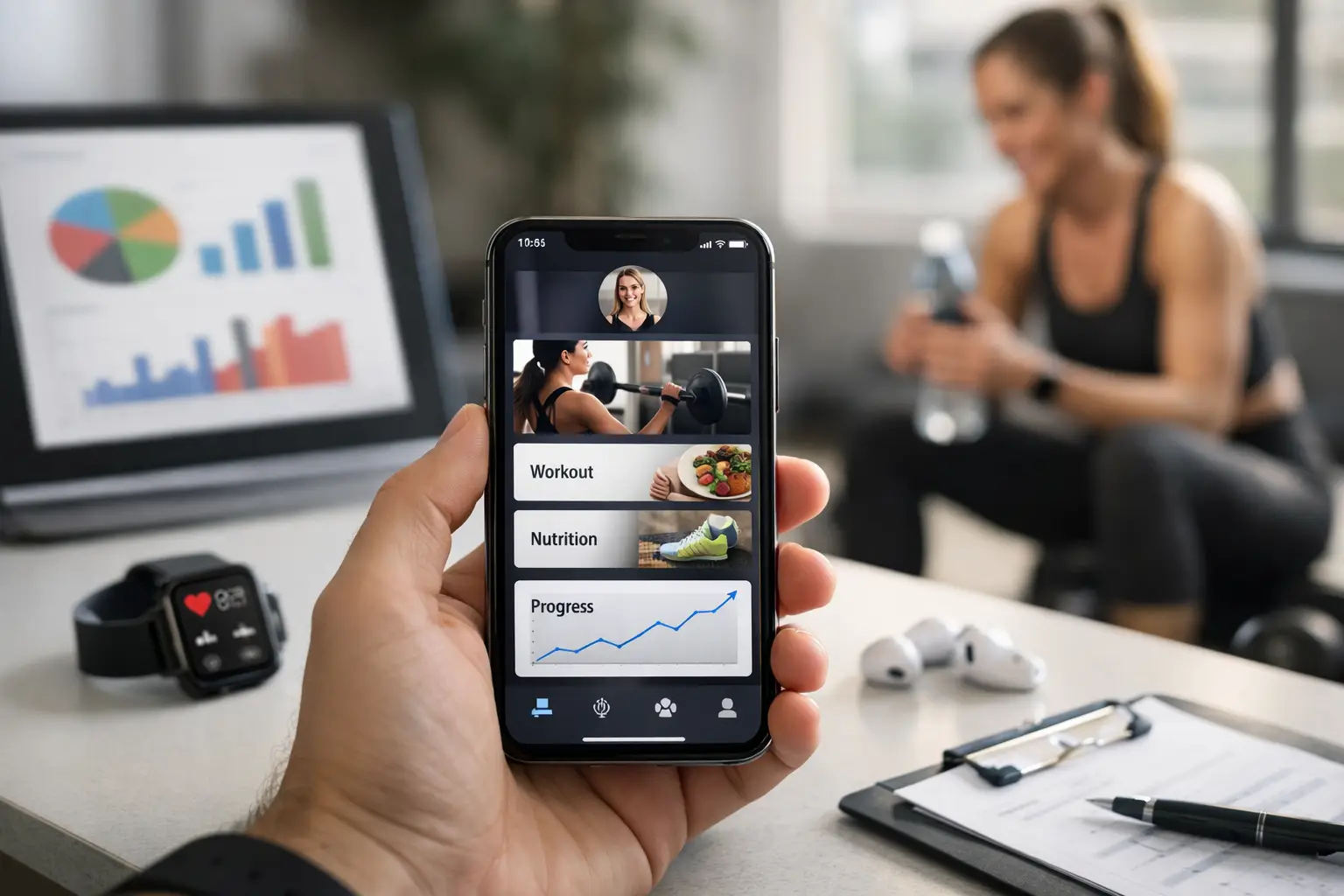
The right platform combines workout delivery, nutrition support, progress tracking, messaging, habits, and check-ins inside one client-facing app. That matters because adherence is rarely lost in the gym alone. It breaks down between sessions, between meals, and between moments of accountability. When clients can log actions, review targets, complete check-ins, and message their coach in one place, friction drops. Lower friction usually means higher compliance, and higher compliance is what improves outcomes.
This is where many coaches make the wrong comparison. They evaluate a branded app as if it is a marketing asset. In practice, it is closer to operational infrastructure. It shapes the full service experience, from onboarding to retention.
Why coaches outgrow disconnected tools
Most coaches do not start with a platform. They start with whatever is cheap and available. Spreadsheets, shared documents, a workout app, a meal tracker, and DMs can work when you have five clients and plenty of manual capacity. The problem shows up when your business grows.
Now every client update lives somewhere different. Programming takes longer to revise. Nutrition adherence is harder to monitor. Check-ins become inconsistent because the process depends on clients remembering multiple steps. You spend more time gathering information than making coaching decisions.
That is the real cost of a fragmented stack. It is not just annoyance. It is decision delay, missed context, slower communication, and a less premium client experience. A custom branded coaching app gives you one operating environment where delivery is standardized without feeling impersonal.
There is a trade-off, though. Moving to one platform requires setup, migration, and a willingness to tighten your process. Coaches who prefer highly improvised delivery may resist that structure at first. But for most professionals serving recurring clients, structure is exactly what creates consistency and frees up time for higher-level coaching.
How a custom branded coaching app improves client results
Clients do better when expectations are clear and feedback loops are fast. That is not theory. Coaching adherence improves when people can easily see what to do, record what they did, and receive timely responses. A well-built app supports all three.
Training becomes more actionable when workouts are assigned with clear exercise instructions, progressions, and logging built into the same flow. Nutrition becomes easier to follow when meal planning, macro targets, and food suggestions are accessible without extra friction. Check-ins become more useful when clients submit data in a consistent format that can actually be reviewed quickly.
That consistency matters because coaching quality depends on signal clarity. If one client sends body weight in text, another sends photos by email, and another forgets half their weekly data, your ability to coach objectively drops. A centralized system improves data quality, and better data supports better decisions on training load, recovery, nutrition adjustments, and habit focus.
For body composition coaches in particular, that matters a lot. Progress is rarely linear. Clients need a system that captures enough information to distinguish between a normal fluctuation and a real issue. When compliance scoring, habit tracking, and trend analysis are built into the experience, coaching becomes more evidence-based and less reactive.
The business case for branded delivery
A custom branded coaching app is also a business tool, not just a coaching tool. Clients are more likely to stay when the experience feels organized, premium, and easy to engage with daily. Retention is not only about being a great coach. It is also about making the coaching process feel dependable.
That is where branding and usability work together. A branded app reinforces that clients are inside your system, following your method, and buying into your standard of professionalism. It gives the service more weight than a patchwork of consumer apps ever can. For online coaches competing in a crowded market, that perceived authority matters.
It can also support pricing. When your delivery looks polished and structured, clients understand the value more clearly. You are not selling messages and PDFs. You are selling a managed coaching system built around their progress.
Still, not every coach needs the same level of customization. If you are early-stage, the main win may be consolidating operations and presenting a cleaner experience. If you are scaling, the bigger win is leverage. Automation starts doing work that used to require staff hours.
What to look for in a custom branded coaching app
The best platform is not the one with the longest feature list. It is the one that removes the most recurring friction from your delivery model.
For most fitness and nutrition coaches, that means strong programming tools, nutrition management, client messaging, check-ins, analytics, and habit tracking in one place. It should also support mobile use properly, because that is where client engagement happens. If the app looks branded but forces coaches back into spreadsheets for analysis and planning, you are not solving the main problem.
Automation is another major separator. Features like auto-periodization, progression management, compliance tracking, and AI-assisted coaching support can save serious time when they are implemented well. The key is that automation should sharpen your coaching, not replace judgment. Good systems reduce repetitive admin and surface useful patterns. They should not flatten every client into the same template.
That balance matters. Too little automation, and you stay buried in tasks. Too much rigid automation, and personalization suffers. The right setup gives you standardized workflows with room for individual decision-making.
A platform like CoachingPortal is built around that middle ground. It combines white-label branding with training, nutrition, check-ins, analytics, and AI-assisted workflow support, which is exactly the kind of stack serious coaches need when they want to grow without lowering service quality.
When a custom branded coaching app makes the most sense
If you are coaching a handful of low-ticket clients with minimal touch points, a full branded platform may be more than you need right now. But if you run recurring one-on-one coaching, hybrid coaching, or a nutrition service where adherence and communication directly affect results, the math changes quickly.
The strongest use case is when you are already feeling operational drag. Maybe check-in day takes too long. Maybe clients miss targets because everything is spread across too many tools. Maybe your service is good, but the delivery experience does not reflect the level of coaching you provide. Those are all signs that a custom branded coaching app is not an upgrade for later. It is a bottleneck fix.
Coaches often assume they need to hire more help to scale. Sometimes they do. But often they first need a better system. Cleaner workflows, better visibility, and fewer moving parts can create more capacity before payroll ever enters the picture.
A strong coaching business should feel clear on both sides. The coach should know what matters, what changed, and what action to take. The client should know what to do today, how they are progressing, and where to get support. When your delivery system makes that easier every day, growth becomes more realistic and results become more repeatable.
If your current setup still depends on workarounds, that is your signal. A custom branded coaching app is not about looking bigger than you are. It is about building a coaching business that performs like a real system.