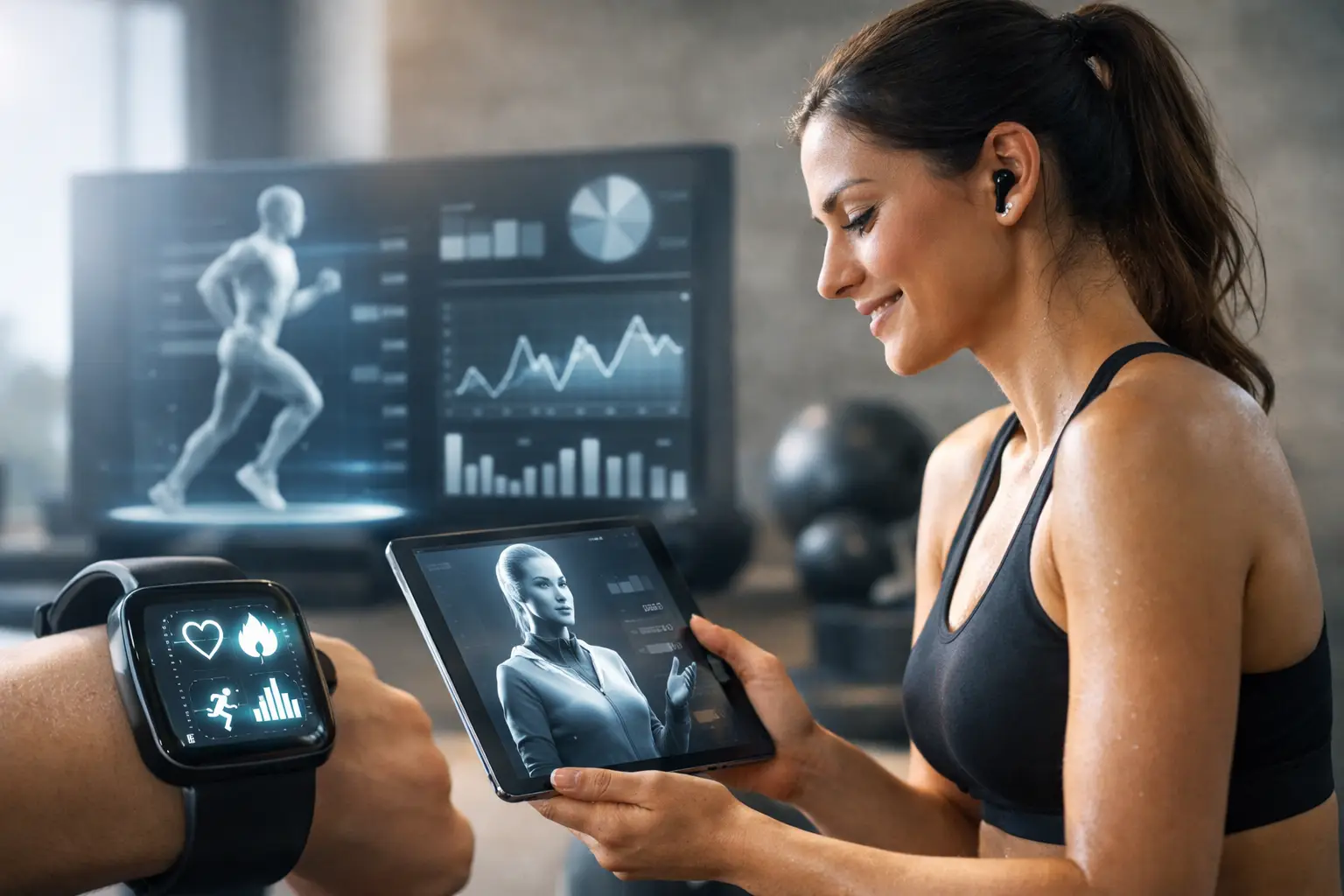
A client submits a weekly check-in at 10:42 p.m.: sleep has dropped, motivation is flat, body weight is holding steady, and they missed two sessions. The real value of AI fitness coaching trends is not a chatbot producing a motivational reply. It is helping a coach spot the pattern quickly, decide what matters, and make a better adjustment before that client drifts out of the process.
For online coaches, AI is becoming operational infrastructure. The strongest applications reduce repetitive review work, organize client data, and surface decision-ready insights. The weak applications generate generic plans, make confident recommendations without enough context, or create more content than the coach can actually use.
The distinction matters. Your clients do not pay for automated text. They pay for outcomes, accountability, expertise, and a coaching relationship that responds when real life changes the plan.
AI Fitness Coaching Trends Moving From Hype to Workflow
The market is moving away from one-off AI plan generators and toward systems that support the full coaching loop: prescribe, execute, report, review, adjust, and communicate. That is a much better fit for recurring coaching businesses because a program is only the starting point. Retention depends on what happens after the client misses a week, stalls on a lift, travels for work, or cannot hit their macros consistently.
Check-in intelligence is replacing manual scanning
Weekly check-ins are rich with useful information, but reviewing dozens of them can turn into a slow, inconsistent process. AI can summarize reported wins, barriers, fatigue signals, adherence data, and open questions so the coach starts with a prioritized view rather than a blank page.
That does not mean every client should receive the same AI-written response. A good workflow uses AI to flag the cases that need attention: declining compliance, repeated low readiness, sudden weight changes, poor recovery, or language that suggests disengagement. The coach then applies judgment, asks the right follow-up, and sets the next action.
This is especially valuable for teams. When every coach can see a consistent summary of the client’s last week, service quality is less dependent on who happened to review the check-in first.
Programming is becoming more adaptive, not less coach-led
Static PDFs and four-week templates still have a place for low-touch products. They are not enough for premium 1:1 or hybrid coaching. The next standard is programming that responds to performance and recovery without forcing a coach to rebuild every session manually.
RIR-based load adjustment is a practical example. If a client consistently performs above or below the intended reps in reserve, the system can suggest a load change while keeping the coach’s training objective intact. This approach aligns with autoregulation research, including work by Zourdos and colleagues, because it recognizes that readiness is not identical from session to session.
Auto-periodization is also getting more useful when it is tied to actual client behavior. A deload should not appear simply because a calendar says it is week five. It should be informed by fatigue patterns, performance trends, adherence, and the athlete’s goal. AI can monitor those inputs and recommend a decision. The coach should still determine whether the client needs reduced volume, lower intensity, a different exercise selection, or simply a more realistic schedule.
The trade-off is clear: greater automation requires better data. If clients do not log sessions accurately or complete check-ins, an adaptive system has less to work with. That makes client experience and compliance tracking part of the AI strategy, not separate concerns.
Nutrition AI is shifting from meal plans to better adherence
Most clients do not fail because they lack a list of foods. They struggle because the plan does not hold up when their workday runs late, their usual lunch is unavailable, or family meals take priority. AI has a strong role in solving those practical friction points.
The most useful nutrition features suggest realistic meal swaps, identify where macro targets are drifting, and help clients make an immediate correction without starting the day over. If protein is low at dinner, the right prompt is not a lecture about discipline. It is a few viable options that fit the client’s calories, preferences, and available foods.
For coaches, AI can also reduce the time spent interpreting food logs and making repetitive substitutions. But it should not replace foundational nutrition assessment. Medical history, disordered eating risk, food access, cultural preferences, allergies, and the client’s relationship with tracking require human screening and appropriate scope of practice.
Compliance data is becoming a retention tool
A client who stops logging is often more at risk than a client who has one imperfect workout. The most valuable AI systems connect training completion, nutrition adherence, step data, check-in responses, and body metrics into an early-warning view.
That gives coaches a chance to intervene before silence becomes cancellation. The intervention may be a direct message, a simplified plan, a short-term maintenance phase, or a conversation about expectations. AI can identify the signal. It cannot know whether a new parent needs fewer training days, whether a physique competitor is mentally exhausted, or whether a client needs referral to another professional.
This trend favors platforms that unify training and nutrition rather than treating them as disconnected products. When the data lives in separate spreadsheets, apps, and messages, the coach spends time assembling a story. When it is connected, the coach can focus on changing the outcome.
Where Coaches Should Keep Control
AI can make recommendations look more certain than they are. That is a risk in a field where the right decision depends on training age, injury history, movement skill, stress, goals, and the quality of the information provided. A novice seeking general fat loss needs a different level of complexity than an advanced lifter preparing for a meet.
Keep coach approval in the loop for meaningful program changes, nutrition target changes, and client communication involving pain, health concerns, or unusually poor adherence. Build clear rules for when an automation can act and when it should escalate. For example, an automatic reminder after a missed check-in is reasonable. A major calorie reduction based on a single week of scale fluctuation is not.
Privacy also belongs in the operating model. Coaches collect sensitive health, behavior, and progress data. Use systems with clear permissions, protect client access, and be transparent about how AI supports the coaching experience. The goal is a more attentive service, not a black box.
How to Build an AI-Ready Coaching Operation
Start with the workflow that costs the most time and has the clearest repeatable pattern. For many businesses, that is check-in review. Define what a complete check-in includes, standardize the questions, and decide which signals should trigger coach attention. Then measure whether review time falls and whether response quality improves.
Next, connect programming and nutrition to the same client record. That is where an all-in-one system such as CoachingPortal can matter: check-ins, compliance, training changes, meal planning, and client messaging inform the same coaching decision instead of creating separate admin tasks.
Do not automate a broken process. If your onboarding is unclear, your programming philosophy is inconsistent, or clients do not know what to log, AI will amplify the inconsistency. First establish standards for intake, delivery, check-ins, and escalation. Then use automation to execute those standards faster.
Finally, set a quality bar that is higher than speed. Review AI suggestions against your coaching principles. Track whether clients are completing more sessions, hitting nutrition targets more consistently, receiving faster responses, and staying longer. A tool that saves five hours a week but produces generic client communication may cost more in retention than it returns.
The best use of AI is not to make coaching feel automated. It is to remove enough operational drag that every client receives more of the part that cannot be automated: clear judgment, timely accountability, and a plan that makes sense for their real life.