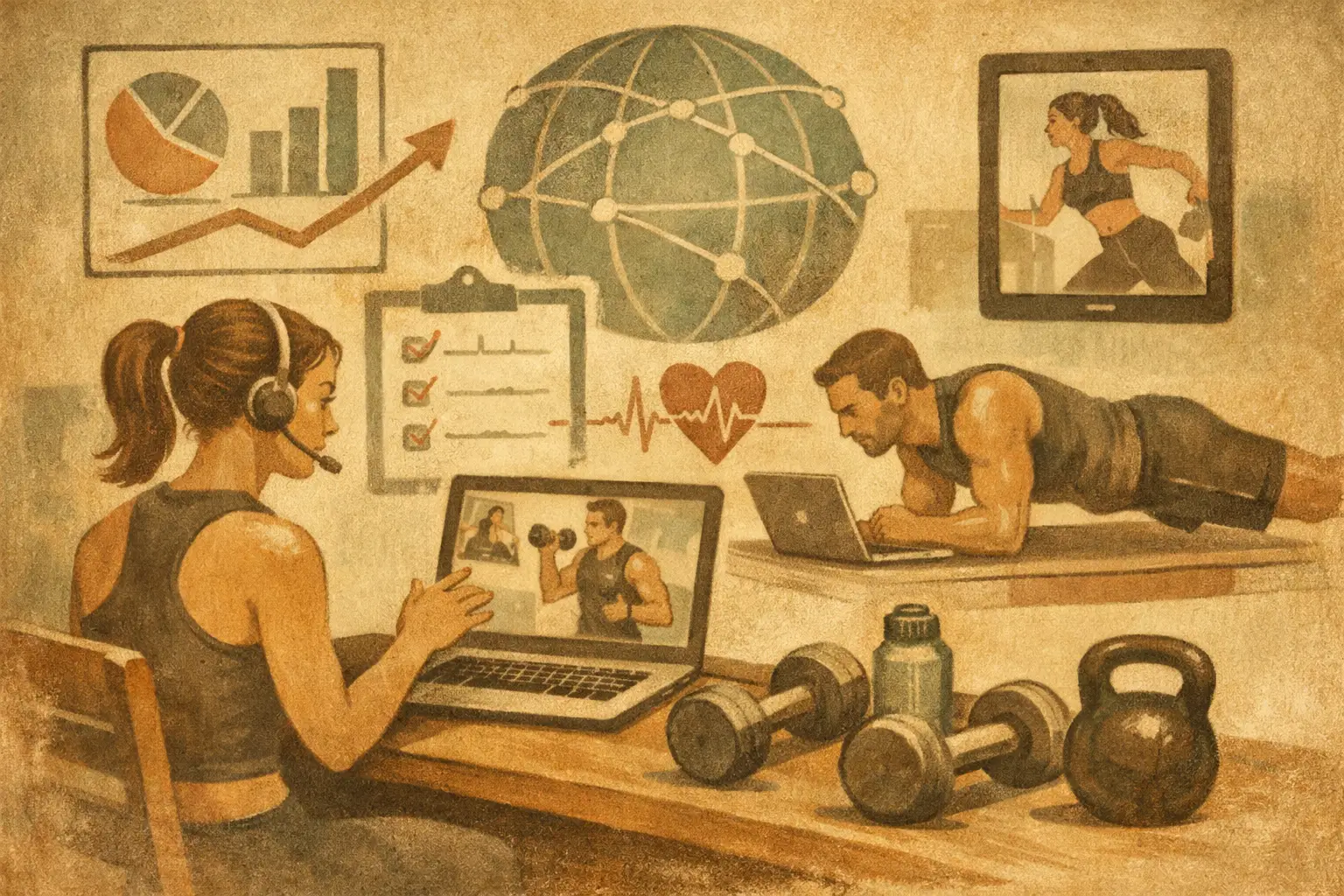
If you are still running client delivery through spreadsheets, separate workout apps, messaging threads, and a check-in form duct-taped together with reminders, you are not saving money. You are leaking time, consistency, and client confidence. A real online coaching platform for fitness coaches should reduce admin load while improving the quality of coaching your clients actually feel.
That standard matters because online fitness coaching is no longer judged only by your knowledge. It is judged by delivery. Clients notice whether their program updates on time, whether nutrition targets are clear, whether check-ins lead to useful adjustments, and whether the whole experience feels professional. If your systems are messy, your coaching can look messy even when your methods are strong.
What an online coaching platform for fitness coaches should actually do
A lot of software claims to support coaching. Fewer systems are built around the full workflow of a fitness business. For serious coaches, the platform should not just store workouts. It should act as operating infrastructure.
That means programming, nutrition, habits, communication, progress tracking, and reporting need to live in one place. When those pieces are split across multiple tools, small delays stack up. You spend extra minutes chasing missed check-ins, re-entering macros, answering questions that should already be visible in the app, and manually deciding when to progress or regress a plan. Across 30, 50, or 100 clients, that is not a small inefficiency. It becomes the main thing limiting growth.
The better approach is centralized delivery. A coach should be able to build training blocks, assign meal structure, review adherence, message clients, and make decisions from current data without jumping between platforms. That creates two wins at once. The coach gets time back, and the client gets a more consistent experience.
Why fragmented tools hold coaches back
Most coaches do not start with a full platform. They start with whatever gets the job done. Maybe that is a form builder for intake, a spreadsheet for progress photos, a training app for exercise delivery, and direct messages for feedback. Early on, that can work.
The problem shows up when client volume rises. Manual systems are fine at ten clients and painful at forty. The issue is not only that they take longer. They also make your service less repeatable. One client gets a detailed response because you had time that day. Another gets a rushed answer because you were buried in admin. That variability hurts retention.
There is also a coaching quality issue. Good decisions depend on pattern recognition. If sleep, body weight, training performance, nutrition adherence, biofeedback, and check-in notes all live in different places, your review process slows down. You are more likely to miss trends that should affect programming or calorie adjustments.
This is where a true coaching platform becomes less of a convenience and more of a business necessity. It creates standardization without forcing generic coaching.
The features that matter most
Workout delivery is the obvious starting point, but it is not enough on its own. Fitness coaches need programming tools that support progression logic, exercise substitutions, training history, and efficient adjustments across a roster. If you coach physique athletes, gen pop fat loss clients, or hybrid clients, your system needs to handle different programming structures without becoming clunky.
Nutrition is just as important. If your clients are tracking macros, following meal plans, or using habit-based nutrition targets, those tools should sit inside the same environment as training. Otherwise, adherence data gets fragmented and your feedback loop breaks down. Coaches who manage body composition know that the difference between a good decision and a bad one often comes down to context. You need to see intake, compliance, weight trend, and training output together.
Check-ins are another major dividing line between basic apps and real coaching systems. A strong check-in process should help you review data quickly, spot issues early, and respond with precision. That means organized metrics, progress photos, compliance trends, and client responses that are easy to compare over time. The point is not collecting more data. The point is reducing the time it takes to turn data into action.
Messaging matters too, but not in the casual sense. Coaches need communication built into delivery so key decisions do not disappear inside text threads. When client questions, plan updates, and accountability live beside the program itself, follow-through improves.
Automation is not a shortcut. It is quality control.
Some coaches hear automation and assume lower-touch service. Usually the opposite is true when the system is designed well. Automation handles repeatable tasks so the coach can spend more energy on analysis, strategy, and behavior change.
For example, compliance scoring can quickly show which clients need intervention before results stall. Smart check-in analysis can surface trends that would otherwise require a manual review of multiple data points. Progression management can help standardize when training variables should change based on actual performance rather than guesswork or memory.
Used correctly, automation protects coaching standards. It keeps delivery consistent when your week gets busy. It also reduces decision fatigue, which is a very real issue for coaches with full rosters. You should not have to rebuild the same process every Monday.
This is one area where purpose-built platforms separate themselves from generic business tools. If the automation is grounded in actual coaching logic, it improves both speed and decision quality.
Client experience is a retention tool
Coaches often focus on acquisition because it feels urgent. But retention usually has a bigger impact on growth. The strongest marketing in the world cannot fully compensate for churn caused by a weak delivery experience.
Clients stay longer when the process feels organized, responsive, and measurable. They want to know what to do today, how they are progressing, and what happens next. A mobile-first client experience supports that. It makes training, nutrition, habits, and communication part of the client’s normal routine instead of something they have to hunt down.
Professional presentation matters here as well. White-label branding, clean dashboards, and structured workflows increase perceived value. That is not cosmetic. It shapes trust. When clients feel like they are inside a real coaching system rather than a patchwork of apps, they are more likely to treat the process seriously and adhere to it.
The best platform depends on your coaching model
There is no universal best option in a vacuum. A one-on-one physique coach has different needs than a high-volume habit-based nutrition business. If you mostly sell low-ticket templates, you may not need advanced check-in analysis. If you offer premium transformation coaching, you probably do.
That is why feature count alone is a poor way to evaluate software. The better question is whether the platform fits your actual delivery model. Can it support individualized programming at scale? Can it manage both meal planning and macro coaching? Can your team review client data without creating workflow chaos? Can clients stay engaged without constant manual nudging from you?
For coaches who want to grow without lowering service quality, the answer usually points toward an integrated system rather than a stack of separate tools. That is the value of a platform like CoachingPortal. It brings training, nutrition, automation, check-ins, analytics, habits, messaging, and branded delivery into one coaching environment designed for performance professionals.
What to look for before you switch
Before committing to any online coaching platform for fitness coaches, audit your current process. Where are you losing time each week? What tasks are repeated manually? Which parts of the client experience create confusion, delays, or drop-off? The best software purchase is the one that solves those specific bottlenecks.
You should also think about six months from now, not just today. A platform that feels adequate at 15 clients may become restrictive at 60. Look for systems that support a higher client load without forcing you to add more admin hours. Scalability is not just about adding clients. It is about preserving decision quality as volume increases.
Finally, look for evidence that the platform reflects real coaching practice. Exercise programming should make sense for progressive overload. Nutrition tools should support both precision and flexibility. Analytics should help you coach better, not just generate charts. And any AI support should reduce busywork without replacing professional judgment.
The right system will not make you a better coach on its own. It will make it easier for your actual coaching to show up consistently, professionally, and at scale. That is the difference between software that stores information and software that moves your business forward.
If your current setup makes every client update feel heavier than it should, that friction is telling you something. Better infrastructure does not just save hours. It gives you more room to coach at the level your clients are paying for.