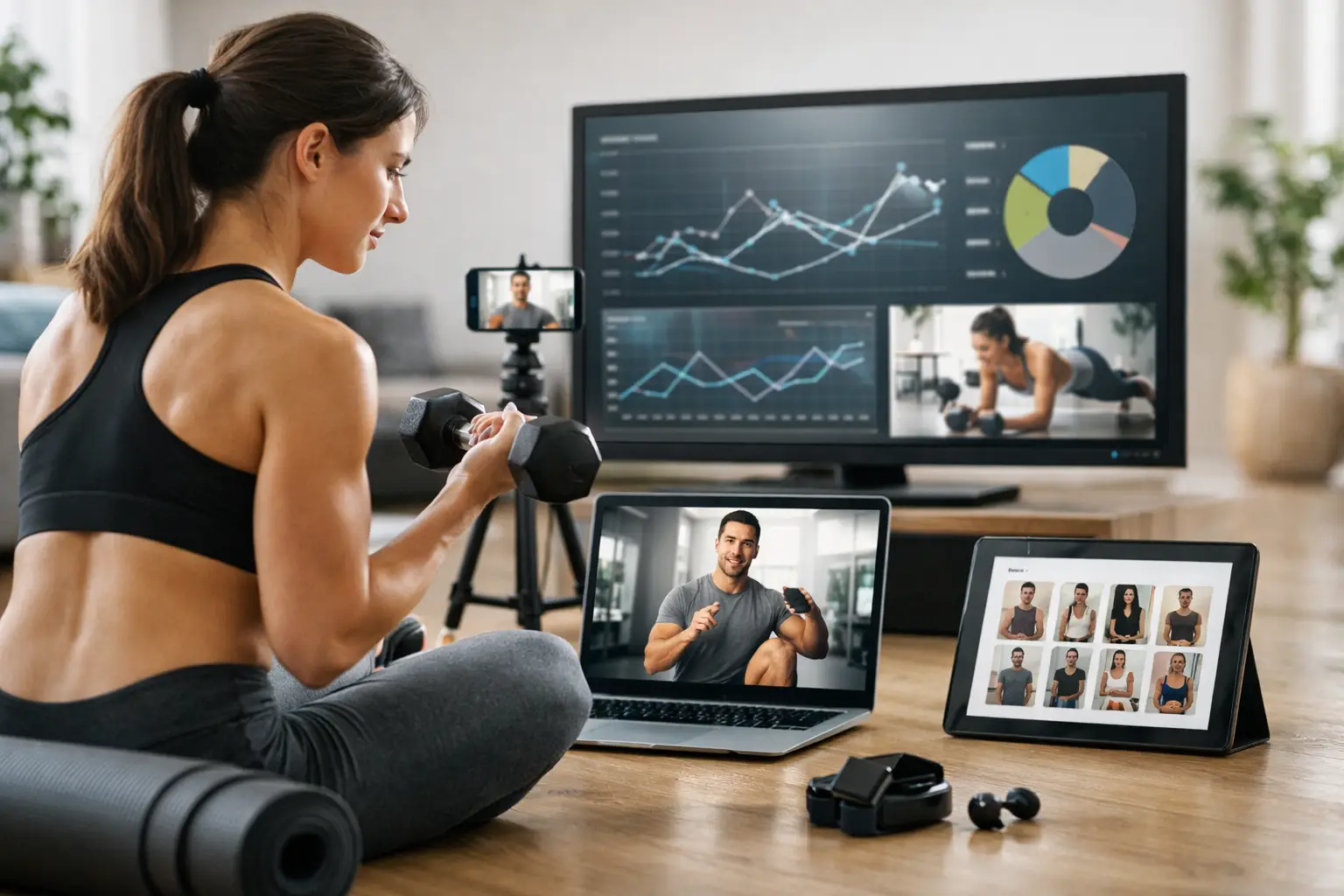
A coach with 25 online clients can still feel buried by admin if every week runs on DMs, spreadsheets, separate meal apps, and manual check-in reviews. That is the real test of remote personal training systems - not whether they look polished in a demo, but whether they let you coach at a high level without creating operational drag.
For serious online coaches, the system is not a side detail. It is the delivery model. It shapes how fast you build programs, how well clients adhere, how consistently you review data, and how professional your service feels from day one. If your workflow is fragmented, your coaching quality eventually gets fragmented too.
What remote personal training systems actually need to do
A lot of tools in this category solve one narrow problem. One app handles workouts. Another handles meal tracking. Another handles forms. Another handles messaging. On paper, each tool looks useful. In practice, the coach becomes the integration layer, and that is where scale breaks.
Strong remote personal training systems should support the full coaching loop. That means program design, delivery, client communication, progress review, compliance monitoring, and adjustment logic all live in one operating environment. If they do not, you end up spending time moving information between tools instead of making coaching decisions.
This matters even more for coaches selling high-touch services. Clients do not experience your tech stack as separate products. They experience one service. If training lives in one app, nutrition in another, and feedback in text threads, the service feels pieced together even when the coaching itself is solid.
The difference between software and a real coaching system
Software can be feature-rich and still fail as a system. The difference is workflow continuity.
A real coaching system creates a clear path from intake to program delivery to weekly review to plan adjustment. Client data should inform the next decision without you having to manually collect and reconcile it. If a client reports rising fatigue, low compliance, and stalled performance, the platform should make that pattern obvious. Better yet, it should help you act on it faster.
This is where many coaches outgrow generic fitness apps. Generic tools are often fine for selling basic programs or one-off workouts. They struggle when you need individualized periodization, nutrition planning, recurring check-ins, and a branded client experience that supports retention.
For example, a physique coach managing 40 recurring clients does not just need a workout builder. They need to know who missed sessions, whose body weight trend is deviating from target, who is reporting poor recovery, and who needs macros or training volume adjusted this week. That is system-level coaching.
Why integrated delivery wins
The best remote personal training systems do not treat training and nutrition as separate businesses. They treat them as connected levers.
That sounds obvious, but many platforms still force coaches into awkward workarounds. Training may be excellent, while nutrition is a weak add-on. Or meal planning may be strong, while training progression is basic. The result is more manual coordination for the coach and less clarity for the client.
Integrated delivery changes the economics of coaching. When workouts, nutrition, check-ins, messaging, and analytics are connected, you reduce admin time without reducing personalization. You also improve the speed of intervention. A coach can spot falling adherence before a client churns. They can connect performance decline with recovery or intake issues instead of treating every problem as a motivation issue.
This is one reason platforms like CoachingPortal are gaining traction with online strength and nutrition coaches. The value is not just that it includes training and meal planning in one place. The value is that integrated delivery removes friction from the actual job of coaching.
What to look for in remote personal training systems
If you are evaluating platforms, the checklist should go beyond surface features. The real question is whether the system helps you coach better at 10 clients and still works at 100.
Programming depth comes first. Coaches working with strength, hypertrophy, or physique clients need more than exercise assignment. They need progression logic, multi-block planning, autoregulation options, and practical ways to adjust loads and volume based on feedback. If the software only supports static templates, you will eventually rebuild your real process outside the platform.
Nutrition should be equally serious. A useful system should support meal planning, macro management, food logging, substitutions, and grocery practicality. If clients can follow training in one place but handle nutrition elsewhere, your adherence data is incomplete from the start.
Check-in infrastructure matters more than flashy dashboards. Weekly reviews are where remote coaching becomes coaching rather than content delivery. The system should collect client feedback in a structured format, surface patterns quickly, and reduce the time it takes to turn responses into action.
Compliance analytics are another dividing line. Coaches often say they want better retention, but retention usually starts with visibility. If you cannot quickly see who is slipping on sessions, steps, food targets, or reporting habits, you are coaching reactively.
Then there is presentation. White-labeling is not just cosmetic. A branded app experience changes perceived professionalism, especially for coaches charging premium monthly rates. It reinforces that clients are buying your service, not being passed through a third-party app.
Automation is useful, but only when it respects coaching logic
Automation gets oversold. Some coaches hear it and assume generic AI advice or canned messages. That concern is fair. Bad automation creates more noise, not more leverage.
Good automation reduces repeat admin while keeping the coach in control. Think load adjustments informed by RIR feedback, periodization tools that support planned training blocks, or weekly check-in summaries that surface what changed instead of forcing you to read 40 long-form responses from scratch.
This is also where evidence-based design matters. If a platform claims to automate programming decisions, those decisions should reflect accepted coaching principles, not arbitrary formulas. RIR-based autoregulation has real support in the literature. Volume management for hypertrophy should align with what we know from peer-reviewed research, not whatever makes a dashboard look busy.
The trade-off is simple. More automation can increase efficiency, but only if it is transparent and grounded in sound coaching logic. Coaches should not have to choose between speed and quality.
The business case for better systems
Most coaches first think about software as a cost. The better lens is operational capacity.
If your current setup takes 12 to 15 minutes to review and respond to each client every week, that overhead compounds fast. At 40 clients, inefficient review workflows can eat entire workdays. A better system does not just save scattered minutes. It changes how many clients you can manage well without lowering service quality.
It also affects acquisition and retention. Cleaner onboarding, clearer progress tracking, and stronger day-to-day engagement make your offer easier to sell and harder to cancel. Clients stay longer when they feel monitored, supported, and able to follow the plan without confusion.
That said, not every coach needs the same level of infrastructure. A trainer selling low-ticket group programming may not need advanced nutrition tools or autoregulation. A high-ticket online coach almost certainly does. The right system depends on your model, price point, and level of personalization.
When remote personal training systems fail
Usually, failure does not come from one missing feature. It comes from friction accumulating in small places.
The client forgets where to check their plan. The coach cannot quickly compare compliance trends across the roster. Nutrition updates happen in one app while training adjustments happen in another. Messaging gets buried. Weekly reviews take too long, so feedback gets shorter and less useful. Over time, the service becomes harder to deliver consistently.
That is why evaluating systems based on isolated features can be misleading. The better question is this: does the platform reduce friction across the entire coaching relationship?
If the answer is yes, you gain leverage. You can coach more clients, maintain higher standards, and present a more professional service. If the answer is no, the software may still be usable, but you will be doing the hard work between the tools.
Remote coaching is mature enough now that clients expect more than PDFs and check-ins over text. Coaches should expect more from their infrastructure too. The right system should make your coaching sharper, your business more scalable, and your service easier for clients to follow every single week. Choose the one that lets you spend less time managing process and more time making decisions that move client outcomes forward.