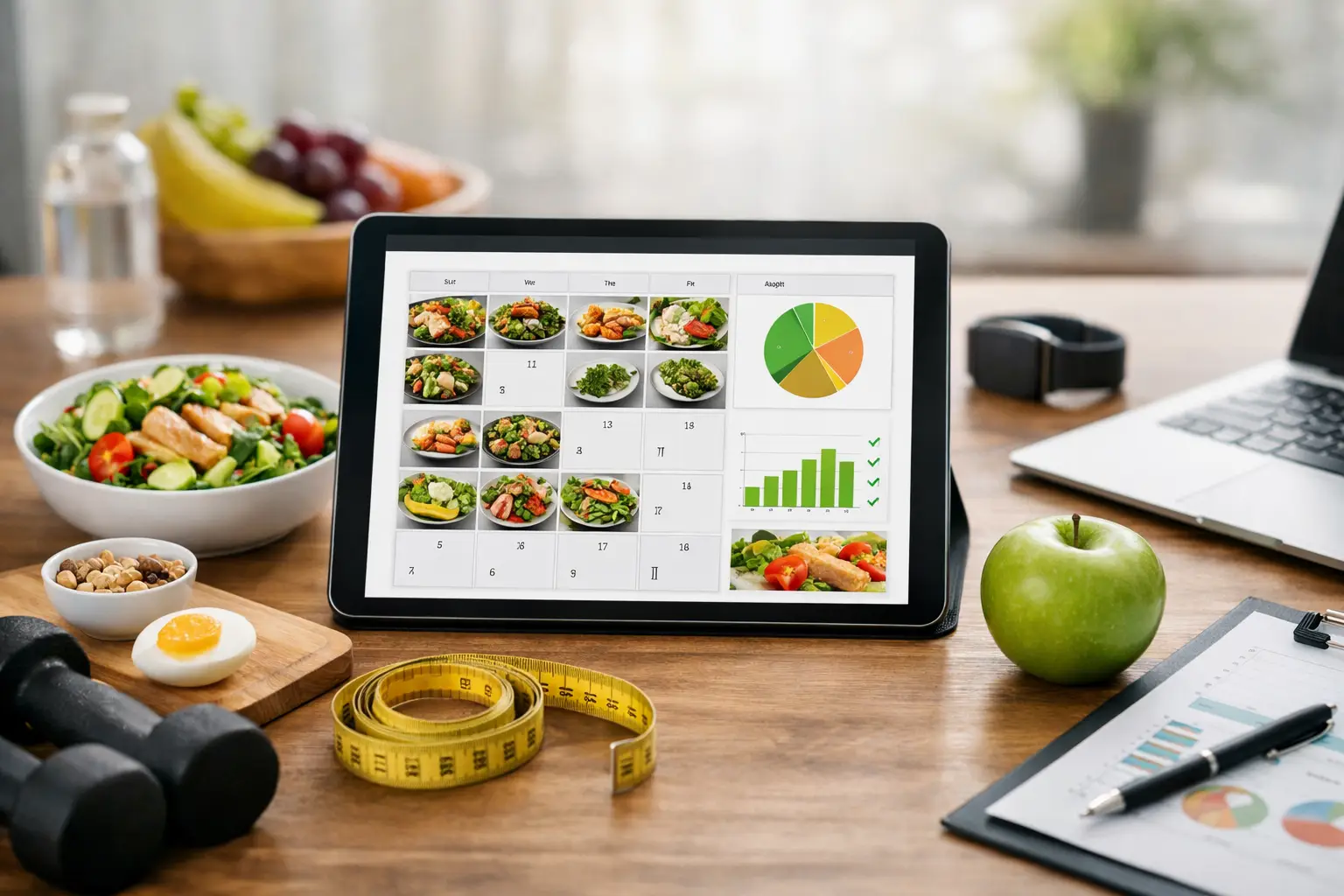
If you're still building meal plans in spreadsheets, copying macros into chat threads, and chasing clients for food logs across three different apps, the problem is not your coaching quality. The problem is your system. Good coach software for meal plans should reduce nutrition admin, improve adherence, and make your service easier to scale without turning client delivery into a template factory.
For nutrition coaches, online trainers, and hybrid fitness businesses, meal planning software is not just a convenience feature. It sits at the center of client results. Nutrition is where personalization, compliance, behavior change, and reporting all collide. When the software is weak, coaches spend too much time editing plans, answering repetitive questions, and manually interpreting check-in data. When the software is built properly, meal planning becomes part of a larger coaching engine.
What coach software for meal plans should actually do
A lot of tools claim to support meal planning, but what they really offer is a static PDF builder or a basic calorie target field. That may be enough if your service is low touch and standardized. It is not enough if you coach clients around body composition, performance, lifestyle adherence, or long-term nutrition habits.
Strong coach software for meal plans should handle more than food recommendations. It should support macro setup, meal structure, substitutions, client preferences, compliance tracking, progress reviews, and communication in one workflow. The key is not whether a coach can create a plan. Almost any software can do that. The real question is whether the plan can evolve without creating more admin every week.
That distinction matters because meal plans are rarely set once and left alone. Calories change. Training volume changes. Food preferences change. Travel happens. Hunger changes. Biofeedback changes. If every adjustment requires manual back-and-forth across disconnected tools, your nutrition service becomes expensive to deliver and harder to scale.
The difference between meal plan software and coaching infrastructure
This is where many coaches buy the wrong tool. They look for a meal planner, when what they really need is coaching infrastructure.
A standalone meal planning app may let you assign foods and calculate macros. That sounds useful until you realize your check-ins live somewhere else, your messaging lives somewhere else, your habit tracking lives somewhere else, and your training program lives somewhere else. Now every client update requires context switching. You are not saving time. You are just moving the work around.
The better model is a centralized system where meal planning connects directly to the rest of the coaching process. If a client's compliance score drops, the coach should see it quickly. If check-in data shows low energy, poor recovery, or appetite issues, nutrition adjustments should happen in the same environment. If body weight trends shift faster than expected, macro changes should be easy to deploy and communicate.
For coaches working with recurring monthly clients, this connected approach usually outperforms pieced-together software stacks. It reduces friction for both sides. Coaches get cleaner workflows. Clients get a more professional experience.
Features that matter most in coach software for meal plans
Meal plan creation is the baseline. What separates professional-grade software is how well it supports real coaching decisions.
Macro management matters because not every client needs a rigid food-by-food meal plan. Some need macro targets with flexibility. Others need structured meals with exact portions. A strong platform should let coaches move between those approaches based on the client, not based on software limitations.
Food substitution support matters for adherence. If a client hates half the plan, the best-designed macro split in the world will not save it. Coaches need a way to swap foods intelligently while keeping calorie and macro targets aligned.
Habit tracking matters because many nutrition problems are not solved by changing food quantity alone. Hydration, meal timing, step count, sleep consistency, and weekend eating patterns often tell you more than a calorie total. If the software cannot track those behaviors in a usable way, the coach loses context.
Check-in analysis matters because nutrition changes should be based on trends, not random reactions. Weight fluctuations, progress photos, subjective feedback, training performance, digestion, and hunger all help shape better decisions. Software that turns this into organized, readable coaching data is far more useful than software that simply stores meal plans.
Automation matters too, but only when it supports judgment rather than replacing it. Smart suggestions, compliance scoring, recurring plan structures, and faster review workflows can save hours each week. Blind automation that pushes generic recommendations can hurt client trust.
Why personalization still matters, even with automation
Some coaches hear "automation" and assume lower service quality. That is fair if the software is built to mass-produce generic coaching. But the best systems use automation to remove repetitive admin, not to remove coach thinking.
For example, if the platform helps generate meal structures based on calorie and macro targets, that saves setup time. If it flags low adherence before a client spirals off plan, that improves intervention timing. If it summarizes check-in patterns, that helps the coach make faster, better calls. None of that reduces personalization. It creates more room for it.
This is especially relevant for coaches managing 30, 50, or 100-plus clients. At that scale, the bottleneck is rarely knowledge. It is operational drag. The software should help you preserve coaching quality as client volume grows.
That is why many experienced coaches now prioritize systems that combine meal planning with analytics, messaging, and review tools. A nutrition plan is only as effective as the feedback loop around it.
The business case for better meal plan software
Better coach software for meal plans does more than clean up delivery. It can directly affect retention, capacity, and profitability.
When clients can access nutrition guidance, meal structure, habits, progress, and messaging inside one mobile-first experience, coaching feels more complete. That increases perceived value. It also reduces confusion, which is one of the most common causes of low compliance.
On the coach side, time savings compound fast. Saving even 10 to 15 minutes per client each week turns into meaningful capacity as your roster grows. That time can be used to improve client reviews, build better systems, or simply reduce burnout. For many businesses, software is not just an expense line. It is a margin tool.
Retention improves when clients feel supported between check-ins. That support does not always require more manual messaging. Sometimes it comes from clearer meal guidance, more visible progress data, and better daily accountability. Good software helps create those touchpoints without demanding that the coach stay online all day.
What to look for before you choose a platform
Start with your delivery model. If you provide macro coaching, make sure the software handles macro adjustments cleanly. If you build full meal plans, check how easy it is to edit foods, portions, and meal templates. If your business combines training and nutrition, avoid buying separate systems unless you have a very specific reason.
Then look at workflow depth. Can you review adherence, body data, habits, and subjective feedback in one place? Can clients message you inside the platform? Can you standardize parts of delivery without making the service feel generic? Can your branding carry through the client experience?
This is where an all-in-one coaching platform often has a practical edge. CoachingPortal, for example, combines meal planning, macro management, check-ins, messaging, training delivery, analytics, and AI-assisted workflow support in one environment. For coaches who want to stop patching together spreadsheets and isolated apps, that kind of setup can materially improve both service quality and operating efficiency.
The trade-off is that more capable systems usually require a bit more setup upfront. But for coaches planning to grow, that investment is usually cheaper than staying trapped in manual processes.
The best software supports coaching, not just content delivery
A meal plan is not the product. Coaching is the product.
That sounds obvious, but software choices often ignore it. Coaches get sold on databases, drag-and-drop meal builders, or pretty templates. Those features are useful, but they are not enough on their own. What matters is whether the platform helps you assess, prescribe, monitor, adjust, and communicate with less friction and better consistency.
The right system should make your service feel sharper to clients and lighter to run behind the scenes. It should help you coach at a higher level, not just organize nutrition more neatly.
If your current process makes meal planning feel like a weekly admin burden, that is your signal. The best coach software for meal plans should give you back time, improve compliance visibility, and make personalization easier to deliver at scale. When the software does that well, nutrition coaching becomes easier to run and much harder for clients to outgrow.
Choose the platform that makes better coaching easier to repeat.