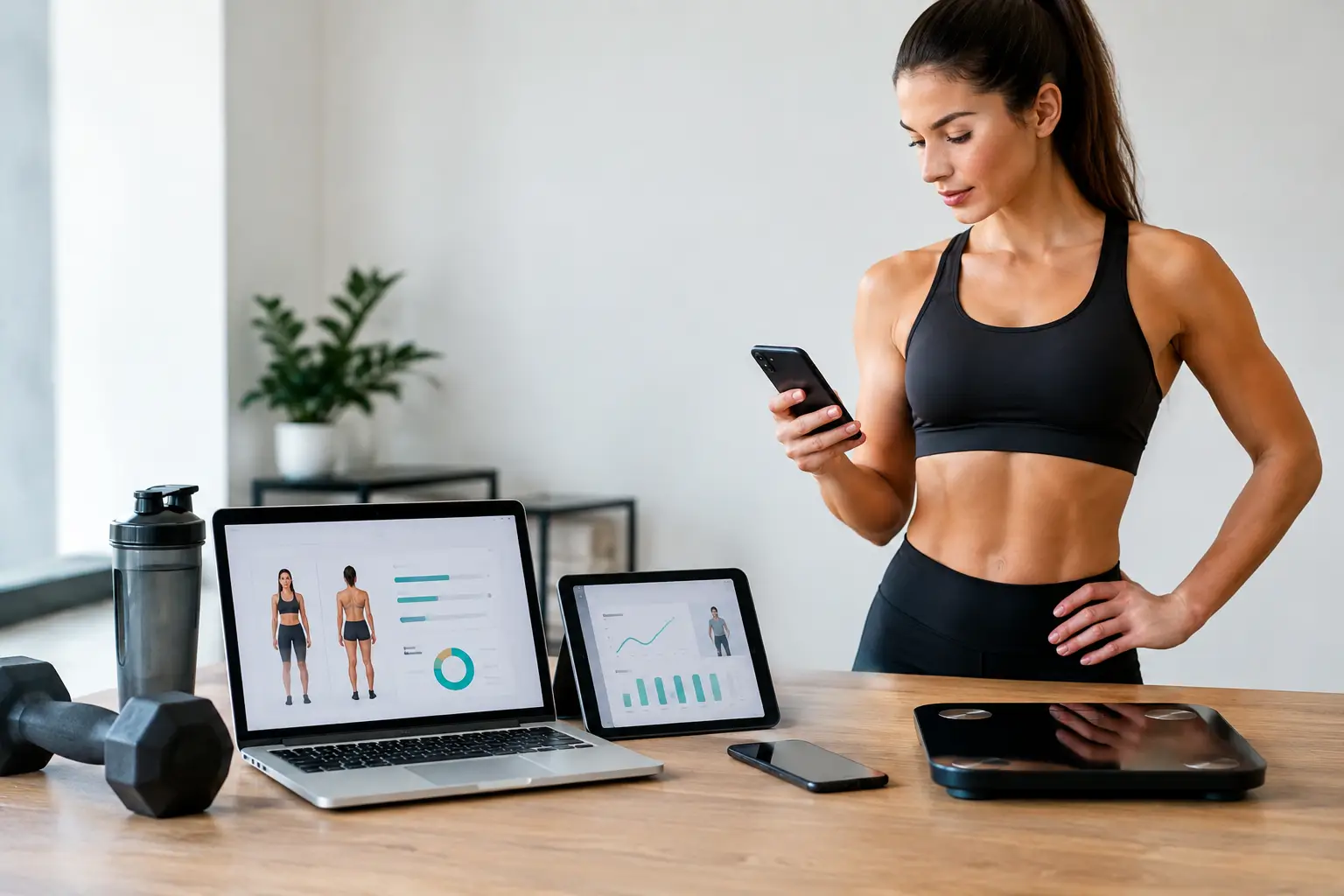
If your check-in day feels like triage, you do not have a personalization problem. You have a systems problem. Figuring out how to personalize fitness coaching at scale is not about writing 50 completely different programs from scratch or sending longer voice notes at midnight. It is about building a coaching model where each client gets the right level of specificity, at the right time, without your delivery collapsing under admin.
That distinction matters because most coaches try to scale personalization by working harder. More manual edits. More spreadsheets. More apps. More context switching between training, nutrition, messaging, and compliance review. It works for a while, then quality gets inconsistent and client experience starts depending on how overloaded you are that week.
The better approach is structured personalization. You standardize the parts that should be standardized, then customize the parts that actually change outcomes.
What personalized coaching at scale really means
Personalization is often misunderstood as constant novelty. In practice, clients do not need a brand-new framework every week. They need coaching that reflects their goals, recovery, training age, schedule, dietary preferences, adherence patterns, and response to previous blocks.
That means the real job is not creating infinite variation. It is making better decisions from better inputs.
For a general population fat loss client, personalization may mean adjusting meal structure around shift work, reducing exercise selection complexity, and setting progression targets that match inconsistent recovery. For an intermediate physique client, it may mean managing volume landmarks, exercise rotation, and calorie adjustments based on rate of loss, training performance, and biofeedback. For a strength client, it may mean autoregulating load using RIR and modifying fatigue management across blocks.
Those are meaningful coaching decisions. Rewriting the same onboarding email 30 times is not.
How to personalize fitness coaching at scale without creating chaos
The simplest way to think about scale is this: build a repeatable operating system, then layer personalization onto it. If every client workflow starts from zero, your business will always hit a ceiling.
Start with segmentation. Not all clients need the same level of customization. A beginner wanting structure and accountability is different from an advanced lifter peaking for a meet. Your service delivery should reflect that. Create clear client buckets based on goal, experience level, training frequency, nutrition needs, and support intensity. Once clients are segmented, your starting templates become more accurate and your adjustments become faster.
This is where many coaches resist structure because they worry templates feel generic. The opposite is usually true. A good template gives you a stronger baseline, so your energy goes toward high-value modifications instead of rebuilding common elements each time. Your hypertrophy template, for example, can already reflect evidence-based volume ranges, exercise pattern balance, and progression logic. From there, you personalize around equipment access, injury history, recovery capacity, and preference.
Nutrition should work the same way. You do not need to hand-build every meal plan from scratch to make it personal. You need systems that account for calories, macros, food preferences, cultural habits, meal timing, and adherence barriers. A client who travels frequently needs different nutrition guardrails than a client who eats at home on a fixed schedule. Personalization comes from fitting the plan to real life, not from making it look complicated.
Data should drive the adjustment, not guesswork
Coaches who scale well are usually better at filtering signal from noise. They know which data points deserve action and which ones are just normal weekly fluctuation.
That requires consistent data collection. If check-ins are unstructured, if training compliance is buried in messages, and if nutrition adherence lives in a separate app, personalization gets slower and less accurate. You end up coaching from memory.
A better setup centralizes the feedback loop. Training completion, body weight trends, recovery markers, hunger, energy, digestion, step count, and subjective readiness should all be visible in one place. Then patterns become easier to spot. The client who says they are "doing everything right" but completes 58% of sessions needs a different intervention than the client with 95% compliance and stalled performance.
This is where platform design directly affects coaching quality. An integrated system like CoachingPortal helps because training delivery, nutrition planning, check-ins, messaging, and compliance analytics live inside the same workflow. That reduces context switching and makes personalization faster to execute. You are not spending time hunting for information across disconnected tools. You are making decisions.
Automation should handle repetition, not replace coaching
Some coaches hear automation and assume it means generic service. That only happens when automation is used as a substitute for judgment. Used properly, it does the opposite. It protects your coaching time for the decisions that actually require expertise.
For example, if your platform can automate check-in summaries, flag compliance issues, adjust loads based on RIR targets, or suggest nutrition swaps when macros are off, you are not becoming less personal. You are removing repetitive analysis so you can respond with more precision.
There is a trade-off here. Over-automate and clients may feel like they are interacting with a system instead of a coach. Under-automate and your delivery becomes bottlenecked by manual admin. The sweet spot is automating recurring processes while keeping interpretation, communication, and strategic changes firmly coach-led.
That is especially useful in training prescription. Research on autoregulation, including RIR-based approaches, supports the idea that effort-based adjustments can improve prescription accuracy relative to fixed loading alone. In practice, that means clients do not need constant manual rewrites if your system already accounts for performance readiness and fatigue trends. You still oversee the process, but you are no longer micromanaging every set.
Personalization gets stronger when the client experience is cleaner
A lot of personalization breaks down because clients do not engage consistently with the plan. Not because the coaching is poor, but because delivery is fragmented.
If training is in one app, meal plans are in another, check-ins come through email, and feedback happens in DMs, adherence drops. Clients miss details. Coaches miss patterns. Everyone spends more time clarifying than progressing.
A single branded client experience improves personalization because it improves usage. When clients can see workouts, meal targets, progress metrics, habits, and communication in one place, they follow the plan more consistently. Better adherence creates better data, and better data creates better coaching adjustments.
This is one of the most overlooked parts of scale. Personalization is not only what you prescribe. It is also how clearly the client can execute what you prescribe.
The best scalable model uses tiers of personalization
Not every client needs the same coaching depth every week. If you try to deliver maximum-touch coaching to everyone, your margins shrink and response quality usually drops. A better model uses layers.
At the base level, every client should get individualized programming and nutrition aligned to their goals and constraints. Above that, some clients need more frequent adjustments, more communication, or more nuanced strategy based on their phase of training. The point is to match effort to need.
That might mean your general fitness roster runs on structured weekly reviews with exception-based intervention, while high-ticket physique or performance clients get deeper block-level analysis and more proactive changes. Both are personalized. They are just personalized at different levels of intensity.
This is also better for retention. Clients do not leave because you failed to manually edit something every day. They leave when the coaching stops feeling relevant. Relevance comes from timely adjustments, clear communication, and visible progress.
What to standardize and what to customize
If you want to scale without losing quality, standardize your onboarding flow, assessment process, check-in structure, exercise library, progression models, and reporting cadence. These are operational assets. They should be repeatable.
Customize goal setting, exercise selection within the program framework, volume and intensity decisions, nutrition structure, behavior targets, and communication style. These are where coaching value is most visible.
That distinction keeps your service efficient without making it feel automated. It also makes team growth easier if you ever add assistant coaches, because the system stays consistent even when personalization happens inside it.
Why this matters for growth
Learning how to personalize fitness coaching at scale is not just a delivery problem. It is a business model decision. If personalization depends entirely on your memory, effort, and availability, growth will always create stress before it creates profit.
But when personalization is supported by better segmentation, integrated data, evidence-based templates, and smart automation, scale starts to improve the service instead of weakening it. You spend less time on admin, less time fixing preventable issues, and more time on the coaching decisions clients actually pay for.
The coaches who grow without losing results are not the ones doing the most manual work. They are the ones building a system that lets expertise show up consistently across every client interaction.
The goal is not to make coaching feel less human. The goal is to remove everything that gets in the way of great coaching, so your clients feel the difference where it counts.