If you are still running client check-ins through DMs, programming in spreadsheets, and nutrition updates across three different apps, you do not have a coaching business problem. You have a systems problem. This guide to online trainer automation systems is for coaches who want tighter delivery, faster admin, and better client adherence without turning their service into a generic template.
Automation gets oversold when people talk about it like a replacement for coaching judgment. It is not. The right system removes repetitive work, standardizes the parts of delivery that should be standardized, and gives you cleaner data so your decisions improve. That matters whether you coach 15 clients or 150.
What online trainer automation systems actually do
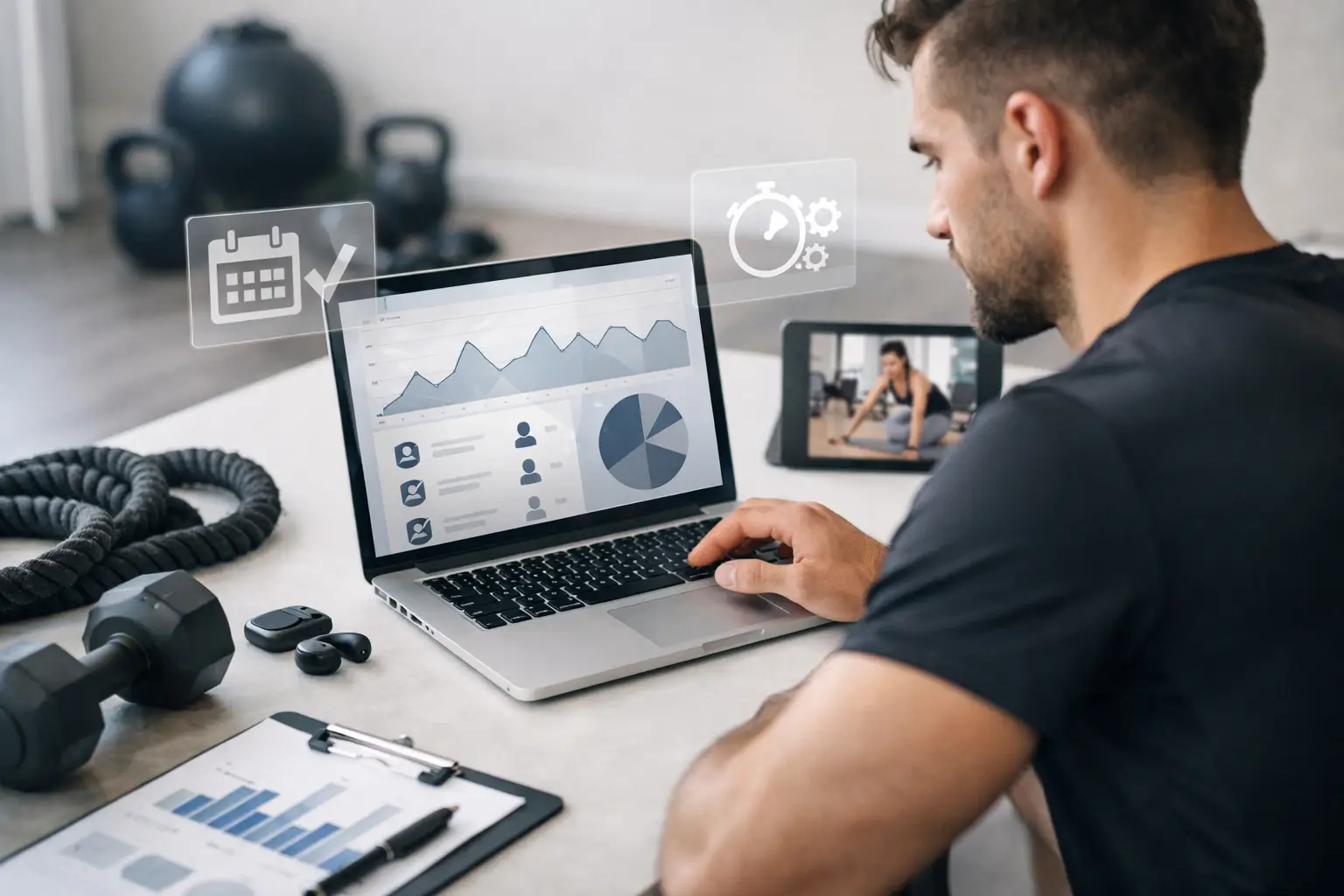
An online trainer automation system is the operational layer behind remote coaching. At a basic level, it should handle programming, nutrition delivery, habit tracking, messaging, progress analysis, and recurring client workflows in one place. At a higher level, it should also help you automate decisions that follow clear coaching rules, like progression logic, missed-check-in follow-up, compliance scoring, and nutrition adjustments based on trend data.
This is where many coaches make the wrong software choice. They buy one tool for workouts, another for meal plans, a form app for weekly check-ins, a messaging platform for client support, and a spreadsheet to pull it all together. That stack can work early on, but it creates friction fast. Data gets fragmented, response time slows down, and every client update becomes manual reconciliation.
A centralized system changes the economics of coaching. Instead of spending hours collecting information before you coach, the platform helps organize, score, and surface what matters. You spend more time interpreting patterns and less time chasing them.
The real business case for a guide to online trainer automation systems
Most coaches start looking into automation because they are overloaded. The deeper reason is margin. Manual delivery eats the hours that should be going toward retention, referrals, and higher-value client support. If your back end is inefficient, growth usually means longer workdays, delayed responses, and inconsistent service quality.
Automation fixes that only when it is tied to outcomes. Saving 10 minutes per client per week is useful. Saving those 10 minutes while improving compliance visibility and speeding up intervention is far more valuable. Good systems do both.
For fitness and nutrition coaching, the strongest automation systems usually improve four areas at once: operational speed, consistency of delivery, data quality, and perceived professionalism. Clients notice when their plan updates make sense, when check-ins feel structured, and when the coaching experience is mobile-first rather than patched together.
That last piece matters more than many coaches admit. Your service is not judged only by your knowledge. It is judged by the experience of being coached.
The features that matter most
Start with programming and progression. If your platform cannot build, duplicate, adjust, and automate training progressions efficiently, it will create drag every week. Strength coaches and physique coaches need tools that support structured progression without forcing a one-size-fits-all template. Auto-periodization can be useful here, but only if you can still override decisions based on fatigue, readiness, or performance context.
Nutrition is the next major filter. A serious system should go beyond static meal PDFs. Look for macro management, meal planning flexibility, food swaps, and practical ways to adjust intake based on trend changes in body weight, adherence, and goal phase. Nutrition automation is not about giving every client the same plan. It is about reducing repetitive edits while preserving coaching logic.
Check-ins are where most remote businesses either scale or stall. A strong platform should collect weekly data in a consistent format, highlight changes from the prior week, and help you interpret patterns quickly. This is where automation becomes immediately profitable. Instead of reading 40 open-ended check-ins line by line, you should be able to identify who is thriving, who is drifting, and who needs urgent intervention.
Messaging also matters, but not for the reason most people think. The goal is not constant access. The goal is structured communication inside the coaching workflow. When client messages, habits, check-ins, training logs, and nutrition data live in the same environment, response quality improves because context is already there.
Then there is analytics. If your system cannot show trend data across adherence, body composition, training performance, and engagement, you are coaching from snapshots instead of patterns. Good analytics do not replace experience, but they reduce guesswork.
What should be automated and what should stay manual
This is where nuance matters. Coaches who automate too little stay buried in admin. Coaches who automate too much start delivering a lower-trust service.
Good candidates for automation include onboarding flows, recurring reminders, habit prompts, check-in collection, compliance scoring, training progression rules, food substitutions, and status-based follow-up. These are repeatable workflows where consistency is an advantage.
What should usually stay human is interpretation. Plateaus, low compliance, poor recovery, emotional eating patterns, schedule changes, and motivation issues are rarely fixed by a trigger alone. The software can surface the issue faster, but the coaching value is in your response.
A useful rule is simple: automate the process, not the relationship. Clients still want to feel coached, not processed.
How to evaluate a guide to online trainer automation systems in practice
When coaches compare systems, they often get distracted by feature count. A better test is workflow compression. How many steps does the platform remove from your weekly delivery cycle?
Map out a normal client week. A client trains, logs nutrition, checks off habits, sends messages, and completes a check-in. You review data, update programming, modify calories or macros if needed, answer questions, and track progress. The right platform should compress that loop into one operating environment.
Then test the edge cases. Can you handle a strength athlete, a fat-loss client, and a hybrid coaching roster without hacking the system? Can you manage branded delivery if professionalism is a selling point? Can a small team use it without duplicating work? If the answer is no, the software may look efficient in a demo but break under real business conditions.
You should also look closely at intelligence features. AI support can save real time when it helps with check-in analysis, draft responses, food suggestions, or progression recommendations. But accuracy and coach control matter. You want assistance, not blind automation. In a serious coaching business, every recommendation still needs to align with your standards and methodology.
Why all-in-one usually wins for scaling coaches
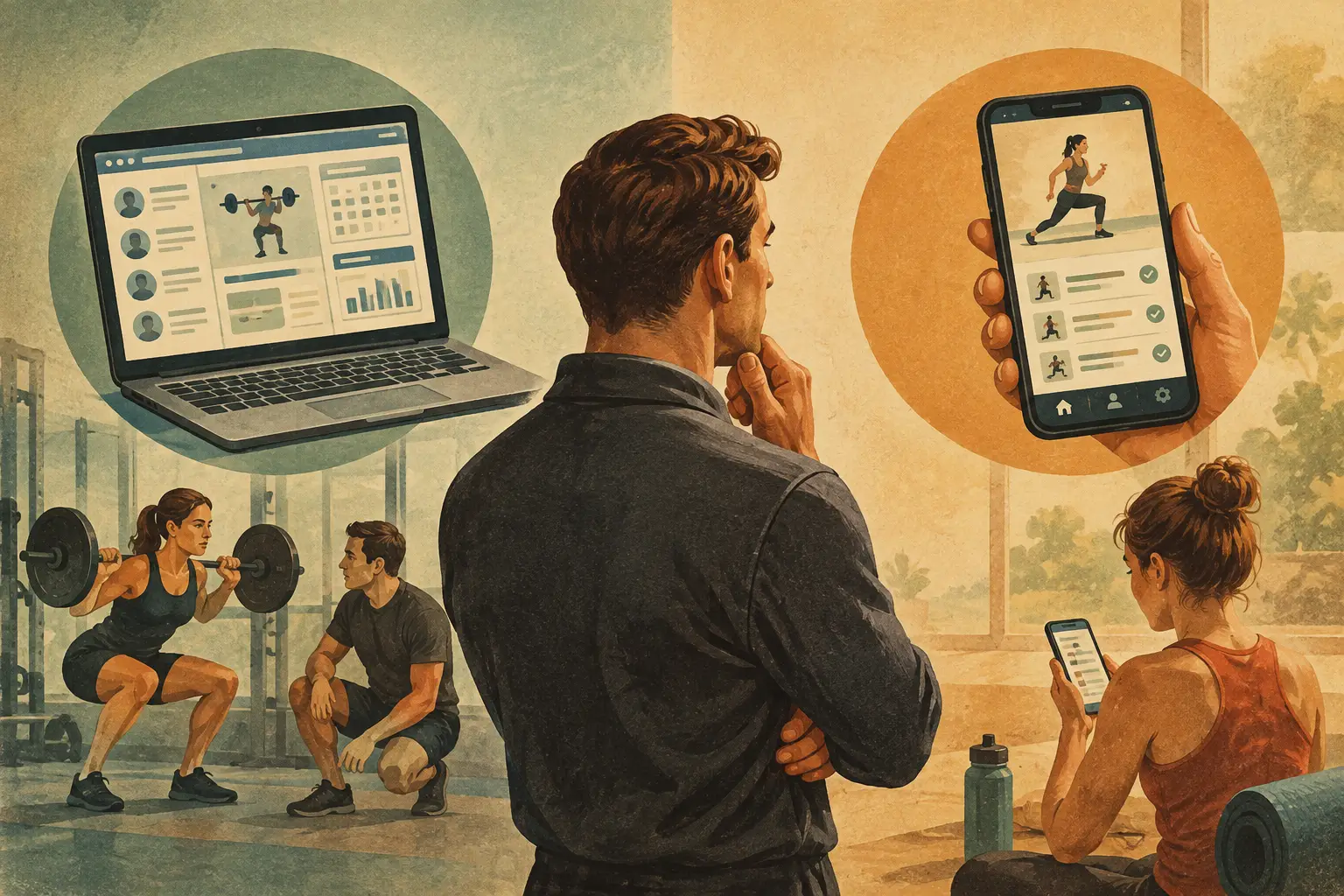
There are cases where a specialized stack makes sense. A large company with custom operations may prefer best-in-class tools for each function. But most independent coaches and growing teams do better with one platform that handles training, nutrition, check-ins, habits, communication, analytics, and branding together.
The reason is not convenience alone. It is compounding efficiency. When each client action feeds the same system, your automations become smarter because the data is connected. Compliance can influence progression decisions. Nutrition adherence can inform check-in triage. Habit completion can add context to body composition changes. That kind of integration is hard to recreate with disconnected tools.
It also improves the client experience. Fewer logins, fewer missed tasks, and a more cohesive mobile flow generally lead to better engagement. Better engagement usually leads to better adherence. And adherence, more than almost anything else, drives outcomes.
Platforms built specifically for coaching businesses tend to have the advantage here. CoachingPortal, for example, combines workout delivery, meal planning, macro management, auto-periodization, check-ins, analytics, habit tracking, white-label branding, and AI-assisted coaching workflows in one environment. That matters when your goal is not just to save time, but to deliver a higher-level service at scale.
Common mistakes coaches make when adopting automation
The first mistake is importing bad processes into better software. If your check-ins are vague, your automations will still produce vague outputs. If your program design lacks progression logic, no platform can manufacture it for you.
The second mistake is overbuilding from day one. You do not need 20 automations before you have a clear coaching model. Start with the repetitive pain points that cost the most time: onboarding, weekly check-ins, training updates, nutrition adjustments, and client reminders.
The third mistake is failing to communicate the system to clients. Automation works best when expectations are clear. Clients should know where to message, when to check in, how progress is reviewed, and what kinds of responses they can expect. Structure increases perceived value when it is presented as part of a professional coaching process.
Choosing the right system for your stage of business
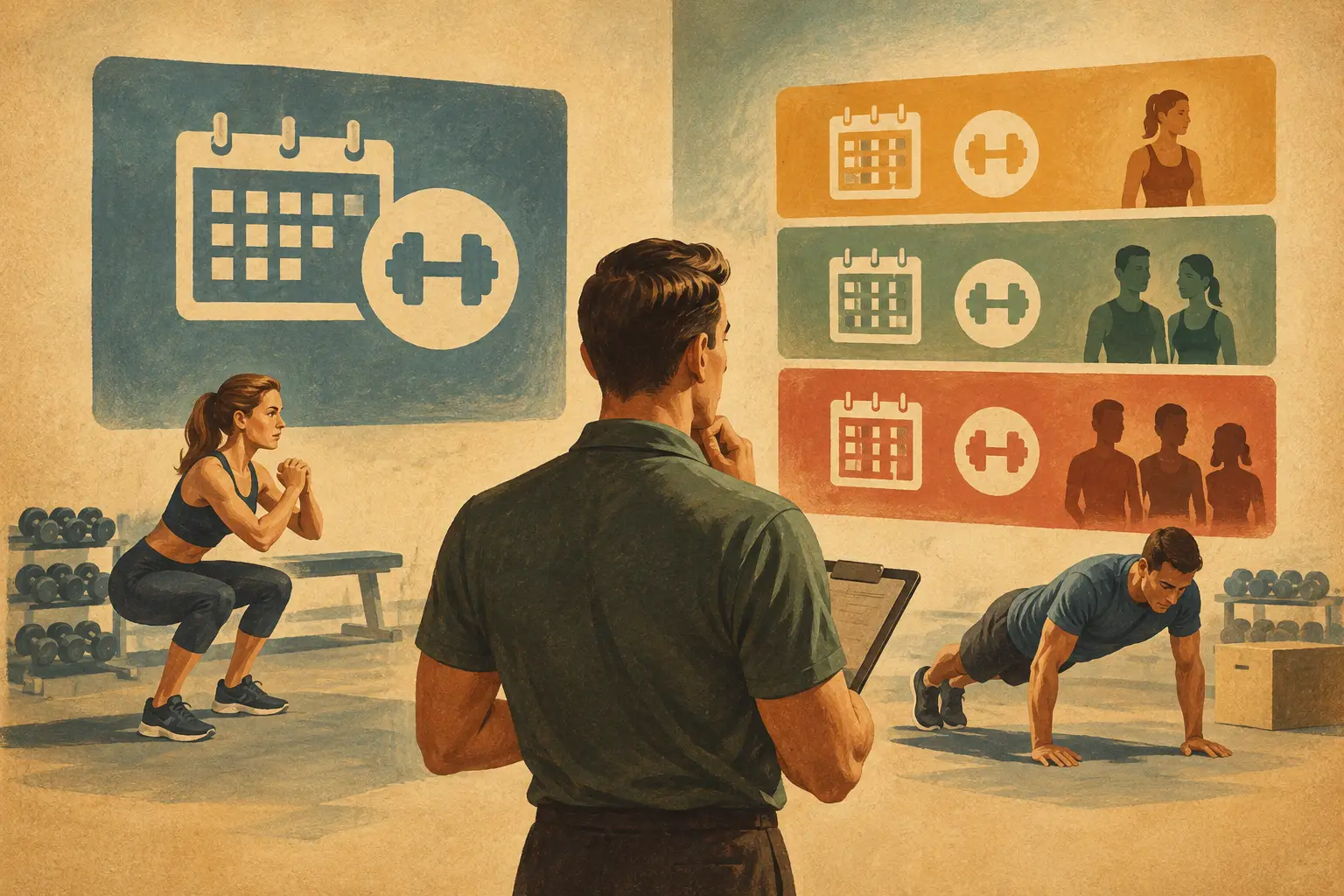
If you are a solo coach with a small roster, your priority is usually reclaiming time without losing personalization. If you are growing past 30 or 40 active clients, standardization and consistency start to matter more. If you run a team, permissions, shared workflows, and brand control become critical.
So the right choice depends on your stage. But the direction is the same. You want a system that reduces admin, improves delivery quality, and gives you more reliable insight into client behavior.
That is the real purpose of automation in coaching. Not less coaching. Better coaching, delivered through stronger infrastructure.
The coaches who scale well are rarely the ones doing the most manually. They are the ones who build systems that protect their time, sharpen their decisions, and make the client experience feel more professional at every step.