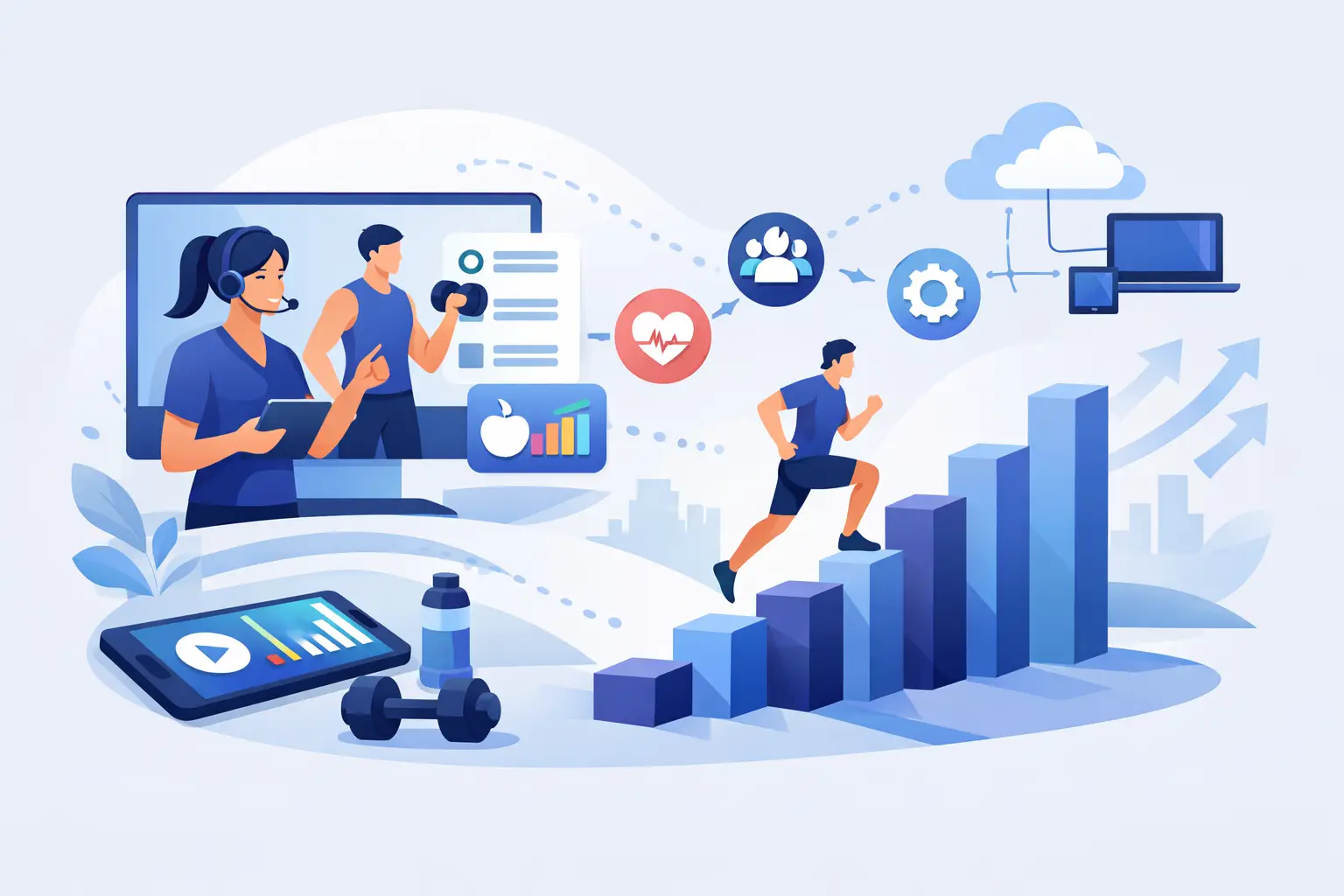
If your coaching business still runs on spreadsheets, separate workout apps, a meal tracker, a messaging tool, and a weekly check-in form patched together with manual follow-up, you do not have a coaching system. You have a bottleneck. The right fitness coaching software fixes that by centralizing delivery, reducing admin, and giving clients a more structured experience they can actually follow.
That matters because most coaching businesses do not stall from lack of expertise. They stall from operational drag. Programming takes too long. Nutrition updates get buried in messages. Check-ins pile up. Client data lives in five places. And as client load grows, personalization starts to slip. Coaches either work longer hours or accept lower service quality. Neither option is a real growth strategy.
What fitness coaching software should actually do
A lot of platforms claim to support coaching, but many are just client communication tools with a workout builder attached. Serious coaches need more than that. Good fitness coaching software should act as the operating system for delivery, not just a digital clipboard.
At a minimum, it should bring training, nutrition, habits, messaging, and progress tracking into one place. But the real difference shows up in how those systems work together. If a client misses sessions, check-in data should make that visible quickly. If body weight trends shift, nutrition targets should be easy to adjust. If performance stalls, progression management should not require a full rewrite of the program from scratch.
This is where disconnected tools start to cost more than they save. A cheap stack of single-purpose apps looks manageable at 10 clients. At 50 or 100, it becomes a daily tax on your attention.
The real value is operational leverage
Most coaches evaluate software by features. That is understandable, but incomplete. Features matter only if they reduce friction in delivery or improve outcomes at scale.
For example, workout programming is not just about building sessions. It is about building them fast, progressing them logically, and modifying them without wasting an hour every time a client has a busy week or minor limitation. Nutrition tools are not just about meal plans. They are about creating adherence, adjusting intake based on actual response, and keeping the process practical enough that clients stay compliant.
The strongest platforms create operational leverage. That means one coach can manage more clients without lowering standards. It also means the coaching experience becomes more consistent. Clients get clearer structure, faster feedback, and better visibility into what matters.
That consistency has a retention effect. People stay longer when the service feels organized, responsive, and results-focused.
Why all-in-one matters for online coaches
Online coaching lives or dies on process. In person, your presence carries some of the experience. Remotely, your system is the experience.
When your client has one app for training, another for macros, another for habits, and text messages for support, adherence usually drops. Not because the client is lazy, but because the path is fragmented. Every extra step creates another chance to disengage.
All-in-one fitness coaching software reduces that friction. The client sees workouts, meal structure, targets, progress data, and check-in requests in one mobile-first environment. That makes your coaching feel more professional and easier to follow.
For the coach, the benefit is even bigger. You are not chasing updates across platforms or re-entering the same information in multiple places. You can spot trends faster, respond faster, and spend more of your time on decision-making instead of admin.
The best platforms support evidence-based coaching
Professional coaches do not need flashy dashboards for their own sake. They need tools that reflect how real coaching decisions are made.
Training should support progression over time, not just exercise assignment. That includes structured overload, phase planning, and adjustments based on performance and recovery. Nutrition should handle calories, macros, meal structure, and behavior change without forcing every client into the same rigid template.
This is where better software helps coaches coach better. If the platform supports periodization, performance tracking, adherence trends, and meaningful check-in analysis, it becomes easier to apply evidence-based practice consistently.
That consistency matters because outcomes are rarely driven by one perfect program. They come from repeated good decisions made over months. Software should make those decisions easier, clearer, and faster.
Automation is useful, but only if it respects coaching judgment
Some coaches hear automation and assume lower-quality service. That can happen if automation is used to replace coaching instead of supporting it.
The better approach is selective automation. Let the platform handle repetitive tasks like check-in reminders, compliance scoring, food suggestions, trend analysis, and progression prompts. That gives the coach more time to interpret context, solve problems, and communicate well.
In other words, automation should remove low-value repetition while preserving high-value judgment. If a system auto-summarizes client check-ins, flags non-compliance, or identifies likely adjustment points, the coach can review faster and respond with more precision. That is not less personal. It is more efficient personalization.
AI can help here too, but only when grounded in sound coaching logic. Generic AI output is not enough. Coaches need assistance tied to programming structure, nutrition targets, and real client behavior. Used well, AI shortens workflow without turning your service into canned advice.
What to look for before you commit
If you are comparing fitness coaching software, the question is not just which platform has the longest feature list. The question is whether it fits the way your business delivers results.
Start with workflow. How long does it take to onboard a client, assign training, set nutrition targets, review a check-in, and make weekly updates? If the platform cannot streamline those core actions, it will not help you scale.
Then look at integration inside the platform itself. Can programming, nutrition, and habits inform each other, or are they just separate tabs living under the same logo? Unified systems outperform surface-level bundles because they reduce decision lag.
You should also evaluate client experience. If the app is confusing, slow, or cluttered, compliance suffers. Clients do not need more features. They need clear next actions, easy logging, and visible progress.
Brand presentation matters too, especially for coaches charging premium rates. White-label branding, polished delivery, and a professional mobile experience raise perceived value. That does not replace results, but it absolutely supports retention and referrals.
Trade-offs are real
Not every coach needs the same setup. A solo trainer with 15 general fitness clients may tolerate simpler tools longer than a physique coach managing high-touch nutrition and detailed body composition check-ins. A hybrid business with multiple coaches will care more about standardization, team workflows, and brand consistency.
There is also a learning curve with more advanced systems. If a platform offers deeper programming logic, nutrition automation, and analytics, setup may take longer than a basic app. That is not necessarily a downside. It depends on whether the added capability creates ongoing time savings and better delivery.
Price should be viewed the same way. Higher monthly software cost can still be cheaper than a fragmented stack plus the hours lost every week managing it. For most growing coaching businesses, the hidden cost is not subscription spend. It is manual work.
Where serious coaching businesses are heading
The market is moving away from lightweight tools and toward platforms that function as business infrastructure. Coaches want fewer apps, better automation, stronger data visibility, and client delivery that feels premium without becoming harder to manage.
That shift is rational. Clients expect mobile access, faster communication, personalized programming, and nutrition guidance that adapts. Coaches expect technology to help them scale without lowering standards. The software sitting underneath the business now influences fulfillment, retention, and brand perception far more than it did a few years ago.
That is why purpose-built systems are gaining ground over generic tools. A platform designed for fitness and nutrition coaching understands progression, adherence, check-ins, and body composition work in a way general software does not. One example is CoachingPortal, which combines programming, meal planning, automation, analytics, messaging, and white-label delivery in one environment built specifically for coaches who need efficiency without sacrificing coaching quality.
The bigger point is not the brand name. It is the direction of the category. Fitness coaching software is no longer just an admin tool. It is part of the service itself.
If you want to coach at a higher level, your system has to carry more of the load. The best time to fix that is before growth turns your backend into the reason clients stop getting your best work.