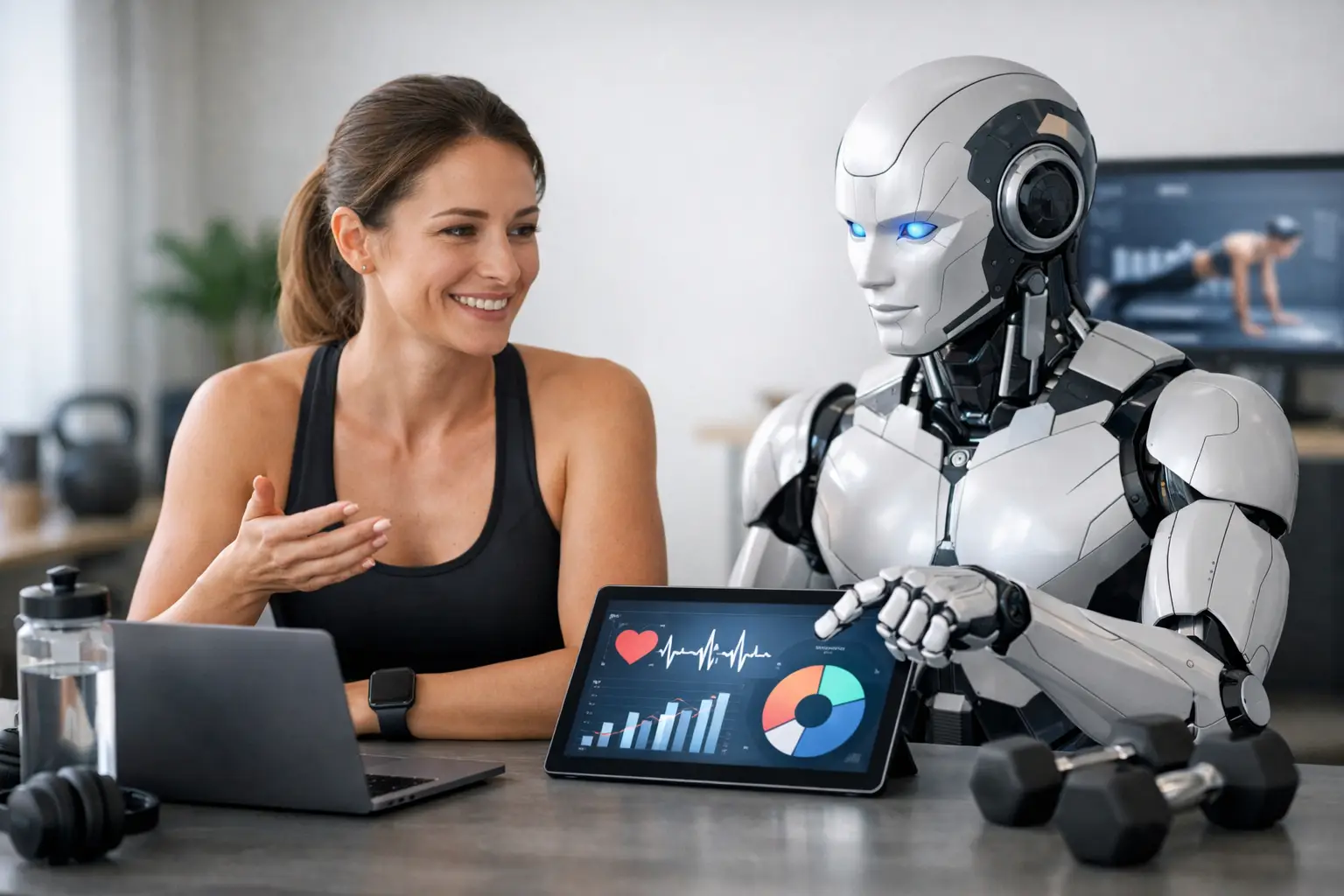
A coach with 80 clients does not lose time in programming alone. The real drain is the pileup around it - check-ins, macro adjustments, missed workouts, follow-up messages, habit tracking, and the mental load of deciding who needs attention first. That is where the question becomes practical: can AI help online fitness coaches in a way that actually improves delivery, not just adds another tool to manage?
The short answer is yes, but only when AI is applied to the right parts of the coaching workflow. Used well, it reduces admin, sharpens decision-making, and helps coaches stay responsive at scale. Used poorly, it turns coaching into generic automation and weakens the very trust clients pay for.
Where AI can help online fitness coaches most
AI is most valuable when it handles pattern recognition, repetitive analysis, and first-pass recommendations. Those are the tasks that eat hours every week but do not always require a coach to start from zero.
Weekly check-ins are a clear example. A coach may review body weight trends, training feedback, hunger, energy, sleep, adherence, and recovery markers across dozens of clients. The work is not just reading responses. It is spotting changes, identifying who is drifting off plan, and deciding what deserves action now versus later. AI can summarize that information quickly, flag concerns, and surface likely adjustments, which lets the coach spend more time on judgment rather than sorting data.
Programming is another strong use case, especially for coaches managing recurring blocks across a roster with different goals and recovery profiles. AI can assist with autoregulation by interpreting RIR-based feedback, fatigue patterns, and session performance to suggest load changes, volume shifts, or deload timing. That matters because good programming is not static. It adapts. When AI supports that process inside a science-based framework, it can help coaches maintain consistency without manually recalculating every client every week.
Nutrition coaching also benefits when AI is used for support rather than replacement. If a client consistently misses macros, the issue often is not effort alone. It is friction. Meal swaps, food substitutions, grocery simplification, and recipe suggestions can remove that friction fast. AI can generate practical alternatives based on macro targets and food preferences, which makes adherence easier without forcing the coach to manually rewrite plans all day.
The real advantage is speed with context
Many coaches hear "AI" and think content generation. That is not where the biggest upside lives. The real advantage is speed with context.
A useful AI system does not just produce text. It reads what is happening in the coaching relationship and helps the coach respond faster with better information. That may mean identifying a client whose performance is dropping while fatigue and stress rise. It may mean noticing a weight loss client is compliant on weekdays but consistently falling off on weekends. It may mean seeing that a physique athlete is hitting calories but underperforming because training stress is outpacing recovery.
That kind of support changes how a coach spends the week. Instead of hunting for issues manually, they can triage quickly, prioritize high-risk clients, and deliver more precise changes. The result is not just time saved. It is a higher standard of coaching across a larger roster.
Where AI should not replace the coach
There is a line that serious coaches should not cross. AI should not become the coach's substitute for critical thinking, relationship management, or professional responsibility.
Client psychology is the best example. A check-in may look like a compliance problem on paper, but the real issue could be stress at work, poor sleep from a newborn, travel disruption, or growing frustration with the pace of progress. AI can flag those patterns. It cannot carry the full emotional and motivational context with the same judgment as an experienced coach.
The same goes for more complex programming decisions. An algorithm can suggest a deload or load adjustment. It should not be blindly trusted in every case. Advanced athletes, injury history, sport demands, and specific prep timelines often require a coach to weigh factors beyond what the system can infer.
That is the trade-off. The more standardized the task, the stronger AI tends to be. The more nuanced and human the situation, the more the coach needs to lead.
What good AI looks like in a coaching business
If you are evaluating tools, ask a simple question: does this reduce decision fatigue inside the workflows I already run?
Good AI for online fitness coaching is embedded into delivery. It works inside training, nutrition, check-ins, and client management. It does not force you to copy data between apps or generate outputs disconnected from your actual coaching process.
For example, an AI assistant that reads weekly check-ins and summarizes wins, concerns, and suggested changes is useful because it shortens the path from client input to coach action. An AI nutrition tool that recommends meal swaps when macros are off is useful because it helps preserve adherence in real time. Programming automation that supports multi-block periodization, RIR-based load adjustment, and fatigue-driven deload logic is useful because it reflects how many evidence-based coaches already think.
That is why platform design matters as much as AI itself. In a fragmented tech stack, AI can become one more thing to monitor. In an integrated system, it becomes operational leverage. CoachingPortal is built around that idea, combining training, nutrition, check-ins, messaging, compliance analytics, and AI automation in one workflow so coaches can move faster without losing control.
Can AI help online fitness coaches scale without losing personalization?
This is the real question behind the headline. Most coaches are not trying to save a random hour here or there. They want to grow without becoming a bottleneck.
AI can absolutely help online fitness coaches scale, but personalization depends on how the system is used. If AI is only generating canned messages, clients will feel that quickly. If it is helping the coach interpret data, spot patterns, and make smarter decisions sooner, the client experience can actually become more personal because the coach has more bandwidth for meaningful interaction.
Think about what clients notice. They notice when adjustments are timely. They notice when their coach remembers context. They notice when plans evolve based on feedback rather than sitting untouched for weeks. AI supports personalization best when it improves responsiveness and consistency behind the scenes.
That is especially valuable for coaches operating on monthly recurring revenue. Retention is tied to perceived attention and results. If AI helps a coach catch adherence drop-offs earlier, respond to plateaus faster, and keep communication sharp, it directly supports retention, not just efficiency.
The best use cases are boring on purpose
The most effective AI applications in coaching are often the least flashy. They are not about replacing expertise with prompts. They are about removing friction from repetitive work.
That includes summarizing check-ins, flagging low compliance, suggesting exercise load changes based on RIR feedback, identifying fatigue trends, recommending meal substitutions, and organizing client communication. None of that sounds futuristic. That is exactly why it matters. These are the operational tasks that quietly limit growth when done manually.
For most coaching businesses, the value of AI is not that it creates something impossible. It is that it helps the coach execute proven systems more consistently across more clients.
The standard should still be evidence-based coaching
AI is only as good as the logic underneath it. If the recommendations are based on weak assumptions or generic rules, the output will look polished while delivering average results.
Coaches should be skeptical of black-box automation that makes strong claims without grounding in applied coaching logic or exercise science. Programming support should align with principles coaches already trust, such as autoregulation through RIR, appropriate volume management, and fatigue-aware planning. Nutrition support should reflect realistic adherence, energy needs, and food behavior, not simplistic macro math.
That is why the platform behind the AI matters. The point is not to automate for the sake of automation. The point is to support better coaching decisions at scale.
If you are asking whether AI belongs in your coaching business, the better question is this: where are you still spending expert time on tasks that should already be systemized? Start there. The right AI will not make your coaching less human. It will give you more room to coach like a professional at the level your clients expect.