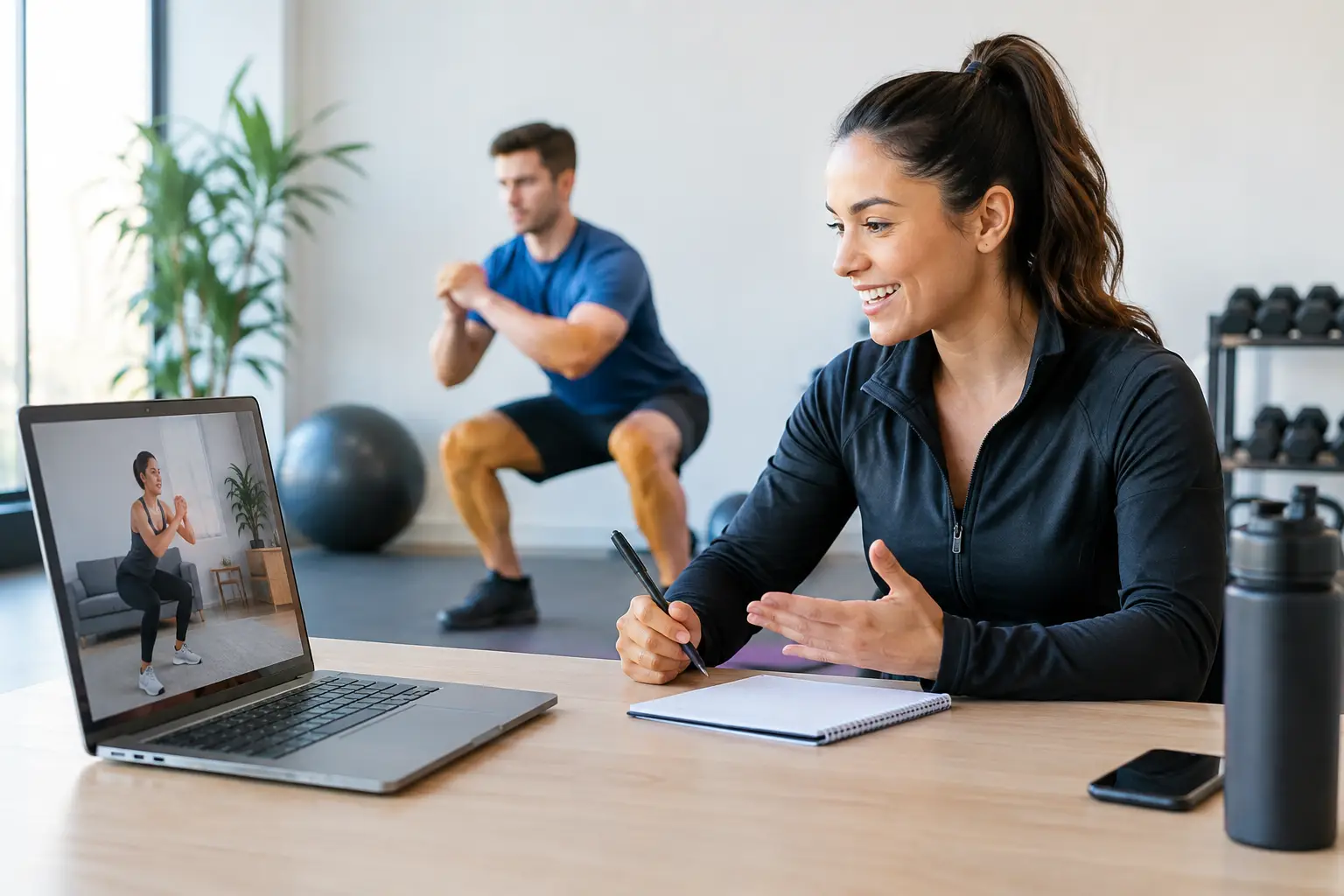
If you're still running hybrid coaching through Google Sheets, a workout app, a meal tracker, and DMs, you're not running a system - you're patching together one. That usually works until client volume climbs, response times slip, and your delivery starts depending more on admin endurance than coaching quality. The best software for hybrid coaches fixes that by consolidating programming, nutrition, communication, compliance, and reporting into one operating layer.
Hybrid coaching is harder than standard online coaching because you're managing both asynchronous and high-touch delivery. Some clients train in person once or twice a week and need the rest handled remotely. Others follow a fully remote plan but expect fast feedback, habit coaching, and nutrition adjustments between check-ins. The software you choose has to support both models without forcing you into double entry, duplicate communication, or fragmented client records.
What the best software for hybrid coaches needs to do
A lot of platforms look good in a demo because they solve one visible problem. They might offer polished workout delivery, or a decent meal planner, or built-in messaging. But hybrid coaches need the full operating stack, not one good feature.
At minimum, your software should let you build and adjust training programs efficiently, collect and analyze check-in data, manage nutrition inside the same client workflow, and track adherence in a way that actually informs decision-making. If workout programming lives in one app and nutrition is somewhere else, your client experience gets weaker and your own review process gets slower.
This matters because training and nutrition do not operate as separate departments. Load progression, body weight trends, recovery feedback, food adherence, and behavior compliance all affect the next coaching decision. When your software keeps those variables disconnected, you spend more time assembling context than applying your expertise.
The strongest platforms also reduce repetitive work. That means automation for progressions, recurring tasks, reminders, check-in interpretation, and habit tracking. Not because automation replaces coaching, but because it removes low-value admin so you can spend more time on analysis, communication, and retention.
The real evaluation criteria most coaches miss
When coaches search for the best software for hybrid coaches, they often compare feature counts instead of workflow quality. That's a mistake. Ten disconnected features are less useful than four tools that work together inside a clean coaching process.
The first question is whether the platform matches how you coach now and how you want to coach at 50, 100, or 200 clients. A solo strength coach with a small premium roster can survive with more manual touchpoints. A hybrid business trying to grow cannot. If every program edit, macro update, and check-in response still requires manual review with no system support, you'll hit a ceiling fast.
The second question is whether the platform improves client adherence, not just coach convenience. This is where many generic apps fall short. They deliver content, but they don't create a structured behavior environment. Habit tracking, compliance scoring, fast logging, visible progress trends, and mobile-first check-ins are not cosmetic features. They directly affect how consistently clients follow the plan.
That point is supported by behavior change research and exercise adherence literature. Clients do better when expectations are clear, feedback is frequent, and progress is visible. Software should reinforce those conditions. If it only stores workouts, it is not supporting coaching outcomes at a high level.
The third question is whether the platform helps you look more professional. Hybrid clients are paying for expertise, but they are also judging delivery. White-label branding, clean dashboards, centralized communication, and organized progress data increase perceived value. That influences retention more than many coaches admit.
Where most software options fall short
A common pattern in this market is specialization without integration. One app is strong for programming. Another is better for habits. Another handles food logging. Another manages forms or messaging. On paper, that sounds flexible. In practice, it creates operational drag.
Every extra tool adds a new login, a new sync issue, and a new place where data can get missed. It also creates a worse client experience. Clients should not need to remember where to message you, where to check workouts, where to submit photos, and where to review nutrition targets. Friction lowers adherence. Confusion lowers perceived coaching quality.
There is also the issue of decision speed. If a client reports poor recovery, missed sessions, increased hunger, and scale stagnation, your next move depends on seeing training, nutrition, habits, and recent check-ins together. If that information is split across platforms, your review becomes slower and less consistent.
For hybrid coaches, this problem is amplified because in-person sessions create additional context. You might notice movement quality in the gym, then need to adjust remote programming, activity targets, or recovery recommendations later. A fragmented tech stack makes those transitions harder than they need to be.
What a stronger hybrid coaching stack looks like
The best setup is usually not the app with the flashiest interface. It is the platform that lets you coach from one center of gravity. Training, nutrition, check-ins, messaging, analytics, and client habits should all inform each other.
For example, if a client is underperforming in the gym and also showing low compliance on meals and sleep habits, the software should make that pattern easy to spot. If progression rules can be applied automatically based on performance trends, that saves time without reducing coaching quality. If food suggestions and macro adjustments can be managed in the same system as body composition tracking, your interventions become faster and more precise.
This is where purpose-built coaching platforms separate themselves from general fitness apps. They are designed around ongoing client management, not one-time program delivery. The difference is substantial if you run recurring monthly coaching.
A platform like CoachingPortal fits this model because it combines workout programming, auto-periodization, meal planning, macro management, check-ins, messaging, analytics, habits, and white-label delivery in one environment. More importantly, those features are built around coaching operations rather than being bolted together. For hybrid coaches, that means less time stitching workflows together and more time making better decisions.
The trade-offs to think through before choosing
No software is right for every coach. If you only deliver basic training plans and check in by text with a handful of lifestyle clients, an advanced all-in-one system may be more than you need right now. Simpler tools can be enough at a small scale.
But if your service includes individualized programming, nutrition coaching, weekly reviews, progress analysis, and a branded client journey, underpowered software becomes expensive in a different way. You pay in time, inconsistency, and client drop-off.
There is also a learning curve trade-off. More capable platforms require better setup. You need to build templates, define check-in processes, and standardize parts of your delivery. Some coaches resist that because manual coaching feels more personal. In reality, structured systems usually make personalization easier because they give you clean data and more time to think.
Pricing should be evaluated the same way. Do not compare subscription cost in isolation. Compare it against admin hours saved, clients retained, and how many disconnected apps it replaces. A platform that costs more per month but removes five manual workflows may be the cheaper option in practice.
How to choose the best software for hybrid coaches
Start with your current delivery model. Map the full client journey from onboarding to program updates to check-ins to offboarding. Identify every place where you copy data, switch apps, wait on missing information, or repeat the same task manually. That is where software should create leverage.
Then evaluate platforms based on operational fit. Can you manage both in-person and remote clients without creating separate systems? Can you coach training and nutrition in one place? Can you review compliance, progress, and communication without hunting through tabs and tools? Can the platform support your client load six months from now?
Finally, test from the client side, not just the coach dashboard. Clients stay longer when software is easy to use, clear, and engaging. If their experience feels cluttered or disconnected, your retention will reflect it.
The best software for hybrid coaches is not the one with the longest feature page. It is the one that helps you deliver a higher standard of coaching with less friction, better data, and a client experience that feels professional from day one.
If your business is growing and your current stack still depends on workarounds, that is usually the signal. Better software is not just an efficiency upgrade. It is the infrastructure that lets your coaching quality hold up as your roster expands.