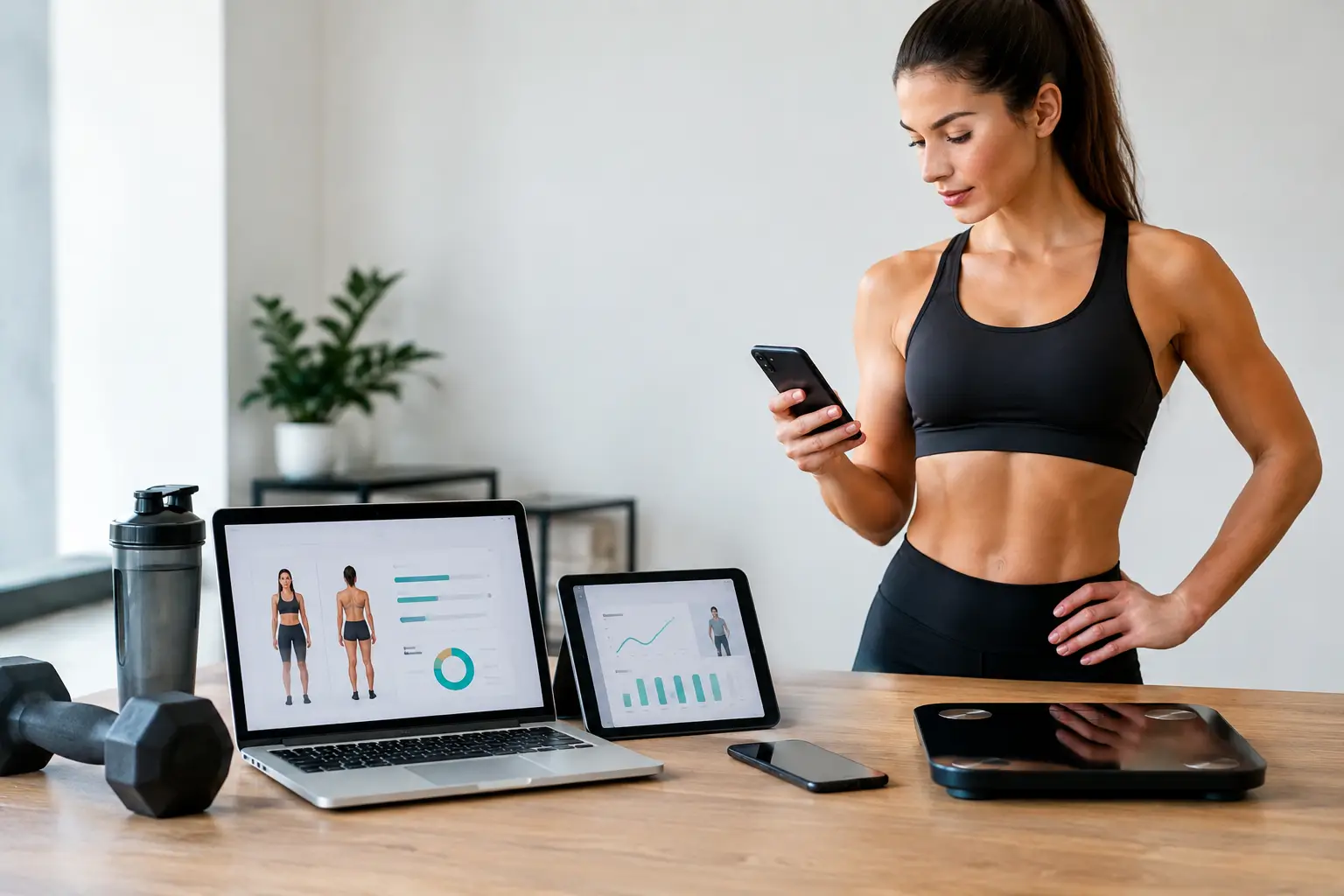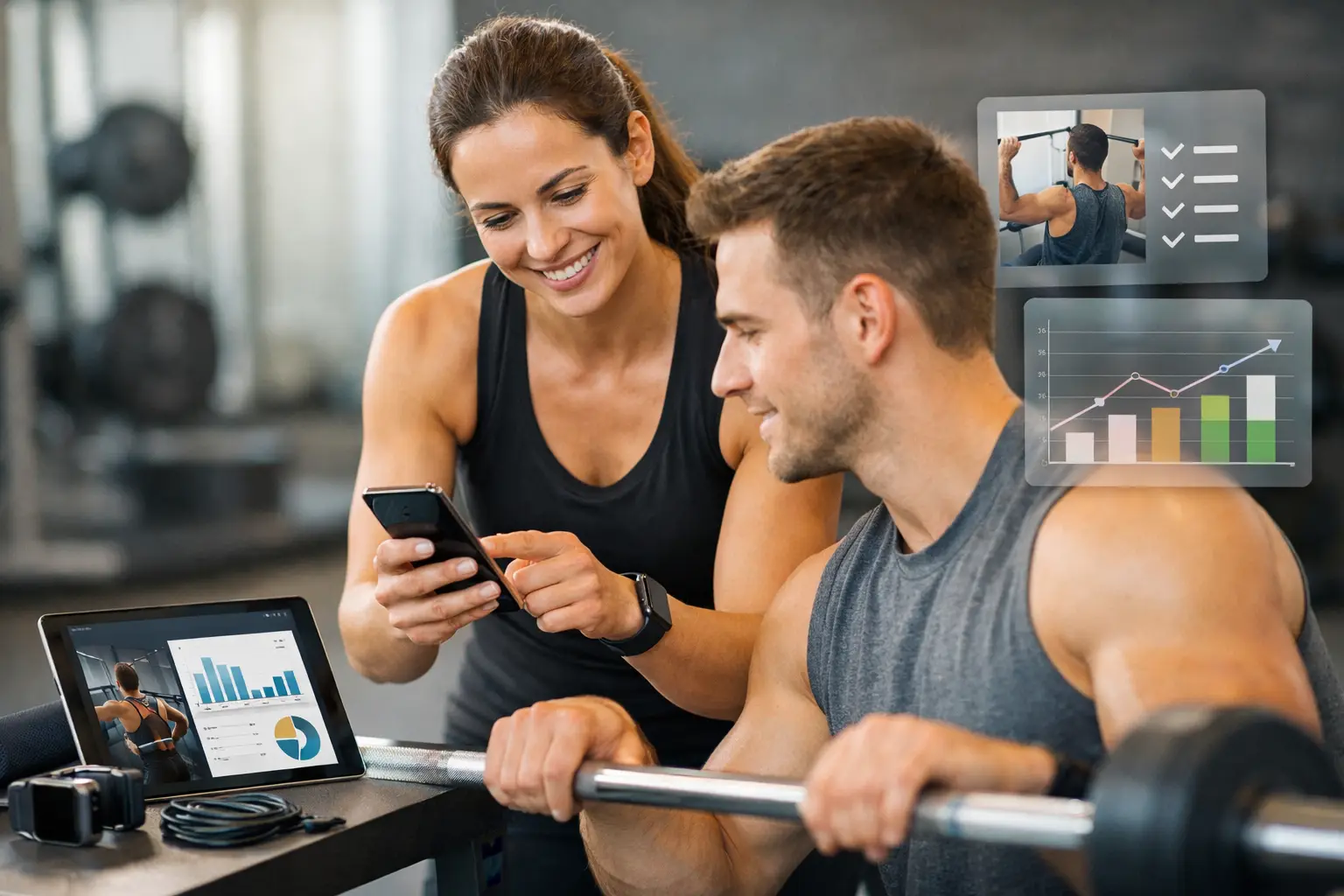
Most coaches do not need another app. They need fewer moving parts.
That is the real standard a gym personal trainer app has to meet. If it adds one more login, one more manual check-in process, or one more place where client data lives, it is not helping your business. For serious fitness professionals, the right app is not just a mobile add-on. It is operating infrastructure for programming, nutrition, communication, accountability, and retention.
That distinction matters because many tools in this category are built for workouts, not coaching. They can deliver a plan, maybe track a few habits, and send a push notification. But once you are managing real client relationships at scale, the gap shows up fast. Programming gets separated from nutrition. Messaging gets buried. Check-ins become inconsistent. Progress data sits in different systems. And the coach ends up doing expensive manual work to hold everything together.
What a gym personal trainer app actually needs to solve
If you coach a handful of highly independent clients, almost any decent tool can look good in a demo. The test is what happens when your roster grows, your offer expands, or your clients need tighter accountability.
A real gym personal trainer app should reduce operational drag while improving client execution. That means it should help you write and progress training programs, manage nutrition, collect client feedback, monitor adherence, and act on data quickly. If it only handles one or two of those jobs, you still need a patchwork system around it.
For most coaches, that patchwork is the real bottleneck. Spreadsheets, messaging apps, form tools, meal planners, and separate workout software create friction at every handoff. The issue is not just inconvenience. Fragmented delivery makes your coaching feel less consistent, less premium, and harder to scale.
The best gym personal trainer app supports coach decision-making
Good software should not replace coaching judgment. It should make that judgment faster and better informed.
That starts with training delivery. A coach needs more than a place to assign exercises. You need a system that supports progression logic, periodization, substitutions, performance tracking, and adjustments based on compliance and recovery data. If your app forces you to rebuild programs from scratch every week, you are spending time on process instead of outcomes.
Nutrition matters just as much. A lot of workout-first platforms treat nutrition like a side feature, which is a problem for any coach working on body composition, performance, or lifestyle change. Meal planning, macro targets, food logging support, and behavior tracking should live close to the training plan, not in a separate workflow. Clients do not experience their goals in silos, and your software should not force you to coach that way.
Then there is feedback. Check-ins are where coaching quality either compounds or breaks down. If clients submit updates inconsistently, or if their data arrives in a format that is hard to review, your response quality drops. A stronger system structures the check-in process, centralizes photos, metrics, habit adherence, and subjective feedback, and helps the coach identify where intervention is needed.
This is where automation becomes useful, not gimmicky. Compliance scoring, trend analysis, smart prompts, and AI-assisted review can surface issues faster, especially when you are managing dozens of active clients. The trade-off is simple: automation should reduce repetition, not flatten personalization. If the app turns coaching into canned replies, it becomes a liability.
Why disconnected tools cost more than they seem
Most coaches underestimate the business cost of a fragmented stack because each tool looks cheap on its own.
But the real cost shows up in hours lost to admin, slower onboarding, duplicated data entry, and weaker client experience. When a client has to use one app for training, another for nutrition, and text for accountability, adherence usually drops. Not because they are unmotivated, but because your delivery has too much friction.
That friction also affects retention. Clients stay longer when coaching feels organized, responsive, and clearly personalized. They churn faster when updates are delayed, plans feel generic, or progress reviews are inconsistent. A gym personal trainer app should strengthen the feeling that your service is structured and high touch, even when parts of the workflow are automated behind the scenes.
For growing coaching businesses, this becomes non-negotiable. You cannot scale high-value 1:1 services if every new client adds another layer of manual management. At some point, the system either supports growth or punishes it.
Features that matter more than flashy extras
There is no shortage of features in this category. The question is which ones actually improve delivery.
Workout programming is table stakes, but depth matters. Exercise libraries, video demos, sets, reps, tempo, rest intervals, and progression tracking should all be easy to manage. More advanced coaches also need tools for phased programming and auto-adjustments over time.
Nutrition tools should go beyond static PDFs or broad calorie targets. Useful systems support macro management, meal structure, food guidance, and adherence tracking in a way clients can actually follow on mobile. Coaches who work with body composition clients know this is where a lot of results are either built or lost.
Messaging should be integrated, not bolted on. When communication sits next to training data, nutrition logs, and check-ins, the coach can respond with better context and less back-and-forth. The same is true for habit tracking and progress analytics. Data is only useful when it is visible at the point of decision-making.
White-label presentation is often treated like a cosmetic perk, but it has practical value. A branded client experience increases professionalism and strengthens perceived authority. That matters when clients compare your service to low-cost template coaching or generic fitness apps.
AI can be valuable too, if it is built around coaching workflows rather than marketing hype. For example, AI support that helps analyze check-ins, flag compliance issues, or speed up meal and programming adjustments can save meaningful time. Used well, it helps a coach stay consistent as client volume grows.
How to evaluate a gym personal trainer app for your business
The easiest mistake is choosing software based on what looks impressive in a feature grid. A better approach is to map the app against your actual delivery model.
If you are primarily an online strength coach, look closely at programming depth, exercise performance tracking, and progression tools. If you are a nutrition or body composition coach, the quality of meal planning, macro systems, and adherence monitoring matters more. If you run hybrid coaching, mobile usability and communication speed become critical because clients move between in-person sessions and remote accountability.
You should also look at setup burden. Some platforms promise flexibility but require heavy manual configuration before they become useful. That can work for a large team with operations support. For most independent coaches, it is better to have a system that is powerful but practical enough to deploy quickly.
Reliability matters more than novelty. Clients will forgive a simple interface before they forgive a buggy one. Coaches will forgive a learning curve before they forgive a system that creates more admin than it removes.
This is also where all-in-one platforms tend to outperform point solutions. When training, nutrition, check-ins, analytics, and messaging live in one environment, the coaching process becomes easier to standardize and easier to scale. That is one reason platforms like CoachingPortal are gaining traction with professionals who want less software sprawl and more control over delivery quality.
The real question is whether the app helps you coach better
A gym personal trainer app should help you produce better client behavior, faster decisions, and more consistent service delivery. If it only helps you send workouts, it is not enough for a serious coaching business.
The strongest platforms create leverage. They reduce admin without making the experience feel automated. They give clients structure without making the process rigid. And they help coaches stay evidence-based and responsive even as their roster grows.
That is the benchmark worth using. Not whether the app looks modern, but whether it gives you more time to coach at a higher level while your clients get clearer direction, better accountability, and a service that feels built for results.