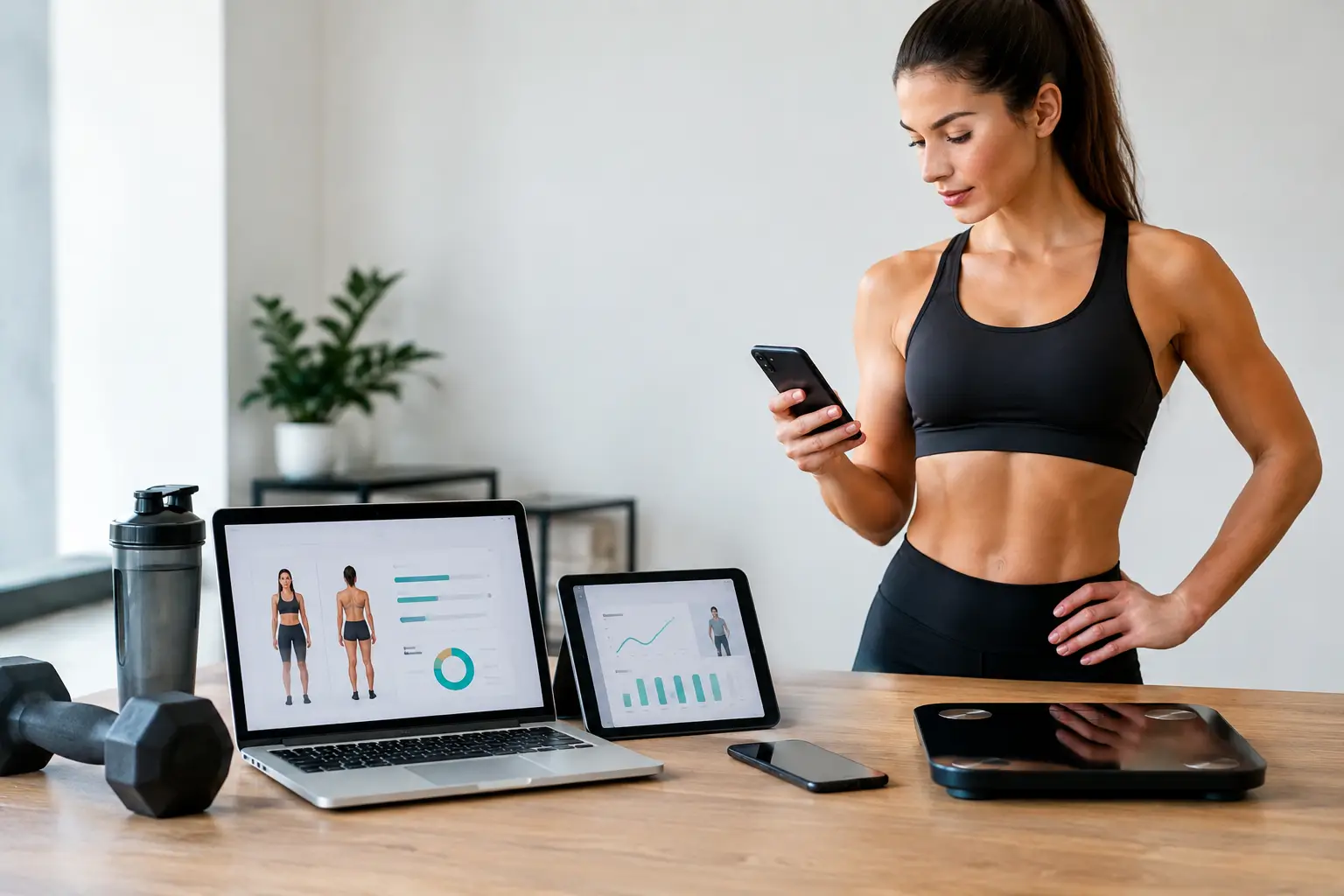
A coach with 25 clients can survive on spreadsheets, DMs, and a patchwork of nutrition and training tools. A coach with 75 clients usually can’t. That’s where a fitness personal trainer app stops being a convenience and starts becoming operational infrastructure.
For serious coaches, the question is not whether an app looks clean in screenshots. The real question is whether it reduces admin, improves adherence, and helps you deliver better decisions at scale. If the platform cannot support programming, nutrition, communication, compliance, and progress analysis in one workflow, you are still managing chaos - just with better branding.
What a fitness personal trainer app should actually do
Most coaches do not need another generic workout app. They need a system that supports the full client journey from onboarding to retention. That includes training delivery, but it also includes the work that determines results over time: check-ins, behavior tracking, nutrition targets, progress review, and consistent accountability.
A strong fitness personal trainer app should centralize the work that usually gets scattered across five or six tools. Programming should connect to progression logic. Nutrition should connect to goals and adherence. Messaging should sit next to check-in data, not inside a separate inbox. When those parts live together, coaching gets faster and more precise.
This matters because client outcomes are rarely limited by exercise selection alone. Research on adherence and behavior change consistently shows that consistency, feedback, and self-monitoring heavily influence results. In practice, that means the best app is not necessarily the one with the flashiest exercise library. It is the one that helps clients execute the plan and helps coaches spot issues before they become drop-offs.
Why disconnected tools slow down good coaches
A lot of coaching businesses hit the same wall. Programming happens in one app. Meal plans live in a PDF or spreadsheet. Check-ins come through forms. Progress photos sit in cloud folders. Client messages are buried in text threads or Instagram DMs. Nothing is technically impossible, but everything takes longer than it should.
That fragmentation creates hidden costs. You spend more time chasing context, less time making high-quality coaching decisions, and clients feel the inconsistency. Delayed feedback, unclear next steps, and missed adherence patterns do not just create friction - they weaken retention.
There is also a professionalism issue. When clients are paying recurring monthly rates, they expect a structured service. A fragmented experience can make even a skilled coach look disorganized. On the other hand, a centralized platform reinforces authority because the process feels deliberate, measurable, and repeatable.
The features that matter most for coaches
The easiest mistake is evaluating software by surface-level features instead of workflow impact. A long feature list is not enough. What matters is whether those features reduce manual work while preserving coaching quality.
Training delivery and progression
Workout programming should be flexible enough for individualization but structured enough for scale. That means exercise assignment, set and rep targets, tempo, rest, notes, substitutions, and progression rules all need to be usable without extra admin.
If you coach hypertrophy, strength, fat loss, or body recomposition clients, progression management matters more than exercise animations. You need to see whether clients are progressing load, volume, performance, and consistency over time. Auto-periodization and intelligent progression tools can save a huge amount of manual review, but only if they are aligned with actual coaching logic instead of random automation.
Nutrition coaching and macro management
For most online coaches, results are not driven by training alone. A fitness personal trainer app should support meal planning, macro targets, food logging or structured nutrition guidance, and adjustments based on progress data.
The key is usability. If nutrition tools are too rigid, coaches end up working outside the platform. If they are too vague, clients lose direction. Good systems let coaches prescribe with precision when needed and use lighter-touch habit or macro-based approaches when that is the better fit.
Check-ins and compliance tracking
This is where many apps separate themselves. Check-ins are the control center of remote coaching. You need a way to collect body weight trends, measurements, photos, biofeedback, adherence data, and subjective feedback in a format that is fast to review.
Compliance scoring is especially useful because it gives coaches an immediate read on whether the issue is the plan or the execution. If a client is underperforming on compliance, the adjustment is often behavioral before it is physiological. That distinction protects coaching quality and makes interventions more accurate.
Messaging and client accountability
Communication needs to be built into the coaching flow. Messaging inside the platform creates context. When a client asks a question about calories, training fatigue, or missed sessions, the coach should be able to see the surrounding data without switching systems.
That sounds small until you multiply it across dozens of clients per week. Context-rich communication reduces response time, improves clarity, and makes clients feel supported without creating inbox sprawl.
Analytics and trend visibility
Coaches do not need more data for the sake of data. They need useful data organized in a way that supports decisions. Trend lines for scale weight, training performance, nutrition adherence, and habit consistency are what help a coach know when to hold, push, or pivot.
Without analytics, a coach is reacting. With analytics, a coach is managing a process.
What clients need from the app experience
Coaches often evaluate software from the coach dashboard first, which makes sense. But the client experience is what determines adherence. If the app is clunky, clients will stop engaging with it. And when engagement drops, results usually follow.
Clients need a mobile-first experience that feels simple. They should know exactly what to do today, how to log it, and where to check progress. The more steps you add, the more compliance falls off.
They also need feedback loops. Seeing completed workouts, nutrition adherence, habit streaks, progress metrics, and coach responses in one place helps maintain momentum. That structure matters because motivation is unstable. Systems are what keep clients moving when motivation dips.
White-label branding can also help more than some coaches assume. It is not just cosmetic. A branded app experience can increase perceived professionalism and strengthen the sense that clients are part of a real coaching system, not just receiving occasional messages and spreadsheets.
Automation is valuable, but only when it protects coaching quality
Automation is one of the biggest reasons coaches move to a dedicated platform, and for good reason. Repetitive tasks like scheduling check-ins, reviewing compliance patterns, suggesting nutrition changes, or managing progression can consume hours every week.
But there is a trade-off. Bad automation creates noise. Good automation creates leverage.
The difference comes down to whether the platform supports evidence-based coaching decisions instead of replacing them with canned rules. AI assistance, smart suggestions, and automated analysis can be extremely useful for surfacing patterns and speeding up review. They should help the coach think faster, not think less.
That is the model serious professionals should look for. Technology should reduce operational drag while keeping the coach in control of prescription, judgment, and relationship management.
How to evaluate a fitness personal trainer app before switching
The best way to evaluate a platform is to map it against your current bottlenecks. If most of your week disappears into check-ins, then check-in review speed matters more than having 3,000 exercise videos. If nutrition is where clients struggle, meal planning and macro management should carry more weight in your decision.
Look closely at how the platform handles client volume. Some apps work well for 10 clients and break down at 50. Others are built for scaling with templates, automations, analytics, and clear workflows. That distinction matters if your goal is growth rather than survival.
It is also worth checking how well the system supports different service models. A 1:1 physique coach, a hybrid trainer with some in-person clients, and a nutrition coach running recurring monthly accounts all need slightly different workflows. Flexibility matters, but it should not come at the cost of complexity.
For coaches who want one centralized system, CoachingPortal reflects the stronger direction the category is moving in - combining training, nutrition, check-ins, messaging, analytics, habit tracking, and automation in a single coaching environment.
The real buying decision
At a certain level, choosing a fitness personal trainer app is not a software decision. It is a business model decision.
You are deciding whether your service will keep relying on manual effort and memory, or whether it will run on structured systems. You are deciding whether your clients get a scattered experience or a professional one. And you are deciding whether growth means more hours for you, or better infrastructure behind you.
The right platform should make your coaching sharper, your delivery faster, and your client experience more consistent. If it only gives you a prettier place to store workouts, keep looking.
The coaches who scale well are usually not doing more work than everyone else. They are running better systems, and their clients can feel the difference.