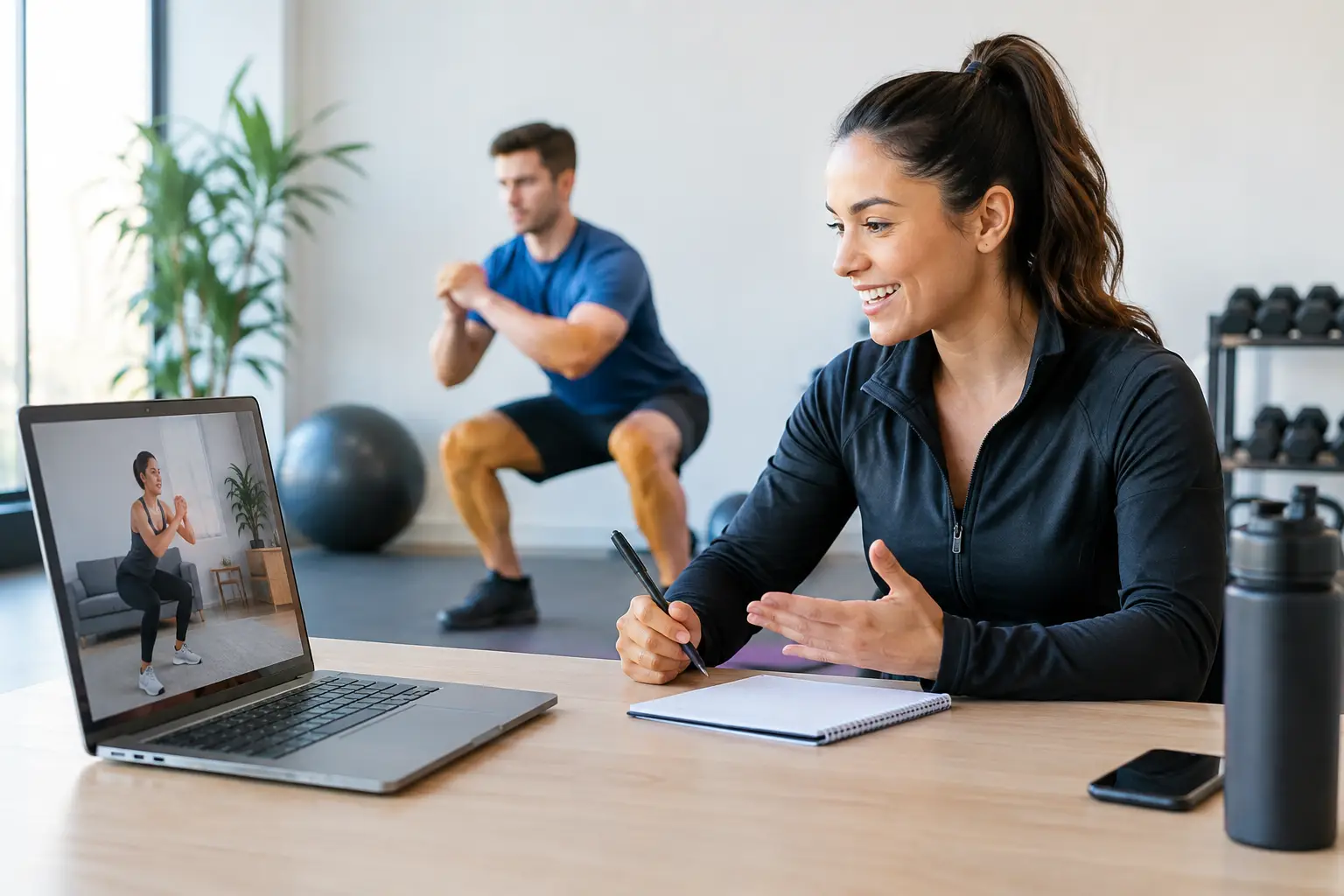
Online coaching is one of the fastest-growing segments in fitness. The global coaching industry generated $5.34 billion in revenue in 2025, nearly double the $2.85 billion reported in 2023, according to the ICF Global Coaching Study conducted by PwC. The number of coach practitioners worldwide hit 122,974, up 15% in two years. If you've been thinking about making the jump, the market is clearly moving in your direction.
But growing demand doesn't mean easy money. Most of the coaches who fail don't fail because they lack knowledge. They fail because they skip the business fundamentals: picking a viable niche, pricing correctly, and building systems that let them deliver consistently at scale.
This guide walks through the seven steps that matter most, with real cost data, earning benchmarks, and practical advice you can act on this week.
Key Takeaways
- Certification costs range from $499 to $1,999 and takes 4-10 weeks to complete (NASM, ACE, ISSA)
- The BLS projects fitness trainer employment to grow 12% from 2024-2034, much faster than average (BLS)
- New coaches typically earn $15,000-$35,000 in their first year, scaling to $75,000+ by year three
- Choosing a niche early and picking the right platform are the two decisions that compound the most over time
What certification do you need to coach online?
A recognized certification is the entry ticket. U.S.-based online fitness coaches need at minimum one NCCA-accredited personal training certification before working with paying clients. The NSCA and ACSM both recommend accredited certifications as the baseline for professional practice.
Here's what the three most popular options cost in 2026:
| Certification | Cost Range | Typical Completion Time | Best For |
|---|---|---|---|
| NASM CPT | $629-$1,999 | 4-6 weeks | Corrective exercise, general population |
| ACE CPT | $675-$945 | 3-6 months | Behavior change, lifestyle coaching |
| ISSA CPT | $499-$1,200 | 8-10 weeks | Online coaching, includes job guarantee |
Prices fluctuate with promotions, so check the official sites before buying. NASM offers a payment plan at $79/month over 12 months if the upfront cost is a barrier.
Which one should you pick? If you plan to focus on online coaching from day one, ISSA is worth a close look. Their curriculum covers online program delivery and they include a six-month job guarantee. If you're more interested in corrective exercise or working with clients who have movement limitations, NASM's specialization library is deeper. ACE tends to appeal to coaches who lean toward habit-based coaching and behavior change.
Don't overthink this step. All three are NCCA-accredited, all three are recognized by employers and insurance providers, and none of them will hold you back. Pick the one that fits your budget and timeline, get it done, and move on.
How do you choose a profitable coaching niche?
Niche selection is where most new coaches either set themselves up for steady growth or start a long struggle with generic competition. Income varies significantly by coaching focus: executive coaches average $96,461 per year, health and wellness coaches average $65,500, and life coaches average $56,770, according to data compiled from the ICF Global Coaching Study and industry surveys.
The fitness coaching space is broad enough that you need to narrow down. Ask yourself three questions:
Who do you want to work with? The answer should be more specific than "people who want to get fit." Think: busy professionals over 40 who want to strength train three days a week. Or postpartum women returning to exercise. Or competitive powerlifters preparing for a meet. The more specific your client profile, the easier your marketing becomes.
What type of training fits your expertise? Strength programming, HIIT, flexibility, sport-specific prep, and rehab-adjacent work all require different skill sets. Play to your actual strengths, not what seems trendy.
Can you validate demand? Before you commit, search for your niche on Instagram and YouTube. Are people actively looking for help in this area? Are competitors charging real money? If you can find 5-10 coaches already making a living in your niche, that's a good sign. It means the market exists. You just need to do it better or differently.
One trap to avoid: don't niche down so far that your addressable market is too small to sustain a business. "Online strength coaching for left-handed golfers over 60" is too narrow. "Online strength coaching for golfers who want to add distance" is specific enough to stand out but broad enough to fill your roster.
What does it take to build an online presence?
The virtual fitness market was valued at $16.4 billion in 2022 and is projected to reach $106.4 billion by 2030, growing at a 26.7% CAGR according to Grand View Research. That growth means more coaches entering the space every month. Your online presence is what separates you from the noise.
You need three things to start. Not ten. Three.
A simple website. This doesn't need to be fancy. A single page with your name, what you do, who you help, a few testimonials (even from free clients), and a way to book a call or sign up. You can build this in an afternoon with any modern website builder. Don't let "I need a perfect website" become the reason you never launch.
One social media platform you'll actually use. Instagram has 2 billion monthly active users, with 62% aged 18-34, making it the default for fitness coaches. TikTok reaches 1.6 billion users with an average daily usage of 95 minutes and roughly 9% engagement for accounts under 100,000 followers, according to Trainerize's 2026 social media report. YouTube's 2.5 billion monthly users make it the best platform for long-form educational content.
Pick one. Post consistently for 90 days before you evaluate whether it's "working." Most coaches quit after two weeks and blame the algorithm.
An email list. Even a small one. Social platforms change their rules constantly. Your email list is the only audience you actually own. Offer something useful in exchange for signups: a free workout template, a nutrition checklist, a video breaking down common form mistakes. Then email that list once a week with something genuinely helpful.
Which coaching platform should you use?
Choosing the right coaching platform early prevents a painful migration later. The platform you use shapes how clients experience your service, from viewing their workout program to logging food to checking in each week.
We've written a full breakdown of how to choose a coaching portal that covers feature evaluation, buy-vs-build decisions, and setup best practices for strength and nutrition coaches. If you're comparing specific tools, our Trainerize alternatives guide covers the most common options for solo coaches.
The short version: look for a platform that handles workout delivery, nutrition tracking, client check-ins, and messaging in one place. Test the mobile experience yourself before committing. And make sure you can export your data if you ever need to switch.
For a closer look at programming-specific tools, see the exercise program builder breakdown. If nutrition is central to your offer, the nutrition coaching software guide covers what to evaluate.
How do you build a community that keeps clients around?
Client retention matters more than acquisition for long-term income. The ICF reports that the average active client load globally is 12.4 clients per coach. That's not a large number. If your average client stays six months instead of three, you've functionally doubled your revenue without signing a single new person.
Community is the retention lever most coaches underuse. Here's what actually works:
A private group for your clients. This can be a simple WhatsApp group, a Discord server, or a community feature within your coaching platform. The goal isn't content production. It's connection. When clients see others showing up consistently, it reinforces their own commitment.
Monthly challenges with low stakes. A "30-day step challenge" or "protein target week" gives clients a shared goal that's achievable and fun. Don't tie it to transformation photos or before-and-after pressure. Tie it to showing up.
Live sessions, even short ones. A 20-minute weekly Q&A on Instagram Live or Zoom builds more trust than ten polished posts. It shows you're a real person who's accessible. You don't need a production setup. Your phone and decent lighting are enough.
The coaches who retain clients longest aren't necessarily the ones with the best programming. They're the ones who make clients feel like they belong to something.
How do you get your first paying clients?
The BLS projects that fitness trainer employment will grow 12% from 2024 to 2034, with roughly 73,700 job openings per year. Demand is there. But new coaches often struggle with the gap between "people need this" and "people are paying me for this."
New online coaches typically generate $15,000 to $35,000 in their first year, according to DollarPocket's 2025 coaching business benchmarks survey of 2,000+ coaches. Coaches with an existing network or audience can reach $30,000 to $50,000.
Here's what works for coaches starting from near-zero:
Start with people you already know. Your first 3-5 clients will almost certainly come from your existing network. Friends, former gym buddies, coworkers, family members who've watched you train. Offer a discounted "founding member" rate in exchange for testimonials and honest feedback. This isn't charity. It's market research with paying participants.
Create content that answers real questions. Every piece of content you post should answer a specific question your target client is already asking. "How much protein do I actually need?" is better than "5 tips for a healthier lifestyle." Specific content attracts specific clients.
Use referrals aggressively. Once you have happy clients, ask them to refer one person. Offer a discount or a free session as incentive. Word-of-mouth is the highest-converting acquisition channel for solo coaches, and it costs you nothing but delivering good results.
Run a free workshop or challenge. Host a free 5-day challenge or a one-hour workshop on a topic your niche cares about. Use it to demonstrate your coaching style and build trust. A percentage of attendees will convert to paid clients. Even a 10% conversion rate on a 50-person challenge gives you 5 new clients.
Don't spend money on ads until you've proven your offer converts organically. Paid acquisition is a scaling tool, not a starting tool.
How do you keep growing as a coach?
Coaches with 10+ years of experience earn nearly double what newer coaches make, averaging $69,721 annually compared to roughly $33,553 for newer coaches, according to the ICF. That gap isn't just about time. It's about compounding skill and reputation.
The fitness industry moves fast. What you learned during certification will be outdated within a few years if you don't actively keep up. Here's how to stay sharp without burning out on continuing education:
Follow the research. Subscribe to the Journal of Strength and Conditioning Research and the International Journal of Sport Nutrition and Exercise Metabolism. You don't need to read every paper. Skim the abstracts monthly and dig into the ones that apply to your niche.
Meet CEU requirements. Most certifications require continuing education credits every two years. Don't treat this as a checkbox. Use it as a forcing function to learn something genuinely new. NASM, ACE, and ISSA all offer specialty certifications (nutrition coaching, behavior change, corrective exercise) that can deepen your niche expertise.
Ask your clients what's hard. The best professional development is often just paying close attention to where your clients struggle. If three clients in a row can't stick to their meal plan, that's a signal to level up your nutrition coaching skills. If clients keep getting injured during specific movements, invest in corrective exercise training. Your clients' problems are your curriculum.
59% of coaches expect to earn more in the following year, according to the ICF study. The ones who actually do are the ones investing in skills, not just hoping the market carries them.
Frequently asked questions
How much do online fitness coaches make?
The median annual wage for fitness trainers and instructors is $46,180 according to the BLS (May 2024 data), though this includes gym-based and part-time trainers. Online-specific roles average $54,518 per year according to ZipRecruiter, with the top 25% earning $69,500 or more. U.S.-based coaches across all modalities average $71,719 annually per the ICF 2025 Global Coaching Study.
How long does it take to get certified as a personal trainer?
Most NCCA-accredited certifications take 4 to 12 weeks to complete if you study consistently. NASM estimates 4-6 weeks, ISSA averages 8-10 weeks, and ACE recommends 3-6 months for self-paced learners. Costs range from $499 (ISSA basic) to $1,999 (NASM premium). All three certifications are fully online.
Do you need a certification to be an online fitness coach?
Legally, most U.S. states don't require a license to offer fitness coaching. Practically, you need one. Liability insurance providers typically require NCCA-accredited certification. Payment processors and coaching platforms may require proof of credentials. And clients increasingly expect it. The credibility gap between certified and uncertified coaches is real, especially online where trust is harder to build.
How do online coaches get their first clients?
Most first clients come from personal networks, not marketing funnels. Start by offering a discounted founding rate to 3-5 people you already know, collect testimonials, then use those testimonials to attract strangers through content marketing and referrals. Free workshops and challenges also convert well for new coaches, with typical conversion rates of 5-15% of attendees becoming paid clients.
Is online coaching a good career in 2026?
The market data says yes. The global coaching industry nearly doubled from $2.85 billion to $5.34 billion between 2023 and 2025 (ICF/PwC). The BLS projects 12% employment growth for fitness trainers through 2034. And the virtual fitness market is expected to reach $106.4 billion by 2030 (Grand View Research). The opportunity is real. Whether it works for you depends on execution.
The bottom line
Becoming an online coach isn't complicated. Get certified, pick a niche, build a basic online presence, choose a platform that fits your delivery model, and start coaching real people as soon as possible. The coaches who succeed aren't the ones with the best website or the most followers. They're the ones who start before they feel ready, learn from every client interaction, and treat their coaching practice like a business from day one.
If you're looking for a platform that handles workout programming, nutrition tracking, check-ins, and client messaging in one place, CoachingPortal offers a free plan for up to 3 clients with no feature restrictions. It's a reasonable place to start while you figure out what your business actually needs.