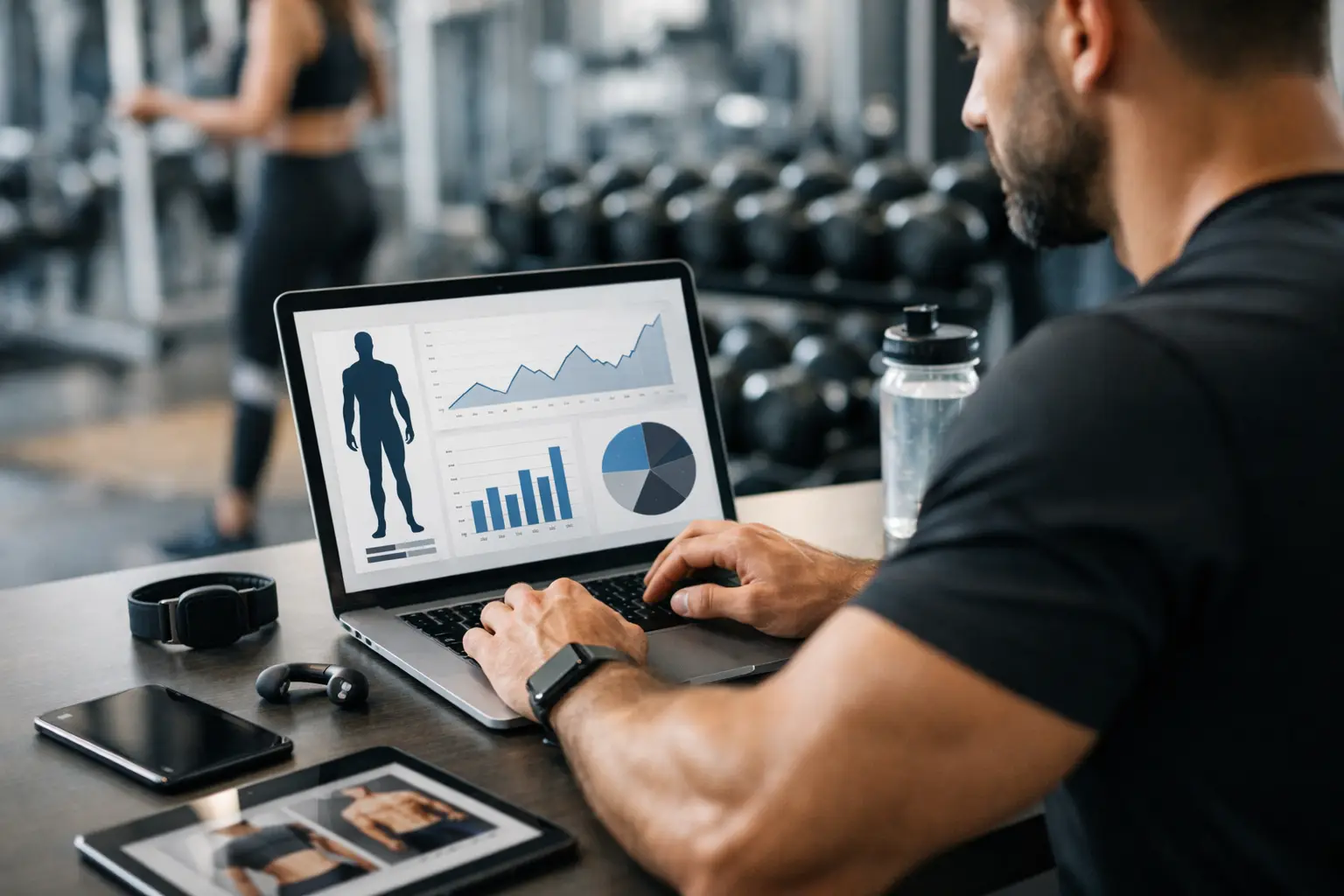
If you are still coaching physique clients through spreadsheets, check-in forms, a meal app, a training app, and DMs, you are not running a high-performance coaching business. You are running a patchwork system that leaks time, creates inconsistency, and makes it harder to deliver the level of precision physique coaching demands. The right software for physique coaches fixes that by putting programming, nutrition, communication, and client monitoring in one place.
That matters more in physique coaching than in general fitness. A body composition client is not just asking for workouts. They are asking for structure, adherence, data interpretation, progression management, and decisions that change week to week based on biofeedback, performance, recovery, and physique response. If your software cannot support that level of coaching detail, your service quality eventually hits a ceiling.
What physique coaches actually need from software
Physique coaching is a systems business. The visible part is the transformation, but the real work happens in the backend. Programming has to account for volume, fatigue, exercise selection, progression, and phase objectives. Nutrition has to adapt to rate of loss or gain, adherence, digestion, hunger, and lifestyle constraints. Check-ins need to capture the right data without becoming a time sink.
That is why generic trainer apps often fall short. They might handle workouts well enough, or offer a basic habit tracker, but physique coaching usually requires a tighter connection between training, nutrition, compliance, and decision-making. If those pieces live in separate tools, you spend your week copying data between systems instead of coaching.
The best platforms help you reduce friction on both sides. Coaches need faster workflows, more reliable data, and less repetitive admin. Clients need clear tasks, fast feedback, and a mobile experience that keeps them engaged between check-ins. Good software supports both. Great software turns that operational advantage into better retention and better results.
The best software for physique coaches solves for precision
Precision does not mean complexity for the sake of complexity. It means having the right tools available when a coaching decision needs to be made.
For training, that usually starts with structured workout programming and progression logic. A physique coach should be able to prescribe training blocks, manage exercise substitutions, track execution, and adjust progression based on performance trends. Auto-periodization can help here, especially when client rosters grow, because it reduces manual edits while keeping programming aligned with phase goals.
For nutrition, precision means more than assigning macros once and hoping compliance stays high. Coaches need meal planning, macro management, food flexibility, and enough visibility into adherence to know whether a plateau is physiological or behavioral. That distinction matters. A client who is not progressing may need a calorie change, but they may also need better meal structure, more realistic food options, or improved consistency.
Check-ins are where all of this comes together. A good system should let you review body weight trends, photos, measurements, training performance, habits, digestion, sleep, hunger, and subjective recovery in one workflow. If the software makes that process slow, your response quality drops as your client count increases. If it makes that process efficient, you can stay detail-oriented without turning every check-in day into an administrative grind.
Why fragmented tools hold coaches back
Most coaches do not start with an all-in-one system. They piece things together as they grow. One app for training. Another for nutrition. A form builder for check-ins. A messaging app for support. A spreadsheet for tracking trends. That can work when you have ten clients and a high tolerance for manual cleanup.
It starts to break when client volume rises or when your service gets more sophisticated. Data gets lost between tools. Clients miss steps because the experience feels scattered. You spend time reminding people where to log, where to message, and where to look for updates. Even worse, your decision-making slows down because the information you need is spread across five tabs.
There is also a branding issue. Physique coaching is a premium service when it is delivered well. If the client experience feels disjointed, your perceived value drops. Clients may still like you, but the business looks less professional than the coaching actually is.
Centralized software changes that. It gives you a single operating system for client delivery, which is exactly what a scaling coaching business needs. Not because all-in-one is automatically better, but because integrated workflows reduce the small failures that compound over time.
Features that matter most in software for physique coaches
Not every feature carries equal weight. Some are nice additions. Others directly affect your ability to coach at a high level and grow without adding chaos.
Workout programming is foundational, but it needs to go beyond simple exercise assignment. Look for software that supports progression management, phase planning, exercise libraries, substitutions, and data review. For physique work, small programming adjustments often matter, especially across accumulation, maintenance, and fatigue-managed phases.
Nutrition tools should be built for coaching, not just food logging. Meal planning, macro targets, smart food suggestions, and the ability to tailor plans to different dieting styles all improve adherence. The practical goal is not perfect dietary control. It is repeatable compliance.
Check-in systems need to be structured, customizable, and fast to review. If the platform can analyze trends or surface compliance issues automatically, that saves time without removing coach judgment. Automation is useful when it reduces repetitive tasks. It becomes a problem only when it replaces individualized thinking.
Messaging and habit tracking matter because most physique outcomes are driven by consistency, not motivation. Software should help reinforce daily behaviors, not just deliver weekly plans. The more the client can do inside one mobile-first environment, the less likely they are to disengage.
Analytics are another separating factor. Coaches need more than raw data. They need signals. Weight trends, training consistency, macro adherence, missed check-ins, and recovery flags should be visible enough to support faster decisions. When the software highlights what needs attention, you can spend more time coaching and less time digging.
Automation is useful, but only if it protects coaching quality
A lot of platforms now talk about AI and automation. The real question is whether those tools improve your service or just create more noise.
For physique coaches, the best automation handles repeatable backend work. Compliance scoring, progression suggestions, check-in analysis, habit monitoring, and smart nutrition support can all reduce admin load. That is a meaningful advantage, especially if you are trying to scale beyond a small roster while keeping response times tight.
But there is a trade-off. If automation is too generic, it can flatten your coaching into templates and canned replies. Physique clients notice that. They are paying for interpretation, not just data collection.
That is why the strongest platforms use automation to support coach decision-making, not replace it. A tool like CoachGPT, for example, is valuable if it helps organize information, identify patterns, and speed up routine tasks while leaving the coach in control of the actual prescription. That is where software becomes leverage instead of a liability.
Choosing the right platform for your business stage
The best software is not always the one with the longest feature list. It is the one that fits how you coach now and where you want the business to go next.
If you are early-stage, ease of setup and affordability matter. You need something that lets you replace manual systems quickly without spending weeks rebuilding your entire service. If you are more established, the priority shifts toward scalability, white-label presentation, deeper automation, and team-friendly workflows.
Your client model matters too. A coach doing high-touch contest prep may need different workflows than a hybrid business serving lifestyle body recomposition clients at scale. Both need strong programming and nutrition tools, but the depth of check-in review, communication volume, and level of customization can differ.
This is also where many coaches underestimate the value of white-label branding. On paper, it can seem secondary. In practice, it strengthens professionalism, improves client trust, and makes your service feel like a real coaching company rather than a collection of borrowed apps.
What a strong platform should feel like day to day
The best test is operational. A strong platform should make your week cleaner.
Client onboarding should move faster. Program updates should take less time. Check-ins should be easier to review. Nutrition adjustments should not require jumping between tools. Client communication should be centralized enough that nothing important gets buried.
On the client side, the experience should feel clear and consistent. They should know where to train, where to view nutrition, where to submit check-ins, and where to message you. That clarity improves adherence because it removes friction from the process.
For coaches serious about growth, this is not just a convenience upgrade. It is infrastructure. Platforms like CoachingPortal are built around that reality, with training, nutrition, check-ins, analytics, automation, and branding in one system designed for real coaching businesses, not generic fitness use cases.
The practical standard is simple. Your software should help you coach with more precision, respond with more speed, and scale with less compromise. If it does not, it is probably costing you more than the monthly subscription ever will.
The coaches who grow without losing quality are usually not working harder at the basics. They have better systems behind the scenes, and clients can feel the difference.